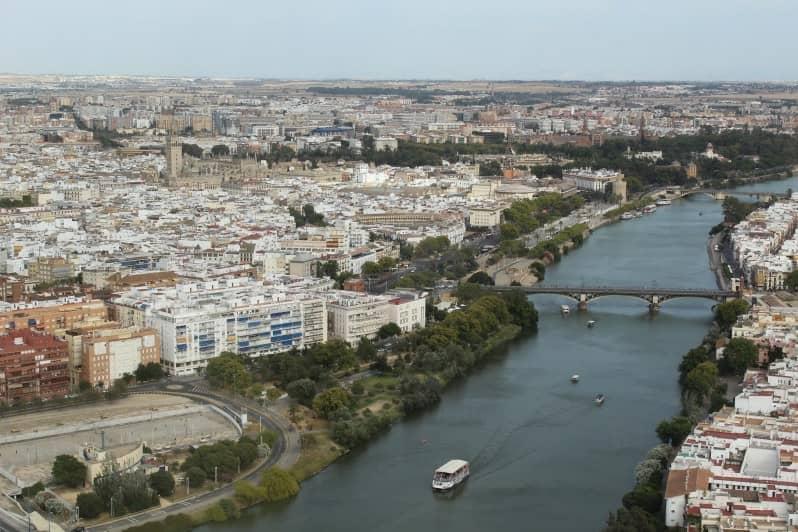
Just a few steps away from the bustle of the city center, there is a place where Seville lowers its voice. Bright cloisters, Baroque painting, and Andalusian silence: the Museum of Fine Arts is the cultural visit that transforms a getaway into a deeper experience.
The museum that explains Seville (beyond the Cathedral and the Alcázar)
There are travelers who arrive in Seville, visit the Cathedral, walk through the Royal Alcázar, and leave convinced they have understood the city. But Seville is also explained in quiet interiors, in canvases where light falls over a white habit, in the mystical intensity of Andalusian Baroque.
The Museum of Fine Arts of Seville is, after the Prado, one of the most important art galleries in Spain. And yet, it remains a human-scale museum: it does not overwhelm, it does not demand cultural marathons, it is explored calmly, almost intimately. Here, something essential becomes clear: Golden Age Seville was not only commerce and architectural splendor, but also painting, spirituality, and a very particular way of representing light.
A former convent turned museum: cloisters, limewash, and silence
The museum occupies the former Convent of La Merced, founded in the 17th century. And this conventual condition is not a minor detail: it defines the entire experience.
Courtyards with orange trees, galleries of white arches, discreet tiles, and a filtered light entering softly. Even before looking at a painting, the visitor has already changed pace. The noise of the city stays outside; inside, the echo is soft and time seems to expand. This architectural context is part of the charm: it is not just a collection, it is a place with atmosphere. One of those spaces where you feel like sitting for a few minutes on a bench and simply observing.
Sevillian Baroque: light as the protagonist
If there is one key word to understand this museum, it is Baroque. And if there is one essential name, it is Bartolomé Esteban Murillo. Murillo (1617–1682) was one of the great painters of the Spanish Baroque and, probably, the artist who best translated the sensibility of Golden Age Seville into images. He was born and worked almost his entire life in Seville, a city that in the 17th century was an important commercial and religious center. His painting is deeply linked to that context: convents, brotherhoods, and ecclesiastical commissions shaped much of his production. Murillo developed a luminous, gentle, and emotional style that achieved enormous success not only in Spain but also across Europe.
The rooms dedicated to Murillo are the heart of the museum’s itinerary. His Immaculate Conceptions, his religious scenes, and his figures wrapped in soft light help to understand 17th-century Sevillian sensibility: devotion, tenderness, humanity.
Alongside him, the intensity of Francisco de Zurbarán, another great Baroque painter, provides a fascinating contrast. His saints, austere and almost sculptural, emerge from dark backgrounds with an almost physical force. Also present is the dramatic energy of Juan de Valdés Leal, whose painting introduces a more restless, more theatrical Baroque.
There is no need to go through every room obsessively. It is enough to stop in front of a few key works and observe how Sevillian painting builds its own identity: religious, yes, but deeply connected to everyday life and emotion.
Beyond the Baroque: romantic and costumbrista echoes
The museum is not limited to the Golden Age. On the upper floors, artists from the 19th century reinterpret Andalusia through a romantic and costumbrista lens. Here, the city changes: popular courtyards, bullfighting scenes, bourgeois portraits. It is another way of understanding Seville, closer to the imagery many travelers have in mind. The contrast with Baroque introspection enriches the visit and completes the city’s visual narrative.
How to integrate the visit into a relaxed morning
One of the great strengths of the Museum of Fine Arts is its location. Situated near Plaza del Museo and just a few minutes’ walk from the historic center, it can easily be integrated into a relaxed itinerary.
Simple proposal for a cultural morning:
Arrive early, when the museum opens and the rooms are almost empty.
Walk calmly through the Baroque rooms, without trying to see everything.
Take a break in one of the interior courtyards.
Head out towards the Arenal district or the Alameda area for an unhurried lunch.
In two well-spent hours, the experience feels complete. No crowds, no endless queues, no “monument checklist” feeling.das, la experiencia queda completa. Sin aglomeraciones, sin colas interminables, sin sensación de “lista de monumentos”.
Practical information to plan your visit
The Museum of Fine Arts of Seville is located at Plaza del Museo, 9, about a 10-minute walk from the Cathedral.
Admission is free for citizens of the European Union and reduced for non-EU visitors, making it one of the most accessible major museums in Spain.
Tickets are purchased directly at the ticket office; advance booking is usually not necessary except for very specific temporary exhibitions.
The museum is open from Tuesday to Sunday (closed on Mondays), and opening hours may vary slightly depending on the season, so it is advisable to check the official website before visiting.
To explore it calmly, between 1.5 and 2 hours are enough. It is not an overwhelming museum, and that is part of its charm.
It also organizes occasional workshops and educational activities, especially on weekends and holiday periods, making it an interesting option for families seeking a calm and well-contextualized cultural experience.
A visit for those looking for something more
The Museum of Fine Arts does not compete with the spectacular nature of Seville’s great icons. It has no towers, no palace gardens, no architectural records. It has something different: depth.
It is the perfect visit for those who have already seen the essentials and want to understand the city from within. For couples who prefer silence to crowds. For cultural travelers who know that sometimes a single museum can explain a city better than ten monuments.
In Seville, light is not only in the sky—it is also in the paintings. And discovering it in the quiet rooms of the Museum of Fine Arts is an elegant—and little exploited—way to complete the journey.
Carnival 2026 is almost upon us. The doughnuts, music, dancing and masks are ready to fill European cities with fun and excitement, but do you know about the origins of these winter festivities? This article will tell you about the birth of winter’s most hotly anticipated event and I’ll be recommending the best European destinations for celebrating Carnival 2026.
The origins of Carnival
Carnival (a term that is thought to have derived from the Latin carnem levare, meaning “removing meat”) is a celebration with its roots in Christian tradition and closely linked to Lent, the period of abstinence and fasting before Easter.
Whilst associated with Christianity, the festivities also draw from paganism, namely from Dionysia and Saturnalia, which for the Greeks and Romans represented times of celebration, chaos and fun, which then, over the course of the centuries, were enriched by masks and costumes.
Where to celebrate Carnival 2026: the best destinations in Europe
In 2026, Easter Sunday falls on 5 of April, meaning that Carnival 2026 celebrations will culminate between 12 and 17 of February, Fat Thursday and Shrove Tuesday respectively.
But in some cities, Carnival doesn’t just last a couple of days; it’s a truly unmissable event, steeped in tradition, which brings almost the whole of February alive. Do you want to find out where? If you’re looking for ideas, here are the best destinations for celebrating Carnival 2026.
Carnival 2026 in Venice: a centuries-old tradition
Carnival 2026 will be bringing the streets of Venice alive from 31 of January to 17th of February: eighteen days of fun, music, dancing and masks between the canals and the “campi”, as the city’s squares are called.
This is not only one of the most awaited events of the year, but also a centuries-old tradition that unofficially dates back to 943 and officially to 1296, when, for the first time, an edict from the city known as La Serenissima officially declared the day before Lent a public holiday. This gave way to the celebrations we enjoy today, over 700 years later, which last for almost the whole of February.
If you decide to fly to Venice for Carnival 2026, be sure not to miss the three iconic events of this festival.
The first is the Corteo Acqueo, a water procession where men and women in traditional Venetian dress parade along the Grand Canal to open the Carnival. The second is the Festa delle Marie (Feast of the Marys), a tradition that also appears to date back to 943, featuring 12 Venetian girls, in typical dress, who walk in a procession to St Mark’s Square, where the most beautiful is crowned. The third, and perhaps the most internationally renowned, is the Volo dell’Angelo (Flight of the Angel), where a masked girl, usually last year’s winner of the Festa delle Marie, descends from the bell tower of St Mark’s; a truly moving moment, to be experienced as you look up to the sky.
For all the latest updates on the 2026 Carnival of Venice, you can visit the official website.
The 2026 Carnival in Nice: with allegorical floats and flower battles
Along with Venice, Nice Carnival is one of the most famous in Europe, as well as the largest and most highly anticipated in France, and this year it will be taking place from 11th of February to 1 of March.
Held for certain since 1294, Nice Carnival is now known for its rich and vibrant procession of allegorical floats. The tradition dates back to 1882, when Alexis Mossa and his son Gustav-Adolf Mossa, two local artists, created the first float for “His Majesty’s Carnival”.
The official date of the first event, however, is 1873, when the Nice citizen Andriot Saëtone founded the “Festival Committee”, responsible for organising the celebrations.
There are so many events to experience first-hand, from parades to performances organised between the Promenade des Anglais and Place Masséna (you can find them on the official website). But if you choose Nice as your next destination, don’t miss the Battle of Flowers, which takes place every Wednesday and Saturday, when there’s a procession of floats adorned with brightly coloured floral arrangements, and petals and flowers are thrown into the crowd.
Santa Cruz de Tenerife: a homage to diversity and a record-breaking Carnival
Santa Cruz de Tenerife, in the Canary Islands, is twinned with Rio de Janeiro and not by chance, as one of the liveliest carnivals in Europe takes place here, and this year it will bring the city to life from 16 of January to 22 February 2026.
Dating back to the 17th century and initially celebrated with an exchange of clothing — the men dressed as women and vice versa —, Tenerife Carnival has always been a homage to diversity, to bending the rules and pushing the boundaries, and it’s now an unmissable event for the LGBTQ+ community as well as for anyone excited about this festival who wants to enjoy, at least once in their life, an experience as surreal as it is thrilling.
Every year, the Carnival of Santa Cruz de Tenerife has a different theme, and by 2026 “Latin rhythms” has been chosen, thus turning the event into an opportunity to learn more about the music and dances of the Latin world.
Here’s an interesting thing: did you know that Tenerife Carnival set a Guinness World Record in 1987? This was for the performance by Cuban singer Celia Cruz, accompanied for the occasion by the music of the orchestra Billo’s Caracas Boys, which succeeded in attracting over 250,000 spectators into one square: a truly amazing feat which has yet to be beaten.
2026 Carnival in Cadiz: the most irreverent masked event in Europe
We’re staying in Spain, but this time we’re flying to Andalusia, towards Cadiz (with Volotea you can land nearby in the charming city of Seville), to visit one of the most irreverent and subversive Carnivals in Europe. The event, which in 2026 will be held from 12 to 22 of February, has in fact always been known for its irony, plays on words, sarcasm and its (not overly excessive) friendly mockery of the most burning issues of the day.
The event dates back to 1600 and is linked to the Ligurian communities, particularly the Genoese, who moved here after the Ottoman defeat.
In Cadiz, instead of the masks typical of the European Carnivals, you’ll see people parading with painted faces and dressed in controversial costumes, and you can attend performances by renowned satirical groups such as comparsas, chirigotas and coros.
The first sing in particular about politics and current affairs, but in provocative tones; the second address the same issues, but in a humorous way; the third, on the other hand, play lutes and guitars to the Carnival Tango beat, switching between a comical repertoire and a more serious one. All of them, in the end, compete with one another in the Gran Teatro Falla, where the annual contest is held and also broadcast on local television channels.
Now that you’ve heard about some of the most intriguing Carnivals in Europe, all you need to do is pick your destination and book your flight. Have a great trip!
Seville, with its unique charm and vibrant cultural life, is a destination you can’t afford to miss off your travel list for 2026. This Andalusian city, combining a rich historical heritage with a contemporary vibe, is sure to make your visit one to remember.
With its unique mix of Moorish, Roma, Christian and Latin American influences, Seville has long been an inspiration for artists, writers and travellers like yourself. When you arrive in the city and start strolling through its streets, you’ll find that it’s like moving through the pages of a book full of history, art and life. Let yourself be pulled along by the flamenco, the processions and countless traditions and events that will enthral you!
Here are the festivals and traditions that you can’t afford to miss in 2026, so that you can soak up every drop of the essence of Seville.
Why Seville is unmissable as a 2026 destination
There’s much more to Seville than its beautiful architecture and its streets steeped in history; it’s a place where traditions come alive. In 2026, the city has a packed schedule of events in store, celebrating the wealth of its culture, spirituality and way of life.
The perfect balance between tradition and modernity
What makes Seville so unique is its ability to stay true to its roots whilst embracing modernity. Its celebrations reflect this duality, providing the perfect setting for exploring both the city’s ancient traditions and its vibrant life of today. Whether you’re seeking a spiritual connection, a cultural experience or simply to enjoy a bit of the Andalusian lifestyle, Seville has something for you.
Seville’s unmissable festivals and traditions in 2026
Reyes Magos
When and where: 5 January, throughout the city.
Why it’s unmissable: the Cabalgata de Reyes Magos (the Three Kings Parade) is a magical event marking the start of the new year, with parades full of colour, amazing floats and sweets galore!
Unique features: every neighbourhood adds its own special touch, and the Plaza Nueva is the hub of the celebrations.
Tips: get there early to secure a good spot and take some bags to collect the sweets in.
Semana Santa
When and where: from 29th of March to 5 of April 2026, throughout the city.
Why it’s unmissable: Easter in Seville is considered one of the most spectacular in Spain, combining faith, art and devotion in the most unforgettable processions.
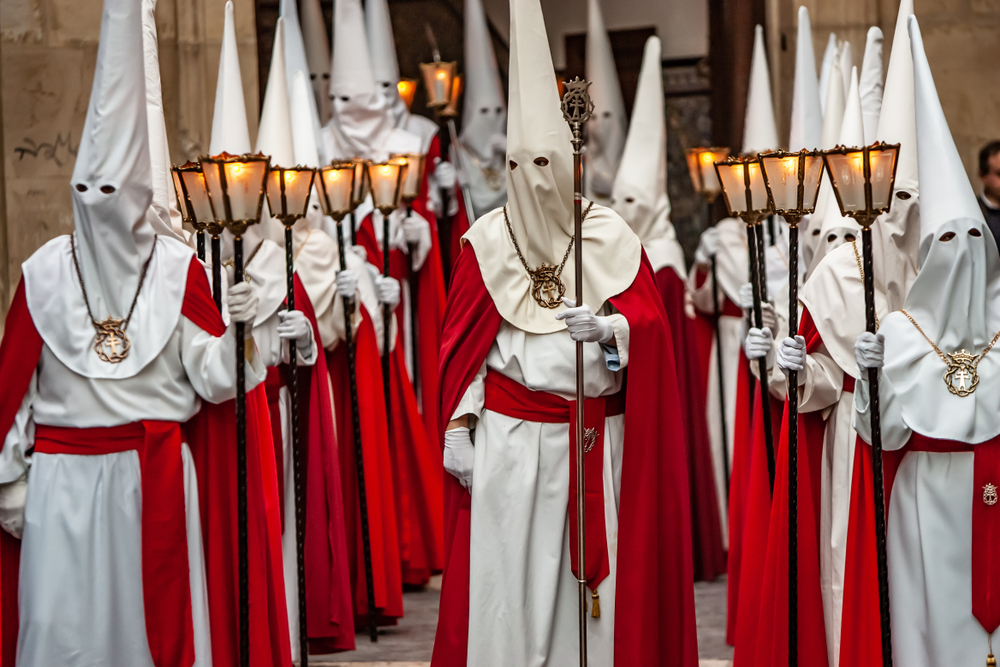
Unique features: the brotherhoods walk through the streets with their impressive floats, accompanied by saetas (Andalusian religious songs) and the beating of drums.
Tips: book your accommodation in advance and check the times of the most iconic processions, such as the Gran Poder or La Macarena.
Feria de Abril
When and where: from 21 to 26 of April 2026, at the Real de la Feria.
Why it’s unmissable: the April Fair is the most glorious celebration in Seville, full of casetas (marquees), flamenco and joy.
Unique features: the alumbrado de la portada (when the main entrance is lit up) and the paseo de caballos (parade of horses) are highlights.
Tips: if you have no access to a private caseta, look for the public ones to enjoy your visit to the full. You can read our interview with Yose for some insider tips on the Feria de Abril.
Corpus Christi
CWhen and where: 4th of June, in the old town.
Why it’s unmissable: this solemn religious celebration is renowned for its processions steeped in tradition.
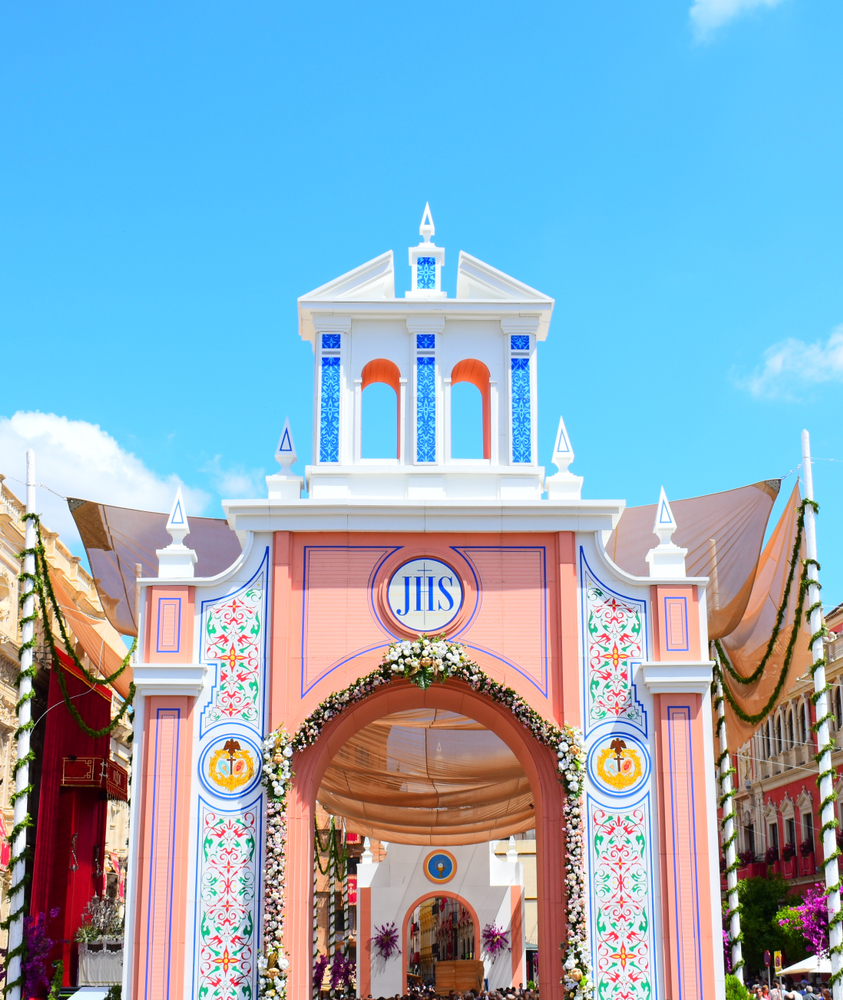
Unique features: the ephemeral altar in the Cathedral and the streets decorated with rushes and flowers are a sight to behold.
Tips: get there early to see the start of the procession (la salida de la custodia).
Noche de San Juan
When and where: 23 June, in various parts of Seville.
Why it’s unmissable: this magical night celebrates the summer solstice with bonfires, music and dancing.
Unique features: the bonfires along the Guadalquivir River and the activities in Triana are particularly popular.
Tips: wear comfortable shoes and enjoy the night’s typical cuisine.
Velá de Santa Ana
When and where: end of July, in the neighbourhood of Triana.
Why it’s unmissable: this is one of the most authentic festivals in Seville, celebrating the patron saint of Triana.
Unique features: rowing competitions, live music and a very friendly atmosphere.
Tips: stroll along the Callejón de la Inquisición to feel the essence of the neighbourhood.
Velá de la Virgen de la Paloma
When and where: August, in the neighbourhood of Arenal.
Why it’s unmissable: while not so well known, this celebration combines devotion and entertainment, with activities for all ages.
Unique features: the open-air concerts and typical tapas make this festival an all-round experience.
Tips: make the most of it by exploring the neighbourhood of Arenal during the day.
Feria de San Miguel
When and where: September, at the Real de la Feria.
Why it’s unmissable: with a more relaxed atmosphere than the Feria de Abril, this fair is ideal for enjoying the art of equestrianism and the local cuisine.
Unique features: the equestrian displays are the highlight.
Tips: try the local wines and traditional tapas in the casetas.
Día de Todos los Santos
When and where: 1 November, in the local cemeteries and markets.
Why it’s unmissable: All Saints’ Day is held in honour of the dead, and you can enjoy traditional delicacies such as huesos de santo, or ‘saints’ bones’ (filled marzipan rolls).
Unique features: the floral offerings in the cemeteries and the markets full of typical confectionery.
Tips: visit San Fernando Cemetery to experience the tradition up close.
Christmas
When and where: from early December until 6 January, throughout the city.
Why it’s unmissable: the festive season turns Seville into a true fairytale, with bright lights, amazing nativity scenes and a warm atmosphere wherever you go.
Unique features: Seville is renowned for its wonderful Christmas markets, such as the one in the Plaza Nueva and the one on the Avenida de la Constitución, where you’ll find arts and crafts, typical delicacies such as polvorones and local products. Nativity scenes, both living and static, are another of Seville’s great traditions at this time of year. Highlights include the Christmas Projection Mapping on the front of the Town Hall, the Flamenco celebrations (Zambombas) in Triana and other neighbourhoods, combining traditional carols with the art of flamenco, and the activities in Plaza de San Francisco, which usually has ice rinks and attractions for the whole family.
Tips: enjoy the Christmas lights as you stroll through the main streets in the centre, such as Sierpes and Tetuán. Try some of Seville’s Christmas confectionery such as yemas de San Leandro (pastries made with egg yolk and sugar) or alfajores (made with honey and nuts), available in convents and traditional patisseries. To add the finishing touch to your experience, visit the living nativity scene in a nearby village, such as Alcalá del Río, to truly immerse yourself in the spirit of an Andalusian Christmas.
Seville in 2026 will provide the perfect setting for you to experience the richness of the cultural, social and spiritual life of Andalusia. So pack your bags and find out why Seville is one of Spain’s brightest gems. See you soon!
Soak up the magic of tapa hopping in Seville, where in traditional and neighbourhood bars your drink comes with a free (or as good as free) tapa: a refreshing journey of the senses for a taste of the authentic side of this Andalusian city.
Seville: warmth, tradition and friendly vibes
Seville is poetry in motion. Its golden light slides along the narrow streets of the neighbourhood of Santa Cruz, the locals burst into spontaneous flamenco song and the whole city oozes with life and tradition. With its orange trees in blossom, whitewashed courtyards and the murmuring of the Guadalquivir River, Seville can be savoured with both the eyes and the palate. The April Fair, the bustling Calle Betis, La Alameda square with its street art… all coming together to make Seville a must-see destination.
Tapa hopping like a local
In Seville, going for tapas is not just about having something to eat; it’s a sensory ritual. A draught beer, and bingo – a tapa suddenly appears in style. Spinach with chickpeas, montadito de pringá (a meat roll), fried fish, croquettes, pork in whisky sauce; a procession of flavours to accompany the conversation, the toasts, the smiles in the fading light. You eat tapas at the bar, you socialise, you greet the person next to you, you take your time, enjoying yourself unhurriedly.
10 bars in Seville that still serve good and cheap tapas
Casa Gálvez(Nervión area). A bar that’s well renowned for its unrivalled tapas; they serve generous portions at low prices, with a handwritten menu on a large blackboard.
Casa Morales (Cathedral area). An old-school classic, with a rustic bar and an extensive menu of traditional tapas.In this long-established bodega, founded in 1850 and always busy, you may well spot Rosalia or another celebrity tucking into meatballs with the locals.
El Rinconcillo (Old Town). The oldest bar in Seville, with centuries of earthly glory, perfect for savouring spinach and chickpeas or cod cooked in a good wine.
Bodeguitas Antonio Romero(various locations). Traditional bodegas where the montadito de pringá and the authentic atmosphere will draw you in.
Bodega Santa Cruz Las Columnas (Old Town). A traditional bar popular with the locals, affordable tapas, fresh ham and the bill chalked onto the bar.
Flor de Toranzo(Old Town). Traditional bars in the Old Town, canapés of anchovy with condensed milk or pork loin with apple, all in a great atmosphere.
Taberna Sol y Sombra(Triana neighbourhood). An iconic Triana bullfighting-themed taberna, with old posters, traditional tapas and an authentic local flavour.
“La Grande” San Jacinto(Triana neighbourhood). A bar in Triana where you can enjoy free tapas with your beer; nice food and a lively atmosphere; we recommend the prawns.
Seville will capture your heart with a tapa in your hand and the resolution to come back in your eyes. Here, tapa hopping is a shared poetry, you beat the heat with a tapa and some conversation; you can enjoy the city slowly, savouring every moment. And Volotea is ready to take you further still: to Cadiz or Malaga, where you can soak up the art and the flavours found in every part of Andalusia. Explore the south, lose yourself in its flavours, and let the soul of Andalusia draw you in… tapa after tapa!
Welcome to Seville, where history can be tasted in every mouthful! Strolling through Seville is like leafing through the pages of a book alive with history, art and culture. From the majestic Giralda bell tower to the bewitching neighbourhood of Triana, every corner of the city casts that spell that all who visit fall under. The cobbled streets of the Old Town, the bustling terraces and the waft of orange blossom are just the beginning of an experience that is much more than just visual. Because in Seville, your palate goes on a journey with you.
The taste of Andalusia on the table
Andalusian cuisine is a feast of fresh and authentic flavours, emerging from the melting pot of cultures that have left their mark on this region. Gazpacho and salmorejo, those refreshing chilled summer soups, compete with pescadito frito (fried fish), tapas of jamón ibérico (ham) and prawn omelette to capture the hearts (and stomachs) of diners. And we mustn’t forget espinacas con garbanzos, a spinach and chickpea dish typically eaten during Lent, or rabo de toro estofado (oxtail stew), steeped in the history of the local bullfighting tradition.
But what if I told you that many of these dishes would not be what they are without the influence of the Americas?
You may not know that… overseas flavours are also part of Seville!
When Seville became the gateway to the Americas during the Age of Discovery, this not only brought gold and spices to the city, but also a culinary revolution that transformed Seville’s cuisine. Just imagine the look on the Sevillians’ faces when they tasted tomato, sweetcorn or pepper for the very first time! Produce that we now think of as staple ingredients in our diet arrived from across the Atlantic and were so successfully integrated that we can no longer imagine our dishes without them.
Salmorejo, for example, wouldn’t exist without the tomato from South America, and what would become of our papas aliñás (potato salad)? Guindilla chilis and bell peppers brought to life dishes such as Basque-style cod, and chocolate, another treasure from the Americas, became an irresistible indulgence for Sevillians. Even ajiaco, a stew that’s actually more popular in the Caribbean, is reflected in local stews, due to the combination of ingredients and techniques.
Where to try these overseas gems in Seville
If you want to try these historic flavours, Seville is full of places where tradition and innovation go hand in hand. At Triana Market, right next to the bridge of the same name, you’ll find stalls where papas aliñás and salmorejo are made like they used to be, but also with an odd modern touch.
For a more alternative experience, La Azotea is an excellent option: a restaurant where local produce and overseas ingredients come together in creative dishes. And if you have a sweet tooth, you must visit La Campana, a long-established patisserie where chocolate, an ingredient from the Americas, is made into chocolates and desserts that will take you back in time.
And for something more authentic, pop into the taverns in the neighbourhood of Santa Cruz, where gazpacho and salmorejo are examples of living history.
A return journey in every mouthful
Seville is a crossroads where past and present combine as naturally as the flavours from here and there. The influence of the Americas on our cuisine has not only enriched our dishes, but also reminds us that food is a journey without borders. So when you next enjoy a good salmorejo or some papas aliñás, remember that you’re tasting a little piece of history. And where better to do this than in Seville, where every corner has a story to tell and a dish to enjoy!
Are you thinking of going to Seville? Would you love to go to the Feria de Abril/April Fair, but could do with some expert advice to help you enjoy this amazing event? Well, you’re in luck! Because today we have a very special guest: Josefa DeOrtega,YOSE, a content creator, architect, fashion lover and sailing enthusiast, as well as a mum and many other things besides. One of her passions is Flamenco and, of course, the Feria. So are you ready to find out why taking part in this event is so worth it?
Before we start with the interview, here’s a quick summary of the FAQs on the Feria de Abril, to give you a general idea of the event.
Seville Feria de Abril 2024: dates
In 2024 the Seville Feria de Abril will take place from Sunday 14 April to Saturday 20 April. The fair is held annually from the second Sunday after Easter until the following Saturday, both inclusive. In 2024, Holy Week begins on Sunday 24 March and ends on Sunday 31 March, Easter Sunday.
What is the Feria de Abril?
It’s a festival created in 1847 as a cattle fair and which eventually has turned into one of the most popular fairs in Seville and in Spain as a whole, as well as becoming worldwide known. During the week of the fair, the locals come together in the casetas, or marquees, within the grounds of the fair to enjoy themselves.
Where to see the Feria de Abril 2024
The temporary city of the Feria de Abril covers an area of 450,000m2 (excluding the funfair) at one end of the city, which can be reached by public or private transport. The address is C. Joselito el Gallo, 41011 Seville.
The Feria de Abril for children
As well as enjoying the festive atmosphere of the Feria, children can have a great time at the funfair within the grounds, on Calle del Infierno. The funfair has countless attractions and rides for both young and older children.
The Feria de Abril without a caseta
Although most casetas at the Feria are private, there are some (around 15) that are open to the public. These casetas can be found on Calle Pascual Márquez, so if you’re not local, we’d advise you to try your luck in this part of the grounds.
How to dress at the Feria de Abril
As Yose tells us in her interview, there’s an established dress code at the Feria. In general, you should be very well turned out and casual dress is not permitted. For the men, the typical dress would be pleated trousers, dress shoes and a jacket. The women can opt to wear flamenco outfits or dress normally, in which case they should dress quite formally.
Interview with YOSE
Hi YOSE, first of all, thank you so much for agreeing to this interview; we’re delighted to have this opportunity to hear all the secrets you can tell us about the Feria! Let’s start with your bio for the benefit of the Volare readers… would you like to introduce yourself in a few words?
Hi! My name is Yose, I’m a technical architect and have been involved in the world of social media since 2010. I’m originally from Cadiz, although I’ve been living in Seville for 27 years. My main passion is the sea and I love sailing. Although I live in Seville, I can’t go for more than two weeks without being by the sea! I live with my daughter, who is seven, and I’m also trying to instil this passion in her.
Tell us about the Feria de Abril, when and where it takes place and why; what is its significance?
The Feria, known as the Feria de Abril (April Fair) or Feria de Sevilla (Seville Fair), is a festival held annually in the city of Seville; when it was first held, in 1847, it was a purely commercial event, but it has now become a wonderful expression of folklore, colour and joy, for both locals and visitors. The event takes place in its own large grounds, called the Real de la Feria, made up of streets lined with casetas (marquee tents), decorated with paper lanterns (farolillos), and full of horse-drawn carriages and people on horseback. It’s held one or two weeks after Easter; in 2023 it will take place from Sunday 23 April until Saturday 29 April.
How important is the Feria to the local culture of Seville?
For the people of Seville, the Feria is a fundamental part of their lives; if you think that many people from the city of Seville allocate part of their annual budget to the Feria, as it’s very expensive, both to attend every day and to invite people to the casetas, as well as the outfits and all the accessories.
I can assure you that the Feria takes up a large amount of any savings that a middle-class family in Seville might have! Having said that, no one goes without during that week, even if it means giving up a holiday or certain luxuries throughout the year. The priority is to enjoy the Feria to the full!
But it’s not just about having fun. The Feria continues to be important from a commercial and professional point of view, as it is a networking space where a lot of business is negotiated, for example, by inviting someone you’re about to do some work with to eat in your caseta.
Then, from 8pm onwards, there’s no more shop talk and it all becomes much more fun!
What are the key features and events of the Feria? Tell us about the casetas and how they work. Are there any opportunities for tourists to access the casetas or are they just for the locals?
The Feria takes place within huge grounds, with surfaces of yellow-coloured clay, known as albero, and casetas, with horses being ridden and horse-drawn carriages constantly passing by. Apart from the exhibición de enganches, a parade of more than 100 carriages, one of the key events is the feria taurina, the bullfighting.
The casetas are private marquees belonging to families or groups of friends who pay for them all year round; it’s true that there are some public ones – known as casetas de distrito – but the music in those is not usually Flamenco from Seville; they’re more like little nightclubs, frequented by young people who don’t have access to a family caseta.
At the Feria, you normally go to your own caseta or one owned by a friend or relative. The casetas aren’t cheap, of course, and there’s also quite a long waiting list to get one. In some casetas you can pay and go in to eat and see concerts, but there are others where only the members pay, so only guests invited by them can go in. It’s a very family-focused, personal atmosphere.
But don’t worry if you’re coming from somewhere else and don’t know anyone with a caseta. I’ve been living in Seville for 27 years and I go the Feria whenever I like and I’ve never had a problem getting into casetas. At the end of the day, the locals are keen to invite you and they want you to share this amazing event with them!
What do you need to take into account if you want to go to the Feria and enjoy it like the locals?
The key to enjoying the Feria like someone from Seville is to come with someone from Seville! Why? Because otherwise, yes, you’ll be able to experience the Feria from outside, you’ll be able to stroll through the Real, see the horses go by, but you won’t be able to experience the coolest part of the festival!
If you miss out on the most important part of the Feria, which for me and for most people there is to go into those family casetas and experience this aspect of the city’s life, you’re going to leave the Feria with only half an idea of what the Feria de Sevilla is all about. There are other fairs, such as the one in Jerez, where there is in fact the option for everyone to go inside the casetas, but in Seville it’s a more private affair, so ideally you need to go with someone local. But as I said before, if you don’t know anyone in the city, don’t lose heart, the locals are very hospitable!
We know that Seville gets very busy around the time of the Feria, so how far in advance should you book your accommodation? And where would you advise visitors to stay?
The issue of accommodation is quite tricky, as people tend to book apartments well in advance; it’s true that the number of rooms and apartments for rent increases quite a lot during the period of the Feria, especially in the area of Los Remedios, a fairly typical neighbourhood where the Real de la Feria is located. I live here and in fact, as I’m answering your questions I’m looking at the entrance to the 2023 Feria, which is now being set up.
As you can imagine, staying in a hotel during the Feria is expensive, and people also look for options that are quite close to the grounds, because transport isn’t straightforward. Taxis, Cabify and Uber are extremely busy at this time, so people prefer to stay somewhere that they can more or less walk from. It’s also worth bearing in mind that the Feria can be exhausting; you can be inside the grounds for eight hours and when you leave worn out, you just want to get home.
If you don’t have any friends in Seville who can put you up, it’s best to book well in advance; and if you can’t find anywhere to stay in the area of Los Remedios, looking outside of Seville may be a good option: it’s actually going to cost you the same to get to the centre from another part of Seville as it will, say, from Aljarafe (a comarca, or area, within the province of Seville). Luckily, the district of Los Remedios is quite well connected with the ring road.
What do you eat at the Feria de Sevilla? Are there any particular drinks or dishes?
At the Feria de Sevilla it’s very traditional to drink rebujito, an alcoholic drink typical of Andalusia, made by blending manzanilla wine, a carbonated lemon & lime soft drink, mint and ice. This is what you drink all day long. Of course, there is also beer and wine, but drinking rebujito is a good idea to avoid getting too drunk, as of course, you can’t drink manzanilla wine for eight hours, we’d all end up completely drunk!
Foodwise, there are some truly traditional regional dishes: ham platters, plates of tortilla, fried fish, shrimp fritters, cheese and almonds in the evening; there’s no particularly typical dessert, you mainly find traditional finger food from Seville, that can be eaten standing up. On some days you might stay for a sit-down dinner or lunch, a bit more formal, but the idea is to have a great time in a caseta on your feet, mingling with others.
Let’s talk about Flamenco fashion: Any suggestions for anyone wanting to buy something to wear at the Feria? We know that the Flamenco dress is the only regional costume that follows different trends every year. Big or small ruffles, high waists, flowers on one side or the other… Can you give us a preview of what everyone will be wearing this year?
Well, to be honest, there is in fact a fairly well established dress code, as there are things that are not permitted at the Feria. For example, men are not supposed to wear jeans. You can’t go to the Feria casually dressed; you need to dress for the occasion!
Men typically wear trousers with pleats, dress shoes and a jacket, which can be a blazer or a more formal jacket, with or without a tie. Definitely no T-shirts, please!
Women can either dress Flamenco-style or normally, but if they are dressing normally, they should dress quite formally and one can’t be combined with the other. What I mean is that it’s completely forbidden to dress normally but, for example, with a flower in your hair. If you decide to put a flower in your hair it’s because you’re wearing a Flamenco dress!
Traditional Flamenco dress consists of flat esparto shoes (as it would be quite painful to wear heels for such a long time at the Feria), a long fitted dress, usually accompanied by an embroidered shawl, with a brooch, a flower and some drop earrings; you don’t normally carry a bag but there’s usually a hidden pocket under the ruffles, where you can keep your money, phone and whatever else you need.
It’s interesting to know that Flamenco fashion is increasing in popularity. We have two Flamenco fashion shows in Seville and in recent years this style has been catching on more and more internationally. The more traditional sectors of Seville society tend to stick, shall we say, to the more formal style, whereas in my case, I like to try something different: for example, a skirt with fringes, or not wearing a shawl.
Seville’s most typical Flamenco outfit, which at the end of the day everyone wears, is called a canasteroFlamenco dress, with just one set of ruffles, consisting of as many as you like. It’s best to avoid very low necklines, as being in a family environment with too low a neckline is not very well looked upon; the Feria is not the place for flaunting too sexy or provocative an outfit.
You have a young daughter. What advice can you give anyone wanting to attend the Feria as a family?
The Feria is of course an event that welcomes children; it’s best to avoid taking very young children and babies, but from the age of five or six, children can have a great time at the Feria during the day. It’s true that from around 6pm onwards the children tend to disappear and in the evening the casetas are usually for adults only.
There’s an area at the Feria called “Calle del infierno” (Hell Street), an amusement park where you can take your children. There are also children who ride horses with their parents, and in some of the larger casetas there are even some children’s shows, with clowns, magicians and other fun activities.
The Feria is definitely a place for children, but for those coming from elsewhere with very young children, my advice is to try and secure an invitation to a caseta in advance; being at the Feria with children with nowhere to take a break can be quite overwhelming.
What is your best memory of the Feria?
All of the times in any caseta with live music, Flamenco, sevillanas and having a good time with my friends. I find every year at the Feria unforgettable, but I certainly have a very set kind of ritual, for example, from the moment I get dressed up, and since my daughter has been going with me to the Feria, it means so much more.
It’s a beautiful moment: getting our outfits ready, the different coloured flowers, the shawls, the shoes, and getting dressed up together, I love it!
So now that you know all about the Feria de Abril, all you need to do is plan your trip to Seville, book your flight and enjoy the flamenco festival just like the locals!
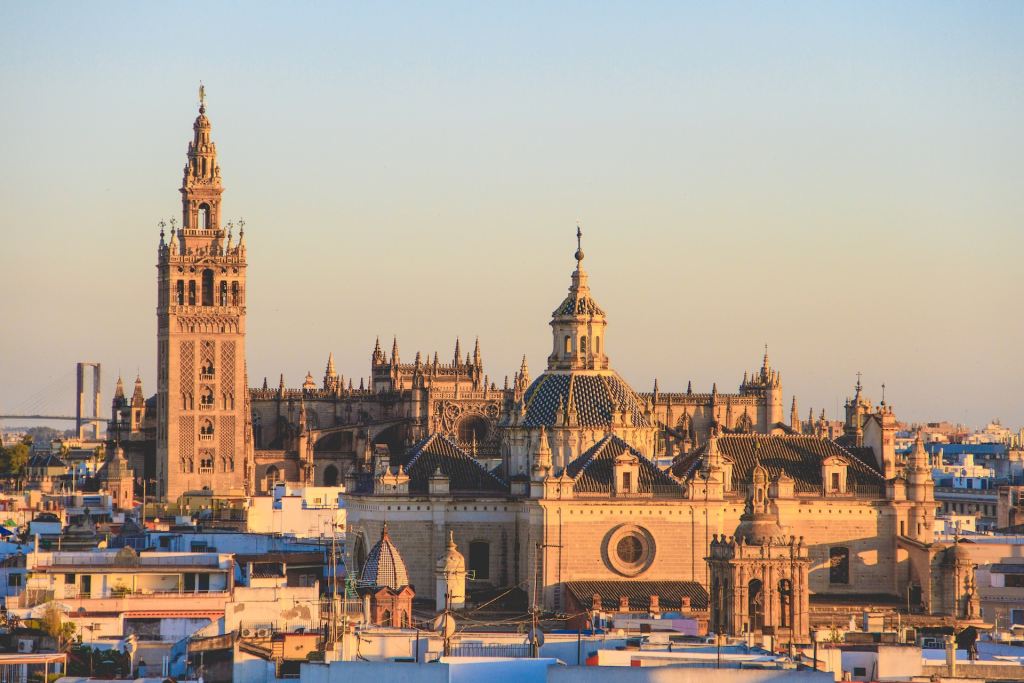
The Cathedral, the Giralda, the Real Alcázar, the Plaza de España, the Torre del Oro and many more sights have made the historical centre of Seville a true open air museum.
WHAT TO SEE IN SEVILLE IN TWO DAYS
Got a couple of days to spare for a getaway? Well, read on, because this guide will tell you all about the must-see places to visit in Seville in 48 hours. Get ready for a truly enjoyable cultural and gastronomic escape in the Andalusian capital!
What to see in Seville on Day 1
What better way to start your tour of Seville than with a typical Andalusian breakfast? We recommend the Génova Café-Bar, an establishment full of character, situated on the Avenida de la Constitución, just 200m from the Cathedral.
Enjoy a coffee, milkshake or freshly squeezed fruit juice on its pleasant terrace, along with toasted bread topped with cured ham, tomato and olive oil. But if you feel like something more substantial, maybe order some scrambled eggs with pancetta or a slice of potato omelette.
After breakfast, make your way to Seville Cathedral, one of the most beautiful monumental complexes in Spain (declared a UNESCO World Heritage Site in 1987) and which you can explore either independently or on a guided tour.
In our opinion, the best way to visit Seville Cathedral is accompanied by a guide, as you can then be sure of getting into the complex (which has a limited capacity) and you also avoid the queues at the entrance. But once you’ve seen the inside of the Cathedral, don’t forget to visit the Patio de los Naranjos (Courtyard of Orange Trees), the Giralda belltower and the Biblioteca Colombina library. You’ll be entranced!
Just a short walk from the Cathedral you’ll find another of the unmissable monuments to include in your 48-hour tour of Seville: the Real Alcázar. This royal palace complex boasts an extraordinary fusion of architectural styles and some wonderful gardens, where you’ll feel what it was like to be a caliph!
Real Alcázar
After a full-on morning of sightseeing, you’re bound to feel ready for some lunch. Within the vicinity, we recommend the Taberna Peregil, not far from the Real Alcázar, on Calle Mateos Gago.
The Taberna Peregil is one of these bars that’s been around forever, popular with both locals and visitors, where you can enjoy the famous orange wine and plenty of dishes typical of Andalusia and Seville itself: salmorejo (a cold soup made with tomatoes and bread), chicharrones (crackling), tortillitas de camarones (shrimp fritters), carrillada (pork cheek), montaditos de pringá (meat-filled rolls) or pescaíto frito (fried fish) are just some of the many options.
Now with your stomach full, we suggest you continue your 48-hour tour of Seville with a stroll along the banks of the Guadalquivir River, along the Paseo de las Delicias towards the Puente de los Remedios bridge. At this point you can go into the Parque de María Luisa and sit down for a rest in the shade of the trees in this park, or walk straight across it to the beautiful Plaza de España.
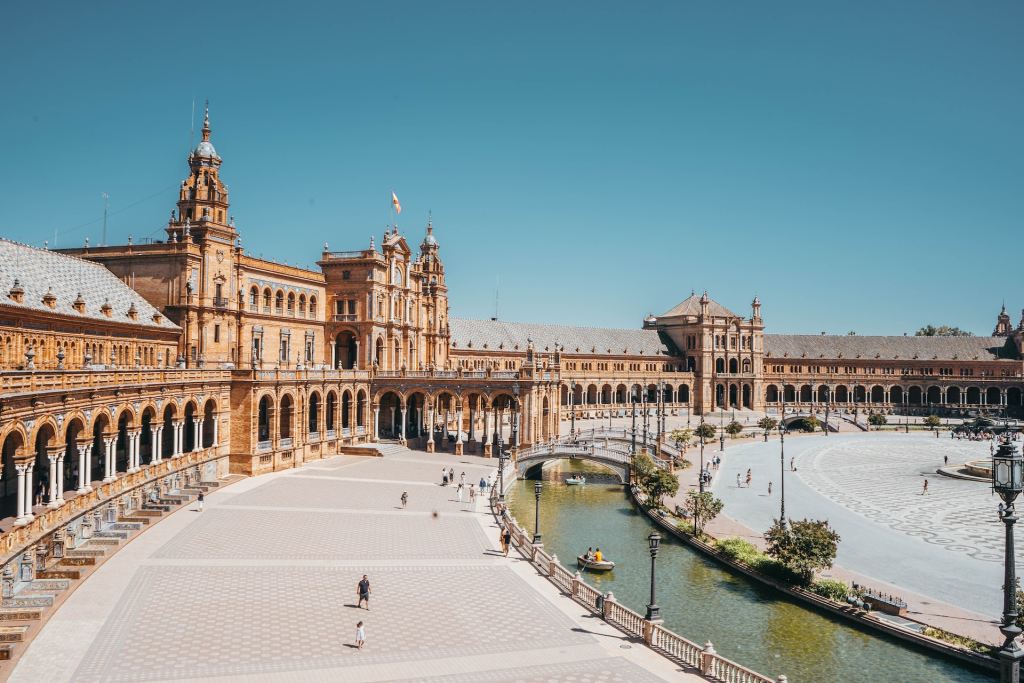
This square (built for the 1929 Ibero-American Exhibition) is renowned for the exquisite tiles adorning its benches, where all the provinces of Spain are represented. The Plaza de España may even look familiar to you, as it has featured in many famous films, such as Lawrence of Arabia and Star Wars: Episode II.
To finish off Day 1 of your 48-hour visit to this wonderful city, we suggest you go back to the area around the Cathedral and visit the Barrio de Santa Cruz. The pretty squares and cobbled streets of this neighbourhood not only formed part of the city’s old Jewish quarter but today they’re home to some of the best tapa spots in Seville.
What to see in Seville on Day 2
Your second day on this weekend tour of Seville starts on a high, at the viewpoint in Plaza de la Encarnación, commonly known as the Setas de Sevilla (Mushrooms of Seville), due to its unusual architecture.
From the top of the Setas de Sevilla you can enjoy 360º views of the city, whilst on the lower floors you’ll find the largest archaeological site in the city (Antiquarium Museum) and the La Encarnación Market, the first food market to be built in the city.
On the way to the Setas we suggest you walk through the Plaza del Salvador, a lively square and a popular spot for many locals to meet up with friends for a drink.
Whether or not you’re a fan of bullfighting, we’re sure that you’ll like the Maestranza Bullring, as it’s a lovely 18th century building. If you’re interested in bullfighting, you should visit the museum on the ground floor.
Crossing the river, you’ll come to the popular Barrio de Triana (the district that has produced numerous singers, flamenco dancers and bullfighters), where you can enjoy the glorious art of its residents.
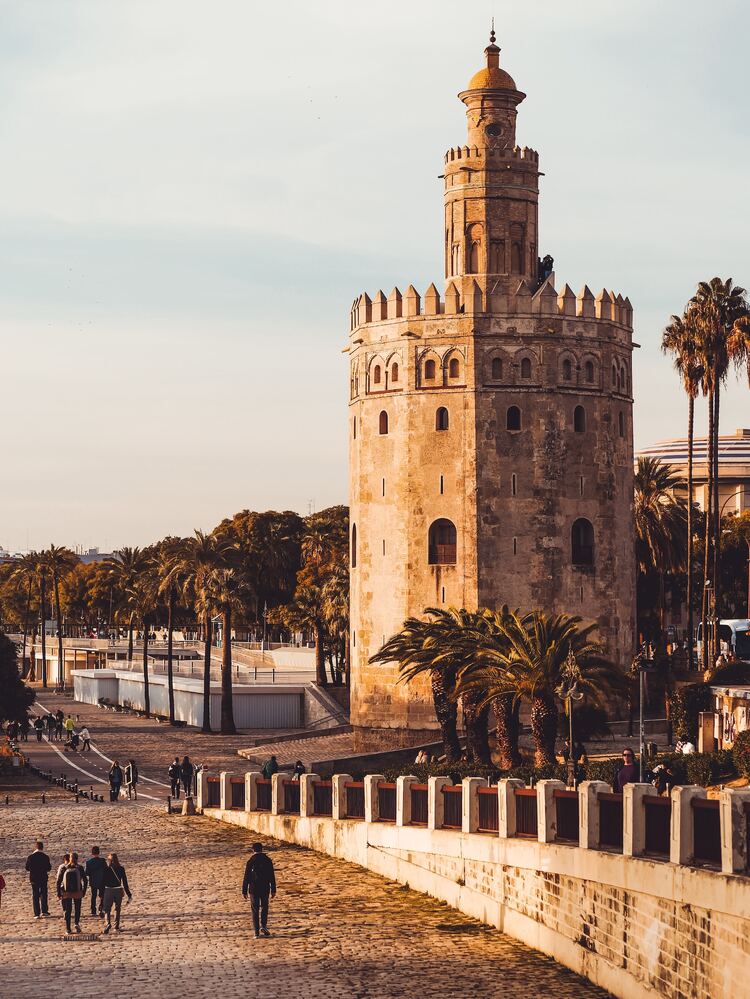
To finish off this tour of Seville in style, there’s no better place than the Torre del Oro. This “Tower of Gold”, built in the 12th century, is now home to the city’s maritime museum, the Museo Naval de Sevilla. It’s also one of the most iconic images of Seville.
What to see in Seville for free
If you’re travelling to Seville on a tight budget, there’s no need to worry. The Andalusian capital has plenty of interesting places that you can visit at no cost whatsoever, or for a very small fee. Here are some examples:
The view from the terrace on the 37th floor of the Torre Sevilla skyscraper, better known as Torre Pelli. Its panoramic views are truly amazing!
We hope this 48-hour tour of Seville appeals to you. Hurry and find a flight to Seville and succumb to the charms of the capital of Andalusia!
Seville, the capital of Andalusia, is a destination where art, history and tradition collide. Unsurprisingly, its popular Holy Week and April Fair attract thousands of visitors every year, while its beautiful historic centre is home to numerous monuments, among which the Cathedral is an undoubted highlight.
Have a free weekend? Then read on, because in this guide we’ll share some practical information on how to visit Seville Cathedral and the other unmissable monuments in the city, such as the Royal Alcázar palace and the Torre del Oro watchtower.
Real Alcázar
History of Seville Cathedral
As with other monuments in Andalusia, Seville Cathedral has its origins in an old Muslim mosque, built in the 12th century in the reign of Abu Ya’qub Yusuf during the Almohad Caliphate.
After the caliph’s death, the mosque was converted into the Church of Santa Maria, although it was not until 1401 that work began on the construction of Seville Cathedral itself. The works, initially directed by the architect Alonso Martínez, lasted for more than a century and were completed in 1507, the year in which Seville Cathedral was consecrated.
Today, at 76 metres wide and 116 metres long, Seville Cathedral is not only one of the most visited monuments in the city, but also one of the three landmarks that (together with the Royal Alcázar and the General Archive of the Indies) make up a monumental complex that has been declared a World Heritage Site by UNESCO.
Visits inside Seville Cathedral
Despite the fusion of architectural styles (Almohad, Mudejar, Renaissance, Baroque, etc.) on show inside Seville Cathedral, it’s considered the largest Gothic cathedral in the world, boasting decorative features and artistic heritage of incalculable value.
It would be almost impossible to mention all of the sites you can visited inside Seville Cathedral, given its impressive array of architecture, chapels and works of art. For this reason, we’ll recommend the ones we consider essential on any first visit inside the Cathedral:
The Central Nave, the Main Chapel and the Choir.
The High Altar.
The Cathedral’s stained glass windows. There are 138 different ones!
The chapels. These are also numerous, although our favourites are the Chapel of the Virgen de la Antigua, the Chapel of Santiago and the Chapel of Santa Bárbara.
Christopher Columbus’ Tomb.
As well as all the above, other must-see places in Seville Cathedral are:
The Patio de los Naranjos courtyard and the Biblioteca Colombina library.
Patio de los Naranjos
The Giralda bell tower.
The Royal Chapel, the Chapter House and the Main Sacristy, all in the Renaissance style.
The Tabernacle, which has an exuberant Baroque decoration.
The Office Pavilion, which houses a large exhibition room full of cathedral art.
How to visit Seville Cathedral
Seville Cathedral can be visited alone or as part of a guided tour.
In our opinion, the best option is to visit Seville Cathedral with a guided tour, for three reasons:
You save time by not having to wait in the long queues at the Cathedral entrance.
If you book a guided tour, you’re guaranteed entry to the monumental site, which has limited capacity.
In addition to the entrance ticket, the guided tour includes an accompanying expert guide, who explains the lesser-known curiosities and facts about the history and artistic heritage of Seville Cathedral.
However, if you prefer to visit Seville Cathedral on your own, you should bear in mind the following:
Book your tickets as soon as possible. Seville Cathedral is one of the most important monuments in Andalusia and also one of the most visited, so the queues at the ticket office are quite long.
Try to get to Seville Cathedral early in the morning to avoid waiting in line at the ticket office and/or entrance under the scorching midday sun.
During liturgical ceremonies, visitors are not permitted inside the Cathedral. You should also dress modestly and keep quiet, as this is a place of prayer.
Tickets for Seville Cathedral
Tickets for Seville Cathedral can be purchased in person at the ticket office or online (our recommended option).
The entrance fees are as follows:
General admission: €11 (online) and €12 (at the ticket office)
Concessions: €6 (online) and €7 (at the ticket office). Applicable to pensioners over 65 years of age, students up to 25 years of age and people with a 33% degree of disability or more.
Free admission: Applicable to people born or residing in the Archdiocese of Seville, the unemployed, children under 13 years of age and people with a 65% degree of disability or more.
Seville Cathedral Opening Hours
Seville Cathedral is open to tourists:
Monday to Saturday, from 11am to 7pm.
Sunday, from 2.30pm to 7pm.
Where is Seville Cathedral?
Seville Cathedral is located in the city centre, on the popular Avenida de la Constitución. The best way to get there is on foot, although the following are also options:
Metro: Line 1. Puerta de Jerez station.
Tram: Archivo de Indias station.
Bus: Lines C4, C3, 5, 41, 42, C1 and C2. Jardines de Cristina station.
Other monuments to visit in Seville: the Alcázar palace and the Torre del Oro watchtower
While Seville Cathedral is a spectacular site, there are many other monuments in the Andalusian capital worth visiting. Two of the best known and most popular (as well as being our favourites) are the Royal Alcázar palace and the Torre del Oro watchtower.
The Royal Alcázar in Seville is one of the oldest functioning royal palaces in the world, as well as a UNESCO World Heritage Site. The Torre del Oro watchtower, meanwhile, is an iconic part of the Seville skyline, as well as the current home of the Naval Museum.
After everything we’ve told you in this guide about visiting Seville Cathedral, we’re sure you’ll now be even keener to discover the capital of Andalusia. Book a flight to Seville and discover this World Heritage Site for yourself!
Christmas is fast approaching and there’s nothing like getting together with our loved ones. Traditionally, these family gatherings would take place at home, but these days there are some great places to go out and have fun.
Seville is a fabulous place spend the winter, with mild temperatures and a lively atmosphere in its streets. The city’s Christmas activities include countless Nativity scenes, traditional artisan Christmas markets, sampling of convent sweets, and exhilarating theme parks for the whole family.
Bars and restaurants have pulled out all the stops to prepare truly appetising menus for our festive lunches and dinners with friends or colleagues. There’s so much variety that you can either opt for traditional menus or more adventurous dishes. So if Seville’s warmth is what you’re looking for this Christmas and you don’t fancy spending hours searching online, don’t worry; this article will give you a whole host of delicious options for enjoying a truly amazing Christmas in this Andalusian gem.
Where to eat during your Christmas break in Seville
Gourmet options at Seville hotels
Hotels are not just for sleeping in; they’ve now enhanced their dining options enormously and offer special set menus for celebrations in their restaurants. And not just for guests, but for anyone wishing to celebrate Christmas in style with a culinary treat. The hotels have realised that the perfect pairing for a high-end stay is to add gastronomic appeal.
We have various gastronomic options available in the city’s hotels:
Sal Gorda Catedral occupies the ground floor of the Hotel Soho Boutique Catedral. Mediterranean cuisine with some truly innovative techniques, revealing little nods to cuisines from other continents such as Asia and Latin America, through its fusion dishes. Sal Gorda Catedral proves that tradition, modernity, and new trends blend perfectly. A venue that stays loyal to Andalusian cuisine, whilst taking nuances and essences from all over, without restraint, but anchoring itself in the Mediterranean and its finest produce, for an average price of around €40 per person.
Sal Gorda Catedral
The Marriott hotel chain has just opened the Hotel Querencia de Sevilla Autograph Collection. A venue offering a perfect option for the stay of your dreams with top-class facilities. A delightful combination of rest, relaxation, and an interesting range of dishes. At its Restaurante Maestría you can enjoy authentic Andalusian cuisine in a wonderful atmosphere. A Seville-inspired menu with traditional recipes, retaining the essence of the delicious local produce, all presented in a contemporary style. Dishes such as a Russian salad of deep-water rose shrimp (ensaladilla de gambas blancas) in garlic, with their coral (€12), ‘almadraba’ bluefin tuna tartare with ajoblanco soup (€20) or free-range eggs with fresh spinach (€11) make this restaurant an absolute must for anyone visiting our city. The average price is around €50 per person.
Maestría
Our next stop is the Hotel Radisson Collection Magdalena Plaza. This hotel is truly committed to fine food, with two in-demand restaurants in the city: Eneko Basque Sevilla and Justa Rufina. Eneko Basque is the creation of Eneko Atxa, one of Spain’s top chefs. This temple of indulgence offers flavours from the Basque Country, casually presented and adapted to our tastes and our way of understanding food. The menu includes traditional recipes with subtle innovative nuances. Dishes that aim for a balance between tradition and evolution, with the charcoal grill taking centre stage. Fish from the Andalusian coast, Jabugo ham and Almadraba tuna are just some of the delights on offer. An ideal spot for a romantic dinner in the heart of the city. An average price of €70.
Eneko Basque
Authentic Seville bars and restaurants
But let’s take a look at some of the most authentic bars and restaurants in Seville. This city, which loves its beer as much as any other, has plenty of classic cervecerías, or beer bars, with expert staff pulling the pumps to serve you the perfect ‘caña’, accompanied by just the right little snack (a delicious Russian salad, a few prawns…).
Cervecería Salmedina is renowned for offering its customers something delicious from the day’s catch from the nearby fish market. A cuisine with strong maritime roots, with ice-cold beer and the finest fresh fish. These are the ace cards of this establishment, which reclaims the traditional tapas. An attractive option for some excellent tapas in the centre of town, for an average price of €30 per person, depending on what seafood you order.
Cervecería Salmedina
Triana was the meeting point for merchants coming from all over Europe, representatives of trading houses or their owners’ sons, who were sent to Seville to gain business and who ultimately aspired to get in on the lucrative trade with the Indies. Today, Triana is a neighbourhood brimming with art, devotion, and culture, and one of the must-sees on any visitor’s list.
Of the countless places to enjoy tapas, we stop at Alfarería 21 Casa Montalván. This regionalist-style building, designed in 1927, was originally a ceramics factory and was subsequently converted into a restaurant and hotel, charmingly decorated with wonderful century-old tiles, lovingly preserved on the walls of this establishment and which bring the historic building to life. Seville-style cuisine, simply prepared, but based on the amazing quality of its raw ingredients. Affordable prices for one of the best restaurants in Triana.
Casa Montalván
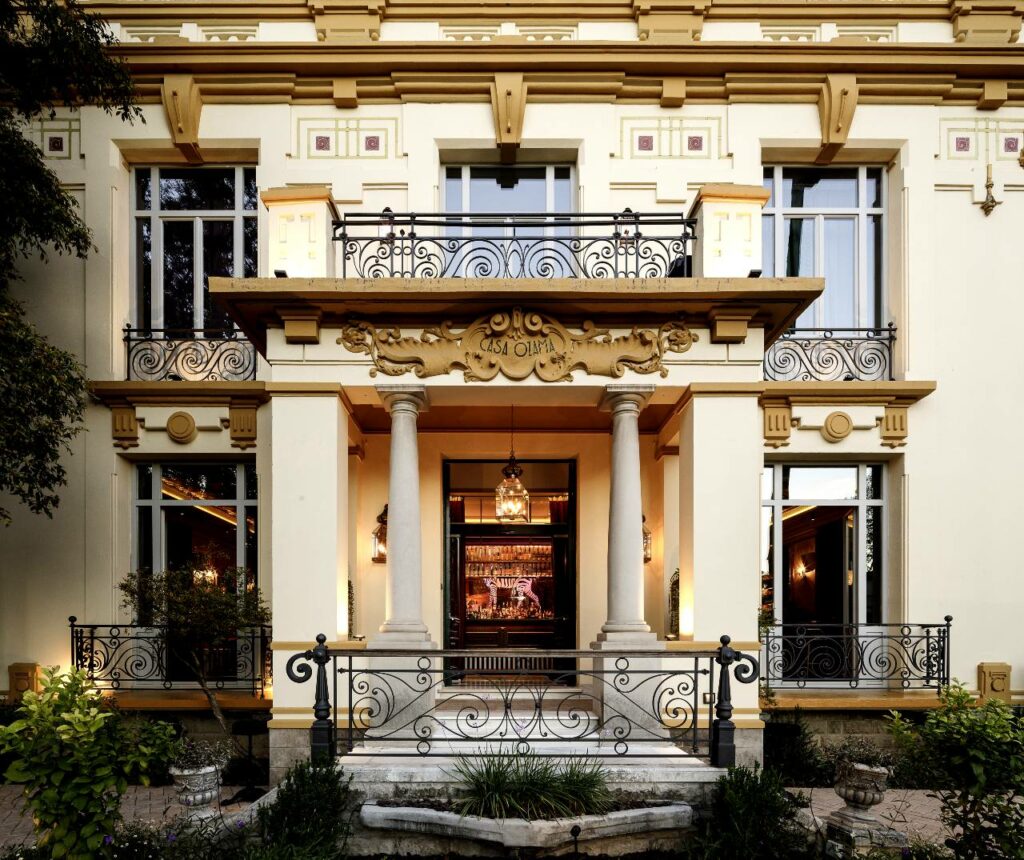
Since 2021, Casa Ozama has been the place to be in Seville. This beautiful restaurant can be found in Villa Ozama, one of the finest villas in the city, modernist in style, with notable architectural features, some neoclassical. Casa Ozama is a gourmet haven with different indoor and outdoor spaces arranged over an area of almost 2000m². A sophisticated menu with modern touches, including tapas-sized portions, such as our famous Ensaladilla, or Russian salad (€7.50), fresh Breton oysters (€25) or croquettes made with Cecina de León cured beef (€8). An extensive menu, finished off with a selection of creative cocktails for you to enjoy at your leisure in its charming gardens. Ozama is an experience that transcends the purely gastronomic, aiming to excite and awaken all your senses. You should note that children are not admitted. €50 is the average price per person.
Casa Ozama
“Starred” restaurants in Seville
We mustn’t forget the city’s Michelin-starred restaurants: Cañabota and Abantal, both costing in the region of €100 per person.
CañabotaAbantal
We could go on; the list of Seville’s fantastic restaurants is endless. Seville is a perfect place to stroll around and seek out spots to savour some of our popular tapas. An ideal city for enjoying the pleasant climate, its sights, its traditions, its history and, of course, its food.
You can organise your visits by neighbourhood and book some of the fashionable restaurants in advance. The best thing is that the prices are generally affordable, considering the high quality offered. We want anyone visiting our city to return to enjoy its huge range of culinary options.
Seville awaits you with open arms, ready to treat you to an unforgettable Christmas!
Any old guide can smother you with points of interest for tourists and enormous lists of ‘interesting’ places to see in the city, but who ever said that guides like that are what us adventurers want? That’s why we made this guide of the TOP 10 Most Romantic Travel Plans in Sevilla for you. We like getting straight to the point, as we’re sure you also do, which is why we’re inviting you to discover these TOP 10 Best Places for Romantic Experiences.
We’d just like to make clear one small, but very important, detail. This Sevillian top 10 isn’t just a couples thing, it’s romantic purely because you’ll fall in love with the music, the architecture, the trees around you, etc. And if, before your trip to Sevilla, you’d like to learn more about this magical destination and get yourself inspired, take a look at Volotea’s suggestions for films, books and music for getting to know Andalucía.
Right, off we go!
10 Romantic Travel Plans in Sevilla To Awaken Your Inner Adventurer
1. Monte Gurugú
Parque María Luisa is one of the many must-sees in the Sevillian capital. Visitors lose themselves after just one step walking around the park’s ample gardens, enjoying the flowers, taking a couple of selfies, etc. Many of the visitors to Monte Gurugú are locals leaving the outside world behind them, and it goes without saying that tourists and adventurers alike should do the same. You’ve got to give it a go!
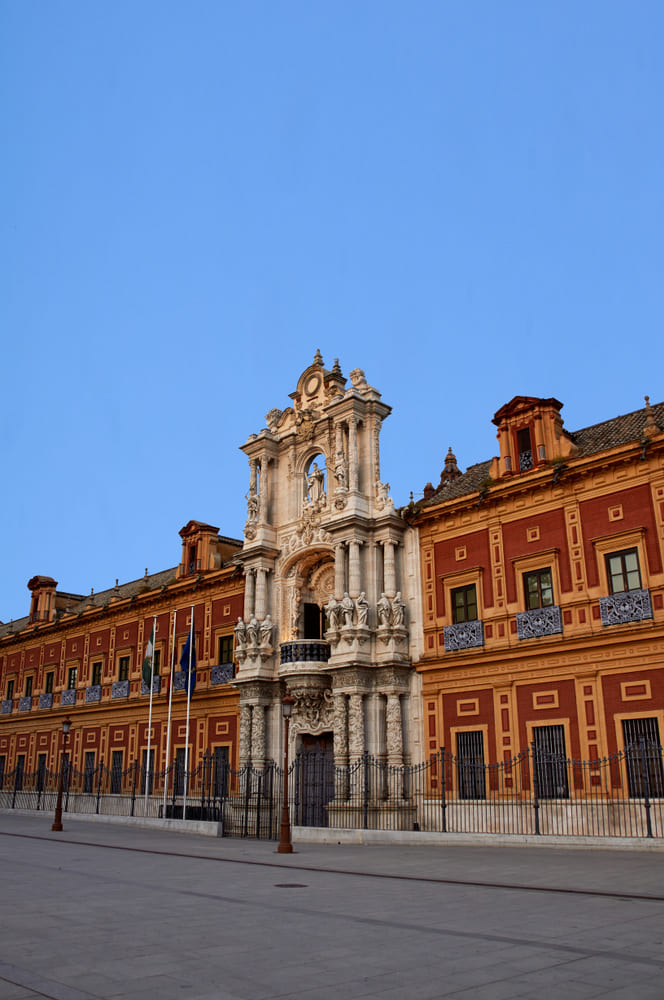
We’re going to give you some history facts, but they’re only short – we don’t want to bore you. The Duke of Montpensier purchased the Palacio de San Telmo (Palace of San Telmo) in 1849; in addition to refurbishing it he also constructed some gardens, and this is where Monte Gurugú is found. You should also know that during the 1929 Expo, there was a small train which travelled via the tunnel cutting through this romantic mountain.
Monte Gurugú is a romantic scene beyond the gardens and the Montpensiers. This corner of the Sevillian sky is where many young couples sneak off for their first kiss.
Bridge of Birds, Parque de María Luisa
2.Puente de los Pájaros (Bridge of Birds) and the Notes of a Violin
Not every bridge is surrounded by so many birds and so much green, and nor are they always so lucky as to go over lakes instead of roads. However, this does apply to the charming and petite Puente de los Pájaros in the Parque de María Luisa.
There’s one little detail making it a particularly romantic space: the notes of a young violinist called Curro Ruiz, who would snoop around with his instrument performing pieces like Wildest Dreams or The Winner Takes It All. It’s in this way that every Sunday, weather permitting (though as a reminder, Sevillian weather is often very forgiving), this artist allows you to experience one of the most beautiful romantic experiences in Sevilla, and naturally, the world.
3. Boat Trip in Plaza de España
From the romantic and hidden charms of the Puente de los Pájaros to the most photographed of all the city’s plazas. Fancy a boat trip while you’re in Sevilla? The semi-elliptical Plaza de España constructed by Aníbal González houses a beautiful lake, also semi-circular in shape, which is perfect for enjoying one of the most romantic experiences of the city.
To make this recommendation a bit more personal, we suggest going during the early or last few hours of the day. The light is prettier, the sun is less intense, and there aren’t any crowds.
4. How Did We Forget to Mention Bécquer!
The gentleman of poetry… It’s impossible to visit Sevilla without sensing Adolfo Bécquer’s influence in many areas of the citym since many routes have been put together to bring the romanticism of this distinguished Sevillian to life.
If you want to visit every stop on the Becquerian map, don’t miss the chance to contemplate whirlwind romance, love had, and love lost. It can all be found in Sevilla in sculptured form, under the shade of a Cypress tree, and it’s called Glorieta de Bécquer (Bécquer’s Bandstand).
Torre del Oro
5. The Left Bank of The Guadalquivir
A stroll beside the Guadalquivir river is just one of our super top travel plans in Sevilla. But the side we’re recommending is the left bank. More specifically, you should start your promenade at the Torre del Oro and from there, start to enjoy the very bank that Triana was born from.
Nao Victoria
Along the way your body will probably want to stop for a break, because you’ll come across the Nao Victoria. After the break we’ll keep strolling because the end is in sight, and there’s no better symbol of the other bank that you’re looking at than the bridge marking the end of your walk. It’s the Puente de Isabel II (the Isabel II Bridge), known the world over as the Puente de Triana.
Oh, man! The controversy that the construction of this tower caused! Debates over if it suits Sevilla or not, if it looks rusted..! And that’s just the start: you try telling a Sevillian that something even bigger than the Giralda, our symbol, is getting built. But pettifoggery aside, don’t miss the chance to feed your (and our) inner adventurer by paying this marvel a visit. Because along with its rusty appearance and sharp break with the rest of the city’s aesthetic, it’s also home to one of the most romantic of your travel plans in Sevilla.
From a room on the 33rd floor of the hotel concealed within this Sevillian skyscraper, with picturesque views of the popular district of Triana, we can experience one of the most beautiful sunsets in the city. Take note!
All you need is to get some takeaway food from one of the restaurants in Torre Sevilla’s shopping centre and to cross a zebra crossing, and there you’ll find a street stall waiting to provide you with cutlery, tablecloths, towels and deckchairs. This initiative by the Centro Comercial is one romantic travel plan in Sevilla you can’t miss.
8. Fundación Tres Culturas, One of The Best Romantic Travel Plans in Sevilla
Back then, it was the ‘92 Sevilla Expo’s old Moroccan Pavilion; nowadays it’s the HQ of the Fundación Tres Culturas (Three Cultures Foundation).
Even though we’d like to tell you all we know and much, much more, on this occasion images do the job better than words. The colors, the architecture, the harmony, the energy that is breathed here, the concerts by candlelight and the photographic exhibitions … everything is designed to make you live a magical moment.
Moroccan Pavillon
We’d like to draw particular attention to the greatly enjoyable Candlelight, one of the concerts that takes place here, where they perform mythical soundtracks with a string quartet by candlelight. The perfect plan!
9. Plaza Santa Marta And the Most Romantic Rendition of Theatre
The Plaza Santa Martais one of the youth of Seville’s hideouts, and one of the city’s most beautiful plazas. You’ll find this plaza hidden behind an alley and a side door in the area surrounding the cathedral, and barely visible amongst so much patrimonial beauty.
With just four whitewashed walls and a cross from the 16th century in its centre, this plaza wouldn’t be so romantic if it weren’t for the story told to us by José Zorrilla, which we’ll repeat for you here. Over a few verses, the story goes that in this plaza, Doña Inés fainted due to the overwhelming love she felt for Don Juan Tenorio, who took this opportunity to spirit her away.
10. Spirits at El Mirador de Sevilla (the Lookout of Sevilla)
It’s time to have a shower, put on some stylish yet comfortable clothes (it’s a worthy cause), dab on a splash of that perfume you threw in your suitcase before you left for the airport and go wherever your tipple of choice takes you at El Mirador de Sevilla.
You might have come to the end of this list, but there’s still one thing left to do: buy your cheap flight to Sevilla with Volotea. Relax and fall in love with this amazing city!