archive.php
Among rolling hills, medieval villages and glasses of ruby-red wine: from Florence, the door opens onto an authentic Tuscany, to be experienced in a single day among vineyards, historic wineries and beautifully set tables.

Florence, gateway to the food and wine of Tuscany

There is a Florence that everyone knows, with its Renaissance domes, museums and sunsets over the Arno. And then there is a Florence that invites you to look beyond its walls, to the south and west, where the hills grow softer and the rows of vines draw the landscape like patient embroidery.

It takes less than an hour to leave the historic centre behind and find yourself immersed in one of the most iconic wine regions in the world. From the Tuscan capital branch out some of Italy’s most charming wine routes: scenic roads that cross Chianti, brush past medieval villages and lead to wineries where time seems to flow to the rhythm of the harvest.

colline chianti

For food lovers, couples in search of a romantic experience or culinary travellers eager to discover authentic flavours, a day trip from Florence is much more than an excursion: it is an immersion into the landscapes and culture of Tuscan wine.

In the Heart of Chianti: vineyards, tastings and historic wineries

The first name that inevitably comes to mind is Chianti. Yet behind this word lies a world made up of micro-territories, traditions and different interpretations of the Sangiovese grape.

The Chianti Classico area, between Florence and Siena, is the most famous. Here the hills alternate with oak woods and olive groves, and every bend in the road offers a postcard-perfect view.

Among the wineries worth a stop:

  • Castello di Verrazzano, a few kilometres from Greve, offers guided tours through vineyards and ancient cellars, with tastings that include locally produced cured meats and cheeses.
  • Antinori nel Chianti Classico, in Bargino, combines contemporary architecture and winemaking tradition in an immersive experience, perfect for those who appreciate design as much as wine.

A local tip? Always book your visit in advance and choose a tasting that includes several vintages: comparing different versions of the same wine is the best way to understand the evolution of Sangiovese and the role of terroir.

bottiglie chianti classico

And to make the experience even more special, opt for a light lunch at the winery: bruschetta with freshly pressed extra virgin olive oil, ribollita or pappa al pomodoro soup served alongside a glass of Chianti Classico tell the story of the territory better than any guidebook.

Beyond Chianti: Lesser-Known Denominations, Great Surprises

If Chianti is the undisputed king, Tuscan wine country certainly doesn’t end there.

To the west of Florence, towards Prato, lies the Carmignano area, one of the oldest denominations in Italy. Less crowded and more intimate, it offers elegant wines in which Sangiovese converses with Cabernet. The hills of Montalbano, dotted with Medici villas and small estates, provide a secluded and authentic setting.

colline del montalbano toscana

Here the pace is slower. The wineries are often family-run and tastings become conversations, stories of challenging harvests, agronomic choices and territorial pride.

For curious culinary travellers, exploring these areas means discovering a less predictable Tuscany, where hospitality is genuine and the landscapes rival the most iconic Chianti postcards.

Medieval Towns and Villages: Greve and San Gimignano, Characterful Stops

A trip along the wine routes is not complete without stopping in one of the towns or villages scattered across these hills.

Greve in Chianti

Greve in Chianti is considered the gateway to Chianti. Its triangular square, Piazza Matteotti, is surrounded by arcades and traditional shops. A relaxed atmosphere fills the air here, especially on market days.
strada greve in chianti

Stepping into a wine shop in the centre to taste different local labels is almost a mandatory ritual. It is also the perfect place to buy a bottle to take home, perhaps after asking the advice of the producers you met earlier in the day.

San Gimignano

San Gimignano, with its medieval towers rising against the sky, looks as if it has stepped straight out of a painting. Famous for Vernaccia, a dry and mineral white wine, it is perfect for an afternoon break exploring its stone alleys and panoramic terraces.

Sitting on a low wall at sunset, with a glass of Vernaccia and views over golden hills, is one of those moments that transform a simple excursion into an unforgettable memory.

Montefioralle

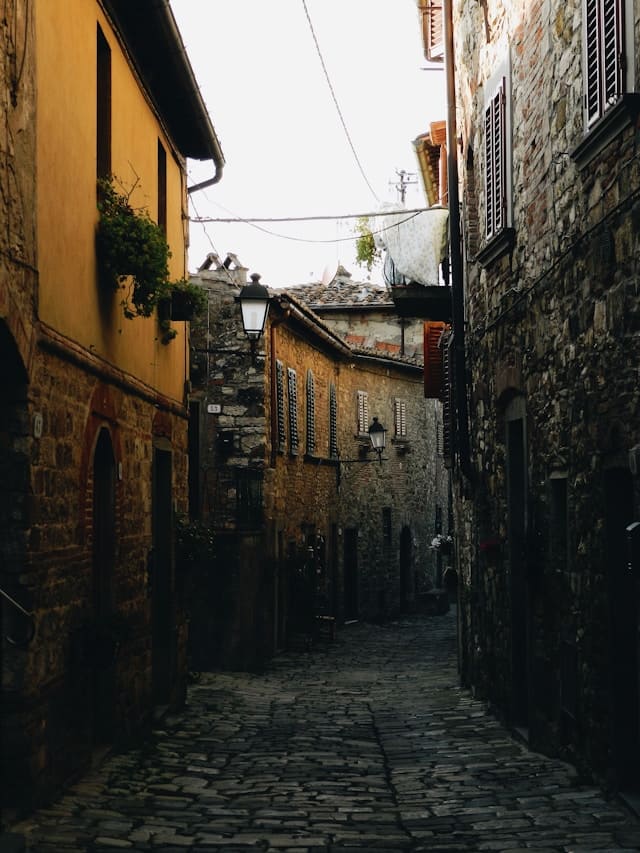
Just a few minutes from Greve, yet infinitely quieter, Montefioralle is one of the smallest and most charming villages in Chianti. Enclosed by a circular wall, it preserves stone houses, very narrow alleys and panoramic views over hills dotted with vineyards.
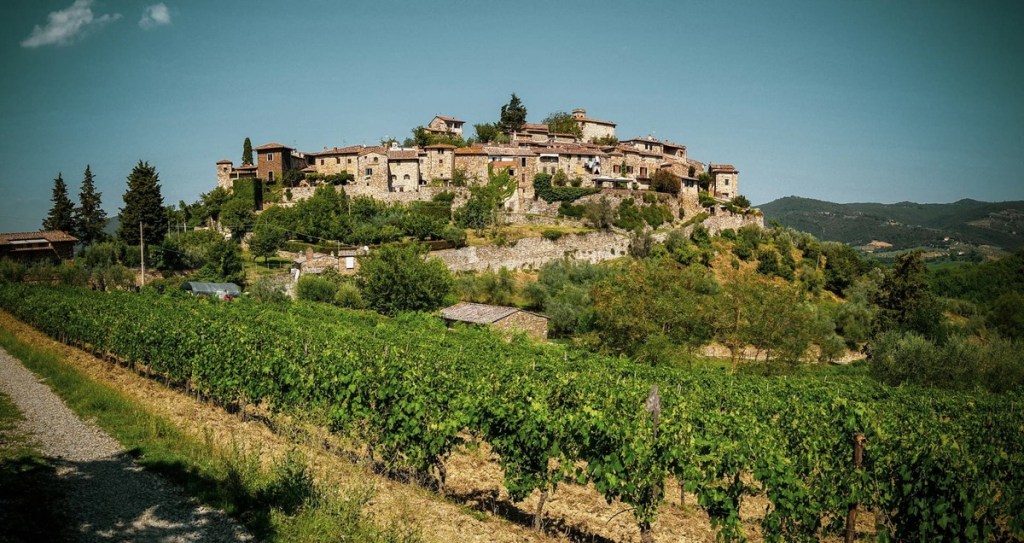
Montefioralle toscana

You don’t come here to “sightsee”, but to slow down. A walk without a destination, a pause on a bench overlooking the vines, perhaps a tasting at a small family-run winery nearby. It is the ideal place for couples seeking an intimate moment off the beaten track, and for those who want to breathe in the most authentic Chianti.

Panzano in Chianti

A livelier yet still deeply local village, Panzano lies along the famous Via Chiantigiana between Florence and Siena. It’s divided between its medieval upper part and the more modern area around the main square, where wine bars and restaurants are concentrated.

It is a perfect stop for those who want to combine wine and gastronomy. Here, the culture of meat is almost a religion, and many trattorias offer excellent interpretations of traditional Tuscan cuisine, paired with the structured reds of the area.A tip? Arrive in the late afternoon, when golden light sets the surrounding hills aglow. An aperitivo overlooking the vineyards, perhaps with a glass of Chianti Classico Gran Selezione, is the best way to finish off your day along the wine routes.

At the Table: What to Eat (and What to Pair It With)

A journey along the wine routes is incomplete without immersing yourself in Tuscan cuisine.

Some of the dishes to try:

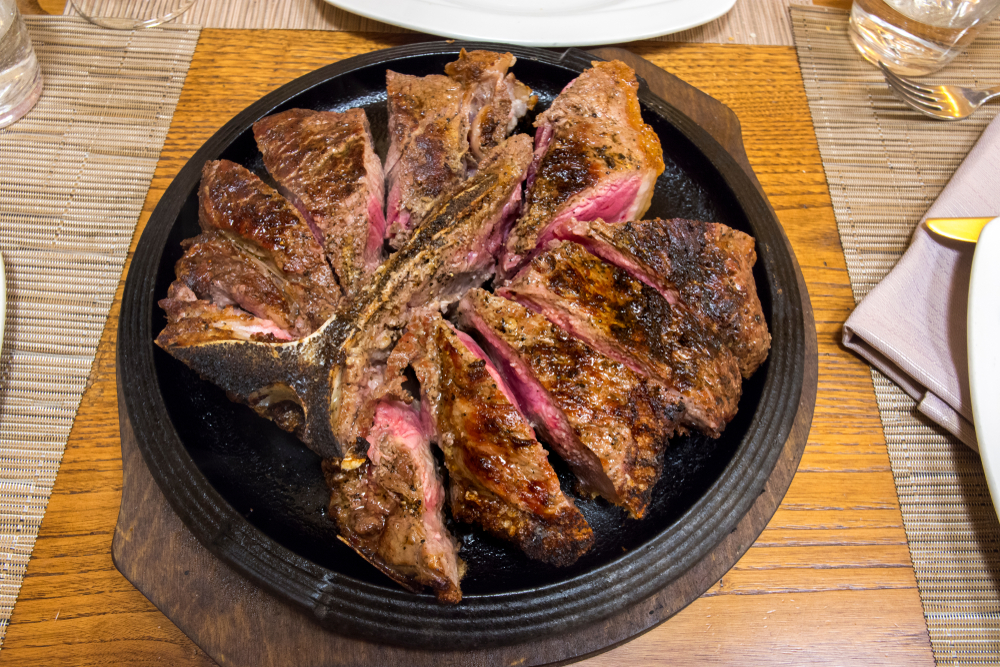
  • Bistecca alla fiorentina, thick and juicy, to be paired with a structured Chianti Classico.
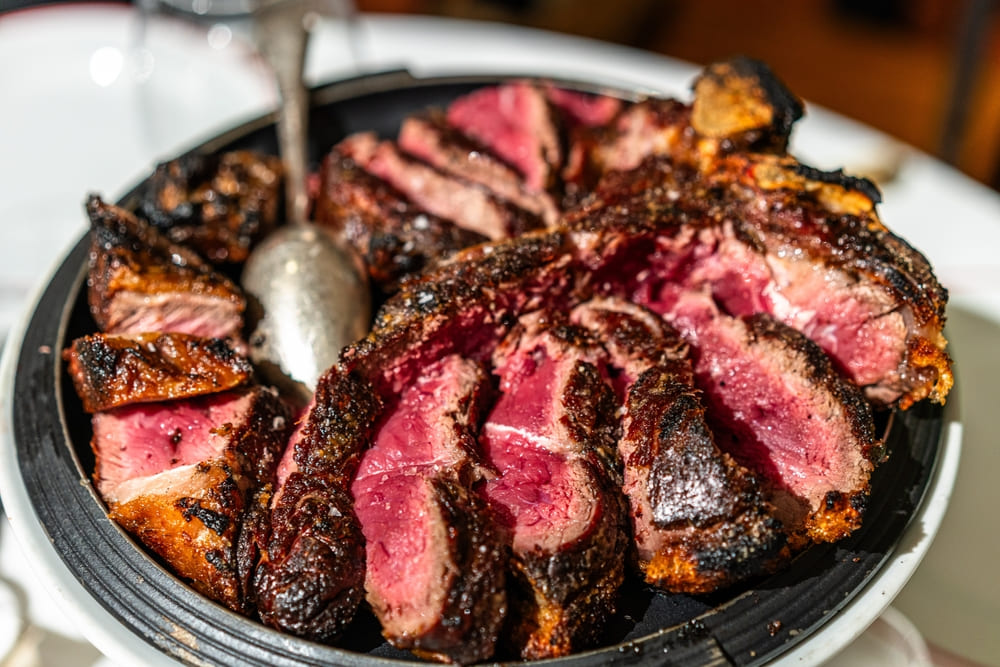
Bistecca alla fiorentina
  • Pappardelle with wild boar, ideal with an intense and spicy red.
  • Ribollita, a rustic soup rich in cavolo nero and beans, perfect with a young, crisp wine.
  • Tuscan pecorino, to be enjoyed with local honey and a glass of red or Vernaccia.

For a memorable lunch, choose a countryside trattoria, perhaps with a panoramic terrace overlooking the vineyards. Often it is the less showy places that deliver the most authentic experiences.

How to Organise Your Trip: Train, Bus, Tour or Car?

One of Florence’s strengths is its strategic position. But what is the best way to explore the wine routes in a single day?

By Car

The most flexible option. It allows you to stop at scenic viewpoints, change your itinerary at the last minute and reach wineries less served by public transport. Ideal for couples or small groups.

With an Organised Tour

Perfect for those who want to taste without worrying about driving. Many tours depart from central Florence and include visits to two or three wineries, a light lunch and a stop in a medieval town.

By Bus or Train

A cheaper solution, but less flexible. Greve is connected by public buses, while San Gimignano can be reached by combining a train to Poggibonsi with a local bus. It requires some planning, but it is feasible.

A practical tip: if travelling by car, it is best to limit tastings or take turns driving. The quality of the wines invites you to toast more than once.

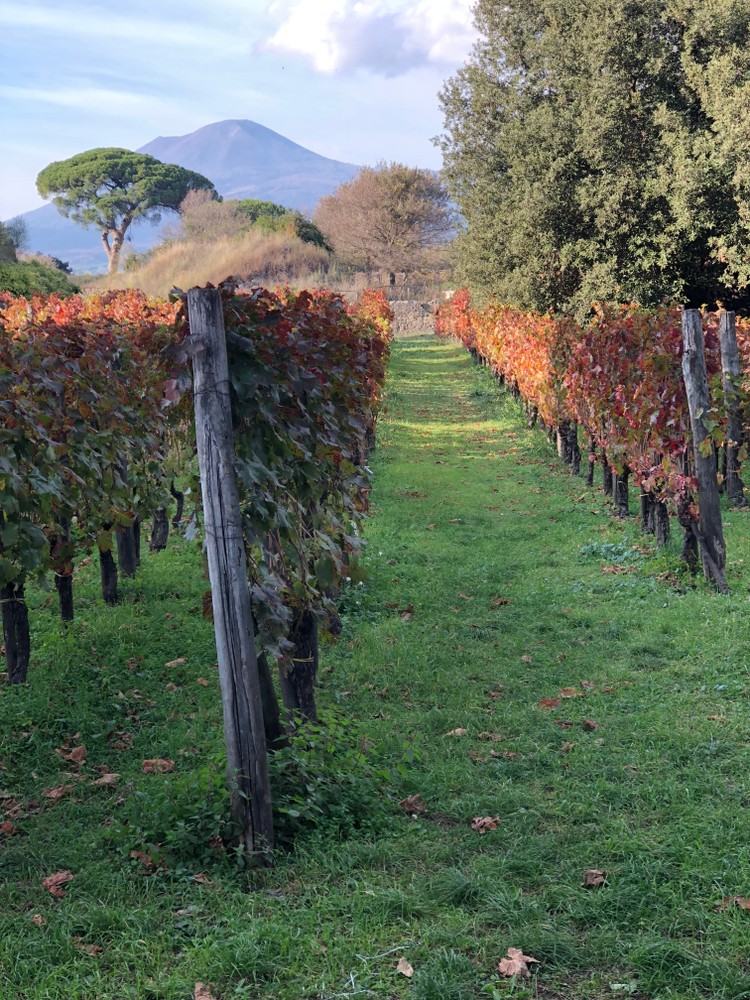
vigneti chianti nebbia

One Day, a Thousand Shades of Tuscany

The strength of a food and wine day trip from Florence lies in the harmonious contrast between art and nature, between city and countryside. In just a few hours, you move from Renaissance geometry to orderly rows of vines, from museum masterpieces to the bold flavours of rustic cuisine.

Read also: Where to eat low cost in Florence

Whether you choose the most iconic Chianti or a lesser-known denomination, whether you opt for a historic winery or a small family producer, the common thread remains the same: the feeling of stepping into a living landscape, where wine is not just a drink but a story of the territory.

Florence is not only a destination: it is a starting point. The gateway to a Tuscany made of rolling hills, villages suspended in time and beautifully set tables.

And if you love discovering places through their flavours, let yourself be inspired by the other Volare articles dedicated to food and wine: new destinations, new glasses, new stories to savour.
In this month of March dedicated to women, we explore European cities through the women who have shaped them — and continue to shape them: goddesses, writers, artists, chefs and pioneers who inspire our journeys.

Exploring a city is never a neutral act. We walk along streets shaped by centuries of history, we look at monuments, museums and squares… but for a long time, that history was almost always told from a male perspective. Today, travelling with a female lens means broadening our focus: discovering the women — real or symbolic — who have helped to build the character, culture and identity of the places we visit.

On the occasion of 8 March, International Women’s Day, we invite you to embark on a different kind of urban journey. Six European cities, six female perspectives, and six ways of understanding travel as an homage to, a discovery and a recognition of women. Because cities can also be understood through them.

Athens, under the protection of Athena

It is impossible to understand Athens without Athena — not only as a mythological figure, goddess of wisdom, strategy and the arts, but also as a founding concept. Athena embodies a form of power that was unusual in the classical imagination: not based on strength, but on intelligence, speech and strategy. Her selection as the city’s protector — over Poseidon — was no coincidence. By offering the olive tree, a symbol of life, work and balance, she defined the values upon which the city would be founded.

Her presence extended far beyond the temples. Athena shaped civic and social life through celebrations such as the Panathenaia, a grand urban festival combining ritual, sport, music and craftsmanship that involved the entire community. During these celebrations, Athenian women played an essential role: they were the ones who wove the sacred peplos offered to the goddess, a collective gesture that united femininity with the city’s very identity.

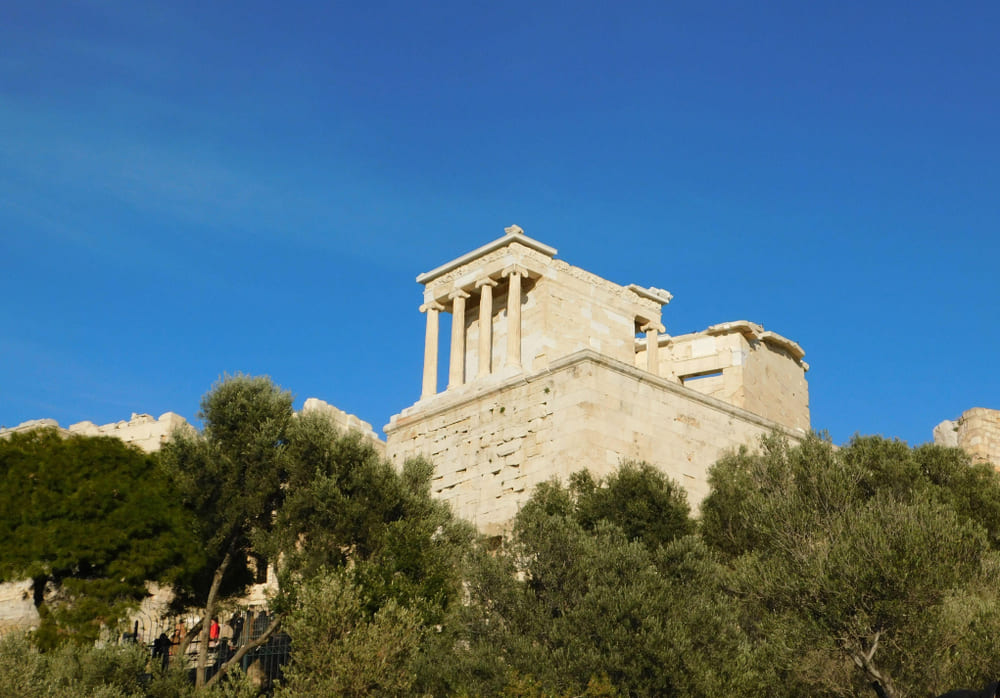
The Temple of Athena Nike, dedicated to victory understood as intelligence and foresight, encapsulates this vision perfectly. Walking through Athens with Athena as your guide means viewing the city from a female perspective that values reflection, creativity and shared responsibility — an invisible yet profound legacy that continues to shape the Athenian spirit.

Templo de Atenea Niké Atenas
Temple of Athena Niké

In a more contemporary vein, there is a figure who perfectly represents Greek female artistic excellence of the twentieth century: Maria Callas. Although born in New York, she trained in Athens and always maintained a deep connection with the city. To connect with her legacy, you can visit the Stavros Niarchos Foundation Cultural Centre, home of the Greek National Opera.

Palermo, popular soul and female voice

Palermo is a city best experienced through the senses: in its markets, its music, its layered and contrasting streets. One of the female voices who best captured this vibrant, popular Palermo was Rosa Balistreri, an iconic singer and figure of Sicilian culture. Through her songs, Rosa gave voice to everyday life, intense emotions and the indomitable character of the island, transforming tradition into a living identity.

ollowing in her footsteps means discovering an authentic and deeply Mediterranean Palermo. The Kalsa district, with its squares opening onto the sea and its creative energy, reflects the free and popular spirit that shaped her work. Historic markets such as Ballarò or Vucciria allow you to understand the city through its bustle, aromas and daily life — elements that inspired so many of her songs. And the Teatro Massimo, the city’s grand cultural temple, symbolises that Palermo where music and emotion occupy a central place.

Visiting Palermo through the eyes of Rosa Balistreri means embracing passion, authenticity and the pride of a city that expresses itself through song.

Florence, power and refinement with Catherine de’ Medici

Born in Florence in 1519 and later Queen of France, Caterina de’ Medici was one of the most notable female figures of the European Renaissance. Raised in the refined humanist environment of the Medici family, she grew up surrounded by art, politics and power — an education that would deeply influence her approach to governance. In France, she not only exerted decisive political influence, but also acted as a patron and ambassador of Italian Renaissance taste, promoting the arts, architecture and cultural life at court.

Today, her Florentine story unfolds through specific places. Palazzo Medici Riccardi, her birthplace, helps us understand the context of power and sophistication in which she was formed. The Le Murate complex, where she took refuge after being orphaned, speaks of a childhood marked by political instability. The Medici Chapels symbolise the historical significance of the family to which she belonged and their artistic legacy.

Florence, seen through Caterina, is a city where power, culture and strategy also had a female face.

Palazzo Medici Riccardi

Curiosity: when Caterina left Florence to settle in Paris, not only did she bring artists and craftsmen with her, but also the refinement of Florentine cuisine. She is credited with introducing new habits, ingredients and a more sophisticated culinary vision to the French court, leaving a lasting influence on the country’s gastronomic culture. Further proof that the Florentine spirit travelled far beyond Italy with her.

Barcelona and the literary voice of Mercè Rodoreda

Mercè Rodoreda is one of the great voices of Catalan literature and a key figure for understanding 20th-century Barcelona. Through novels such as La plaça del Diamant, she portrayed everyday life, memory and the city’s wounds, giving a voice — with unprecedented sensitivity — to female experiences in a Barcelona marked by war and post-war hardship. Few writers have captured the city with such delicacy, and La plaça del Diamant transformed this corner of the Gràcia neighbourhood into a universal literary symbol.

Plaça del Diamant is today a quiet, everyday, deeply Barcelonian place. Walking through the area means stepping into an intimate, feminine and resilient city, far from the major tourist icons.

colometa plaça diamant
Detail of the monument la Colometa, plaça del Diamant

Through Rodoreda, Barcelona reveals itself in details and emotions.

“And I went into Plaça del Diamant (…) and I covered my face with my arms to protect myself from I don’t know what and I let out a hellish scream. A scream I must have been carrying around inside me for many years, so thick it was hard for it to get through my throat, and with that scream a little bit of nothing trickled out of my mouth, and that bit of nothing that had lived so long trapped inside me was my youth and it flew off with a scream of I don’t know what…letting go?”
La plaça del Diamant, Mercè Rodoreda

Madrid, a creative capital in the feminine

Madrid is a city constantly reinvented through its female creators. Painters, illustrators and writers dialogue with tradition while driving the cultural scene towards new forms of expression. A good starting point to understand this energy is the Museo Reina Sofía, where female presence in contemporary art is increasingly visible, as well as creative districts such as Barrio de las Letras or Carabanchel, which have become true artistic laboratories.

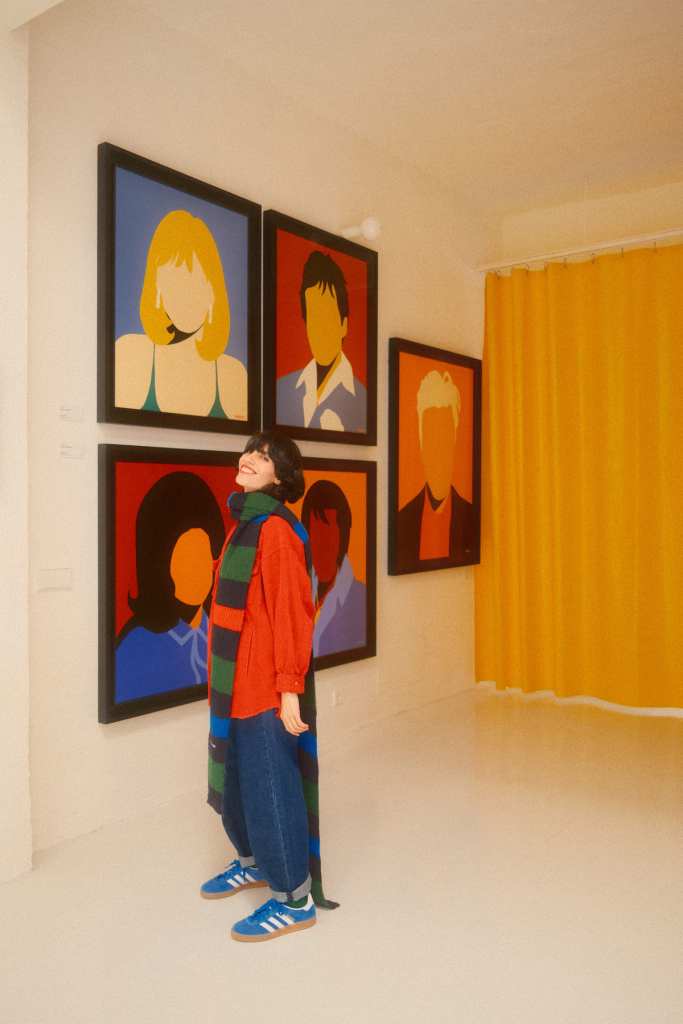
Among the most recognizable voices of this creative Madrid is Valeria Palmeiro, artistically known as Coco Dávez, a multidisciplinary artist based in the capital whose work revolves around colour as an emotional language and identity as her creative territory. Her renowned Faceless series, begun in 2015, proposes featureless portraits where the absence of a face allows us to project ourselves onto others using collective memory and chromatic intuition. Her work has been exhibited in galleries and cultural spaces across different countries and she has collaborated with international brands and institutions.

Madrid is where her work has grown and evolved. The city is not only her home but also her creative laboratory: here she has a studio in Carabanchel, where she develops her artistic practice, offers mentorships and occasionally opens her doors to the public for meetings, visits and cultural events. For her, Madrid represents movement, diversity, community and a constant energy that directly dialogues with her way of understanding art.

Lyon and the flavour of Eugénie Brazier

Lyon is synonymous, among other things, with outstanding gastronomy, and much of this reputation is owed to women. Pioneer chef Eugénie Brazier, the first to earn three Michelin stars, paved the way for the famous Mères lyonnaises. These popular cooks were mostly women of humble origin, who, between the late 19th and early 20th centuries transformed domestic cooking into unpretentious haute cuisine. Having worked as cooks for bourgeois families, many of them lost their jobs due to economic crises or wars and went on to open their own small restaurants.

Their cooking was sincere, generous and product-based, rooted in traditional regional recipes: hearty, well-executed dishes, without artifice. Over time, these establishments became must-stop destinations for travellers, politicians and food lovers, establishing Lyon’s international fame as a culinary capital. Among the most famous were the aforementioned Eugénie Brazier, Marie Bourgeois and Mère Fillioux, who was the mentor of the legendary Paul Bocuse.

During your visit to Lyon, you should not miss a dinner at the restaurant once owned by Eugénie, La Mère Brazier, where traditional cuisine is celebrated as cultural heritage. This local excellence proves that Michelin-starred chefs are not only men.

credits: lamerebrazier.fr

A wish for 8 March

Travelling with a female lens means broadening the narrative, recognising voices have long been overlooked, and celebrating the women who have shaped — and continue to shape — the cities we love to visit.

This 8 March, Volare wishes to see every trip as an opportunity to discover new female role models and that there will be more and more outstanding women shaping the cultural pulse of our cities in the future.

Happy International Women’s Day to everyone!

Seeing Florence from the Arno means discovering its most romantic side: boats at sunset, iconic viewpoints, slow walks and gourmet stops. A visual and sensory journey, perfect for couples and slow weekend getaways.

Florence seen from the water: the city from a different perspective

Florence is a city everyone thinks they know. Museums, churches, Renaissance masterpieces: art is everywhere. But there is another way — more intimate and surprising — to experience it: by following the course of the Arno. The river crosses the city like a narrative thread, reflecting palaces, bridges and golden light, especially in the final hours of the day.

Looking at Florence from the water or walking along its banks allows you to slow down and shift perspective. It’s the ideal dimension for travellers who want to go beyond the classic itinerary, guided instead by light and the gentle rhythm of the river.

On the Arno by boat: Florence at sunset

One of the most evocative experiences is boarding a traditional boat and gliding slowly along the Arno. In recent years, historic barchetti and traditional boats have returned to the spotlight, offering a privileged viewpoint over the city, far from the noise and crowds.

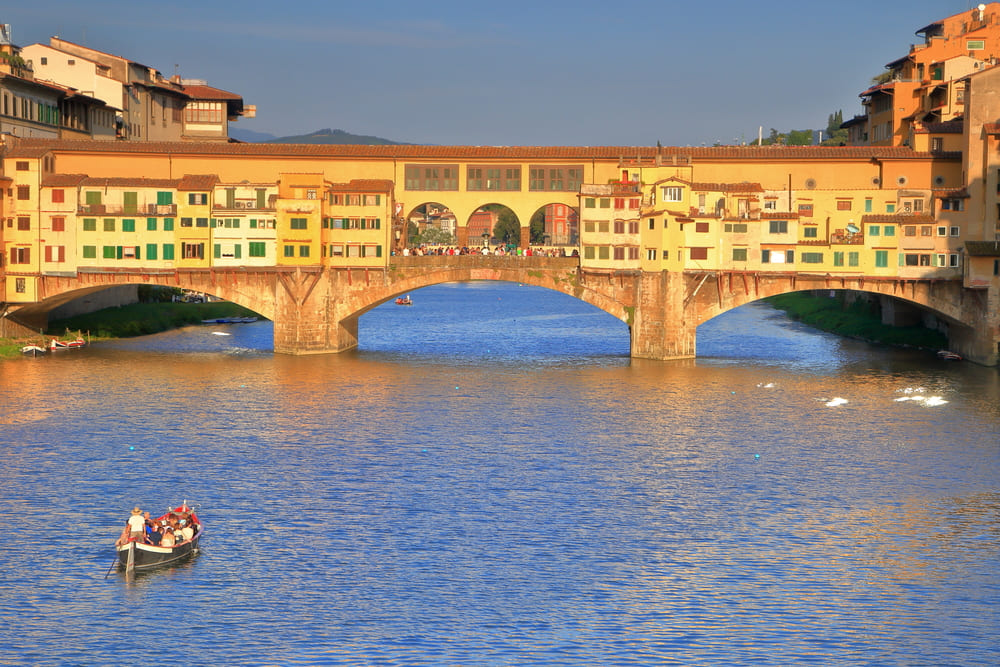
The best time is undoubtedly late afternoon, when the sun lowers and bathes the buildings in golden light. Passing beneath the Ponte Vecchio is one of the most iconic moments: shops suspended above the water, shimmering reflections and the quiet flow of the river create an atmosphere that feels almost timeless.

Boat tours run from May to the end of September, usually lasting between 45 and 60 minutes, and should be booked in advance via the Renaioli website. A tip: choose a tour with an aperitivo on board or one scheduled just before sunset, when the light is at its best.

arno con barca e ponte vecchio luce del tramonto

The best viewpoints from which to admire Florence

Seeing Florence from above is almost a ritual — and doing so at sunset makes it even more special. Among the most famous viewpoints is Piazzale Michelangelo, easily reached on foot or by bus. From here, the view stretches across the entire city: the Duomo, the Arno, its bridges and the surrounding hills. Arriving a little early is recommended, to find a good spot and watch the gradual change of light.

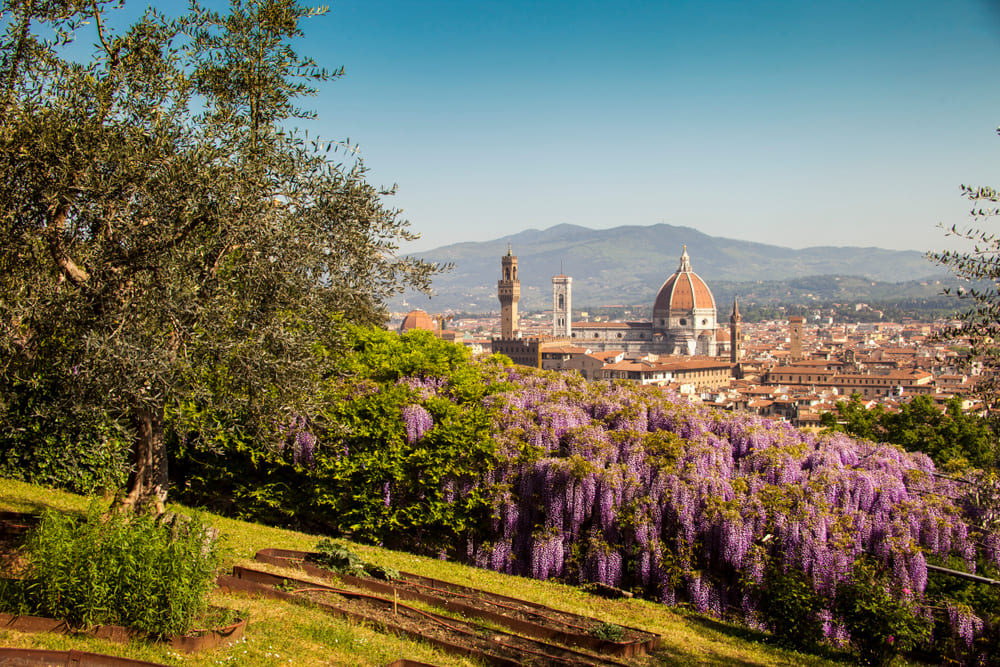
For a more intimate atmosphere, the Giardino delle Rose (Rose Garden) is a perfect choice. Small, well kept and free to enter, this park offers a romantic view over the city among pergolas and seasonal blooms. Nearby, the Giardino Bardini provides one of Florence’s most elegant panoramas: baroque staircases, wisteria (spectacular in spring) and picturesque vistas.

panorama firenze da giardino Bardini

These spots are ideal for memorable photos — but above all, for pausing in silence and watching Florence slowly change colour.
Walking along the Arno: slow and scenic routes

Following the Arno on foot is one of the most enjoyable ways to explore Florence at an unhurried pace. A simple yet scenic route starts at Ponte alle Grazie, crosses the historic centre and continues to Ponte Santa Trinita, often considered the city’s most elegant bridge.

This stretch is especially beautiful in the late afternoon: lights begin to glow, the riverbanks come alive and the water reflects the façades of the palaces. Along the way, there are plenty of opportunities for a gastronomic pause.

Where to stop for an aperitivo or gelato

  • Golden View Bar: directly overlooking Ponte Vecchio, ideal for an aperitivo with a view, especially at sunset.
  • La Terrazza Rooftop: a stylish rooftop terrace for an evening drink with views over the Arno.
  • Gelateria dei Neri: one of the city’s most loved gelaterias, perfect for ending the walk on a sweet note.

Sitting down, watching the river and the world go by is an essential part of the experience.

More experiences along the Arno: bridges, hidden corners and iconic photos

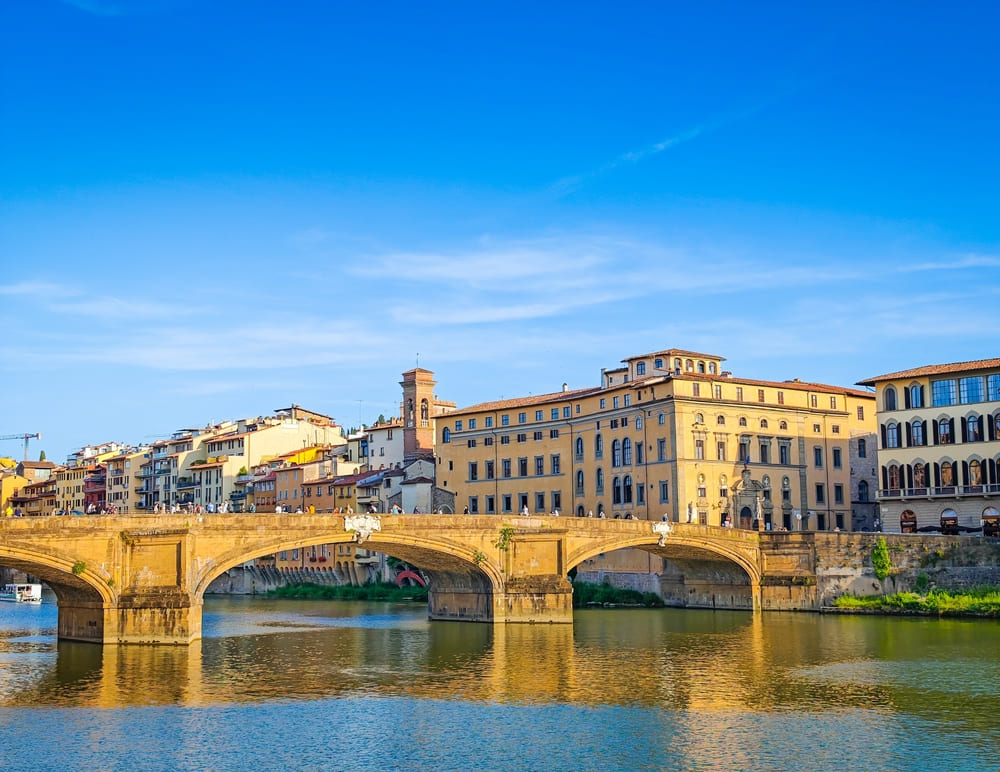
Beyond walks and boat rides, the Arno offers a series of small, memorable moments — perfect for those who love observing and photographing the city. The bridges, in particular, act as true urban viewpoints. Ponte Santa Trinita is considered one of Florence’s most elegant bridges: from here, you’ll find one of the most harmonious views of Ponte Vecchio, especially at sunset. Ponte alle Grazie, on the other hand, offers a wider perspective of the river and the cathedral’s dome, preferably early in the morning when the light is soft and the city still quiet.

ponte santa trinità firenze

For those seeking less crowded spots, it’s worth heading towards Ponte alla Carraia, where you can capture beautiful evening reflections and a more everyday Florence, far from the picture-postcard spots. The banks of the Oltrarno district, particularly the stretch between Ponte Vecchio and Ponte alla Carraia, are perfect for stopping for a few minutes, watching the water flow and noticing architectural details often overlooked.

A photography tip: wait for the moment when the streetlights come on and the sky turns a deep blue. This is when Florence becomes more intimate and the Arno transforms into a mirror, offering evocative images that can be captured even without a tripod or professional equipment.

Florence beyond classical art

Experiencing Florence from the Arno means changing your perspective: not just works of art, but reflections on the water, shifting light and unexpected moments of silence. It’s a more sensory, romantic and visual Florence — one that invites you to slow down and observe.

Perfect for couples, weekend escapes and slow travellers, this perspective reveals a city that unfolds gradually, following the course of the river. An invitation to return — perhaps at the next sunset — to see Florence once again, but from a different angle.

Unmissable exhibitions ranging from the Renaissance to modern art: from Beato Angelico to Toulouse-Lautrec, to the contemporary installations at Sant’Orsola. Florence in autumn comes alive with art and wonder.

Why is Florence in autumn the perfect destination for art lovers?

As the days get shorter and the squares are filled with the aroma of roasted chestnuts, Florence shows itself in a new light. With the summer crowds gone and life taking on a slower pace, the city of the Medici becomes a more intimate place, where you don’t just admire the art – you breathe it in.

ponte Vecchio autuno firenze

You never need an excuse to return to Florence, but autumn does give you one more reason: it’s the season of the grand exhibitions, when the museums and historical palaces are transformed into stages of a sensory journey between past and present. This year, the star of the show is undoubtedly the exhibition dedicated to Beato Angelico, but you can also step into the fascinating world of the Paris of the Belle Époque or admire the contemporary art blooming within the walls of Sant’Orsola.

Who was Beato Angelico and why is this such a unique event?

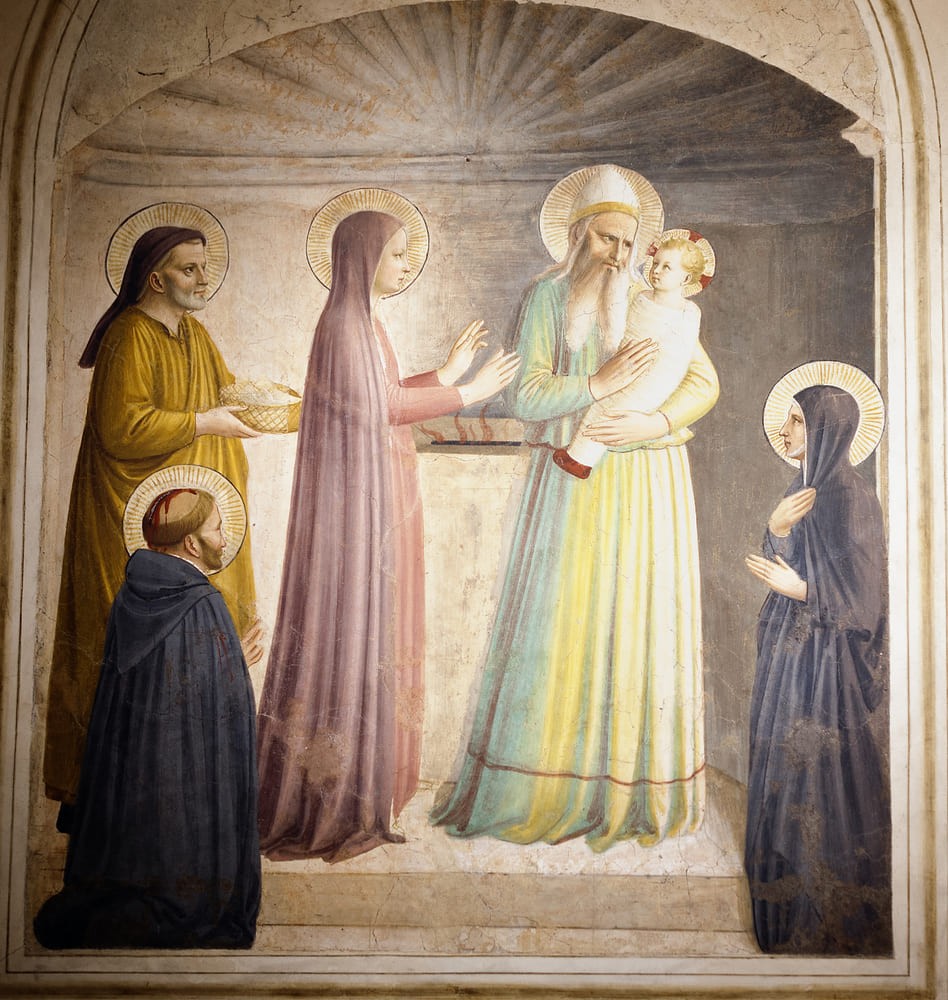
Fra Giovanni da Fiesole, better known as Beato Angelico, was a figure who embodied the essence of the Early Renaissance: a mystic and an innovator, he was both devout and visionary. His works seem to be suspended between heaven and earth, capable of speaking to both religion and to human sensitivity.

From 26 September 2025 until 25 January 2026, Palazzo Strozzi and the Museo di San Marco are hosting the exhibition Beato Angelico, a monumental project involving over four years of planning, bringing together more than 140 works on loan from museums all around the world, including the Louvre, the Metropolitan in New York, the Gemäldegalerie in Berlin and the Vatican Museums.

This is Florence’s first major monographic exhibition dedicated to the artist in 70 years, curated by Carl Brandon Strehlke, together with Angelo Tartuferi and Stefano Casciu.

Palazzo Strozzi

What makes this exhibition so special?

It’s the dialogue that makes the exhibition such an extraordinary experience: a dialogue between institutions (Fondazione Palazzo Strozzi, Ministry of Culture, Museo di San Marco) but also between periods and sensibilities. The event is being held across the two venues, creating a bridge between the sacred and the human, between art as a prayer and art as a quest for harmony.

You can admire restored masterpieces and altarpieces reunited after centuries dispersed, discovering how Angelico was able to merge gothic grace with Renaissance perspective. His portrayals of the Madonna, immersed in a divine-like light, envelop you in a silence that invites you to reflect.
It’s said that Beato Angelico never began to paint without praying first. Perhaps this is why, even today, we can sense a kind of inner peace when we look at his works.

dipinto beato angelico

And what if you want to move into a different period, from the Renaissance into the Paris of the Belle Époque?

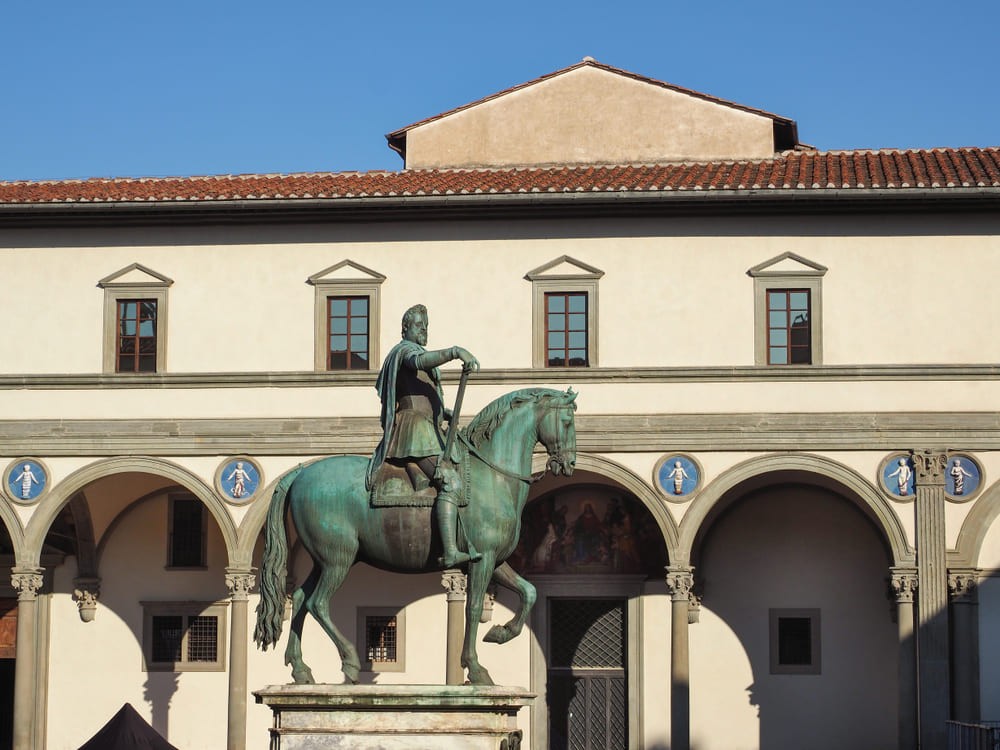
Just cross the Arno and make your way to the Museo degli Innocenti, which from 27 September 2025 until 22 February 2026 is hosting the exhibition Toulouse-Lautrec. A journey through the Paris of the Belle Époque.

Over 170 works, including posters, lithographs, drawings and paintings, tell the story of the vibrant, chaotic world of the Montmartre cabarets, with the Moulin Rouge dancers, the bohemian artists and the energy of Parisian nightlife.

Henri de Toulouse-Lautrec, with his ironic and compassionate perspective, was the master chronicler of that era in which art and life were deeply intertwined. The exhibition is enhanced by period furnishings, photographs and costumes, for a truly immersive experience in which you’ll smell the aroma of the wine and hear the sound of the violins of 1890s Paris.

Museo degli Innocenti Firenze
Museo degli Innocenti

Did you know? In spite of his short stature and physical afflictions, Toulouse-Lautrec was a staunch regular of the café-concert. He liked to say that “life should be lived like a poster”, and through his posters he made it eternal.

Is there also room for contemporary art in this Florence so steeped in history?

Absolutely! As you’ll see at the wonderful exhibition Sant’Orsola – The Rose That Grew From Concrete, running from 5 September 2025 until 4 January 2026 at the Museo Sant’Orsola.

This is an unusual venue, a former convent in the heart of the city, which has been undergoing a symbolic and physical rebirth for years. In anticipation of the official reopening of the complex, thirteen international artists have transformed the site into a laboratory of creativity and memory.

The works, all site-specific, converse with the marks of time: peeling walls, cracks, rough surfaces. It’s a powerful tale of resilience, where the damaged concrete becomes a metaphor for a beauty reborn even in the toughest conditions.

An interesting fact: The title of the exhibition, The Rose That Grew From Concrete, takes its name from a poem by the African American artist Tupac Shakur, a symbol of the strength that can emerge from hardship. A perfect message for the new face of Sant’Orsola.

How can you make the most of an autumn art weekend in Florence?

Take your time, as you should always do with precious things. In the morning, have a coffee in Piazza della Repubblica, as the city wakes up to the aroma of croissants and the footsteps echoing on the cobblestones. Then make your way to Palazzo Strozzi to soak up the reflective atmosphere of Beato Angelico.

Piazza della Repubblica Firenze dall'alto
Piazza della Repubblica

Thanks to direct connections with Florence Airport – Amerigo Vespucci, just a few minutes from the centre, getting to the city is easy and convenient: the art awaits you almost as soon as you land.

In the afternoon, step into the more vibrant and colourful past with Toulouse-Lautrec at the Museo degli Innocenti: an explosion of light, laughter and nostalgia for a lost world.

And to finish off the day, there’s nothing more evocative than a stroll to Sant’Orsola, through the streets steeped in history, to discover how contemporary art still knows how to surprise us, even between scaffolding and concrete.

Why visit Florence specifically in autumn and winter?

Because this is the time of year when Florence shows its unhurried, authentic side. The museums aren’t busy, the lights of the palaces shine brighter at dusk, and every exhibition offers a warm refuge in which to discover the pleasure of a slower pace.

Florence is not an open-air museum alone: it’s a treasure chest from which gems are revealed one by one, between a cup of hot chocolate and a visit to a gallery.

panorama firenze fiori

“Art is not what you see, but what you make others see”, wrote Edgar Degas. And in autumn, Florence makes us see, and feel, all the silent power of beauty.

Whether you come for the weekend or for longer, Florence at this time of year does not merely exhibit masterpieces: it narrates them, lives them, transforms them. So are you ready to fall under its spell?

To find out more about the city’s museums, you can also read our article on the Uffizi and other unmissable museums in Florence.

Ever dreamt of spending Christmas in one of the most beautiful and welcoming cities in Europe? Our best destinations are packed full of beauty, festive atmosphere, and energy to start the New Year off on the right foot.

Some people are crazy about Christmas markets, mulled wine, and local artisan products. Others cannot wait to pick up their skis and hit some breath-taking slopes. Others prefer to escape to warmer climates by the sea. Let’s not forget those who love Christmas lights and nativity scenes, or those who are waiting for the holidays to have some uncomplicated fun.

Whatever your idea of the ideal Christmas holiday, this festive season is a unique opportunity to explore the length and breadth of Europe, see places close to your heart or discover new destinations that have been on your wish list for a long time. Have a look at our suggestions to plan your Christmas trip.

Prague: a fairy-tale Christmas

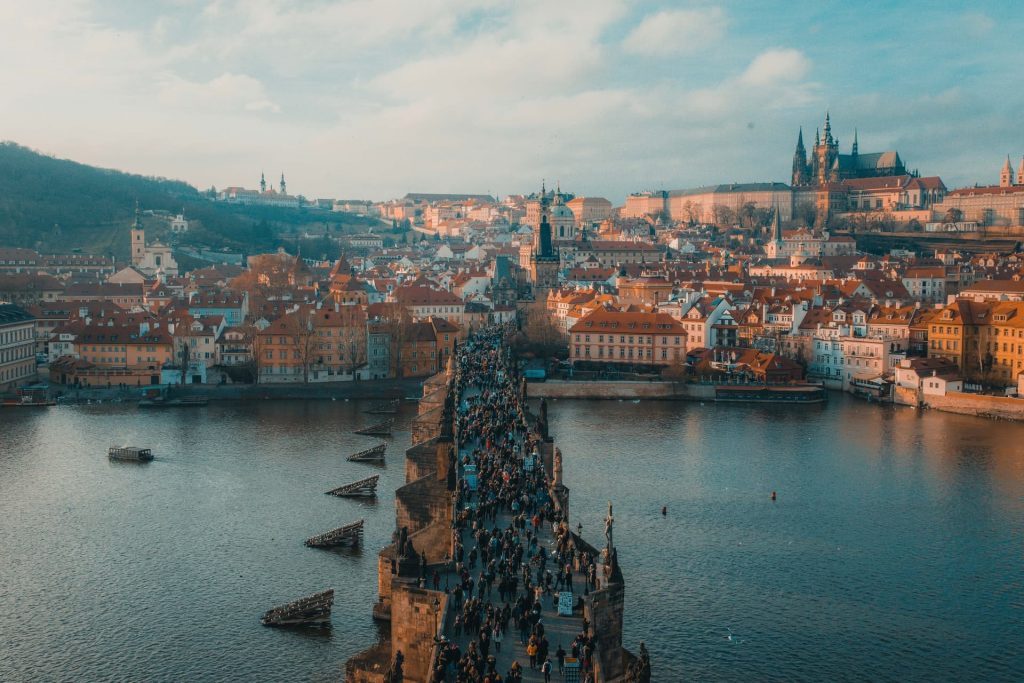
Prague is a city that casts a magic spell on its visitors. Whether you are crossing the Charles Bridge, wandering around the Jewish Quarter or Malá Strana, or admiring the hilltop castle view, you will feel like you have been transported into a fairy-tale. At Christmas, Prague’s magic knows no end: wonderful lights, artisanal markets, ice rinks, and Nativity scenes are all irresistible attractions for Christmas lovers. 

Our recommendations for spending Christmas in Prague:

  • Visit the Christmas markets: there are many scattered through the city centre, but the main (and unmissable) ones are those in Wenceslas Square and the Old Town Square, just a few minutes apart. This year they should be open every day from 29 November 2025 until 6 of January 2026. Not only will you have an array of souvenirs to pick from, you can also enjoy local delicacies like klobása (grilled sausages), perníčky (spicy gingerbread) and warm yourself up with svařák, a local mulled wine. If you are bringing the kids, the Old Town Square market has an animal stall where they can pet sheep, goats, and donkeys. 
  • What would Christmas be without carols? School choirs and folk groups in traditional dress perform every afternoon in the Old Town Square. Taking part in these performances is a great honour for children, who travel from all over the country to take part.
  • Go to a classical music concert or see an opera or a ballet at the National Theatre, the Opera House, the Castle or at one of Prague’s historic churches. You’ll feel as if you were in an eighteenth-century novel – all you’ll need is a carriage to top it off!

Venice: skiing down World Heritage mountains

piste sci cortina

When you think of Venice, the first thing that comes to mind is the wonderful ‘City on Water’ with its canals, streets, and history. But Venice is also the starting point for those travelling to the mountains, seeking fantastic ski resorts aimed at winter tourism. If you would like to spend Christmas on the slopes, rent a car at the airport, take motorway A27 from Mestre, and drive to Belluno. From there, take the national road to Cortina d’Ampezzo, Zoldo Alto, or Folgaria (Trentino).

These are some options for more or less experienced skiers:

  • Great War Ski Tour: this is one of the most spectacular ski circuits in the area, designed to explore the locations where, between 1914 and 1918, Austrian and Italian soldiers fought a devastating war in between the peaks. The entire circular route can be completed in 8 hours, and you will be able to see shelters, trenches, and cannons. You can start from any of these towns: La Villa, San Cassano e Armentarola in Alta Badia, Arabba, Malga Ciapela, Alleghe, Selva di Cadore, and Passo Falzarego.
  • Nordic skiing on the Asiago Plateau: in this area surrounded by seven towns, lovers of cross-country ski will find 500 km of perfect tracks to get away and relax on the peaceful mountains.
  • Glamour and après ski in Cortina, the Queen of the Dolomites. If you believe that the real fun begins when the skis come off, you will love Cortina. This mountain village is not only surrounded by amazing landscapes and beautiful districts, but it is also the most fashionable and prestigious ski location in the country. If you want to be in the in-crowd and are not intimidated by crazy prices, this is the right place for you.
  • From Arabba, a little gem set in the Fodom Valley, in the splendid, adventurous Belluno Dolomites, you can see two of the area’s most famous massifs: the Sella and the Marmolada, the highest mountain in the Dolomites (3,343 m). From the village, skiers can enjoy the Arabba-Marmolada ski area, offering snow enthusiasts over 60 km of pistes, and set off to explore the Sellaronda ski tour.
Bari: Christmas traditions and culture

orecchiette bari

In recent years, Puglia has established its reputation as an ideal destination for summer holidays thanks to an irresistible mix of beautiful beaches, cultural cities, fantastic food, and lively culture. But, although most people think that Puglia is synonymous with beach life, it should not be overlooked as a Christmas destination. For example, its capital, Bari, is a beautiful city with deeply embedded traditions, which means Christmas is always a thrilling experience there. We recommend spending a weekend there over the holidays, so you have time to explore the city and the outskirts.

  • Spend a day discovering the wonders of the historic quarter, Old Bari. The narrow alleys, palaces, and churches decorated with stunning Christmas lights that create a fantastic atmosphere. But don’t forget about the people: chat with the people on the famous delle Orecchiette (via dell’Arco Basso) who continue the ancient tradition of hand-made pasta. Bari’s churches are perfect examples of the Puglia Romanesque and beloved by the Pugliesi, and at Christmas they are full of people and ambience.
  • Taste the traditional Baresi Christmas sweets, fragrant fritters cover with sugar and honey, or soaked in mulled wine. And, of course, enjoy the Bari focaccia, perfect for breakfast, lunch, dinner, and as a snack!
  • Take a couple of days to explore the Bari area which is full of interesting places: Polignano a Mare, Alberobello, Putignano, Trani, Giovinazzo, Locorotondo, Cisternino, and more. You really are spoilt for choice because the local towns and villages are all beautiful, and you will avoid the summer crowds.
alberobello puglia
Alberobello

Strasbourg and the magic of Alsace

strasburgo natale

Wooden houses, colourful façades, the smell of cinnamon in the air, lights, decorations, and snow-covered streets. At Christmas-time, Alsace districts look straight out of a fairy tale. Few places in Europe take Christmas so seriously and are so warm and poetic as this French region. These are the places to visit when you travel to this magical destination:

  • Visit the wonderful Strasbourg markets: It’s no wonder the city has been named the ‘Christmas capital’. From 26 November to 24 December 2025, you’ll be able to explore the oldest Christmas market in France, Christkindelsmarik, dating back to 1570, with 300 stalls all over the old town centre. The mystical atmosphere with carols in the background, the smell of sweets and the twinkling lights will bring back happy childhood memories. One sight to see, in the central Place Kléber, where the market ends, is one of the biggest Christmas trees in Europe.
  • 60 km from Strasbourg is Colmar, one of the most famous towns in Alsace with its wooden houses with brightly-coloured buildings, cobbled streets, and gorgeous canals. It’s a day trip from Strasbourg, so enjoy the local delicacies and take lots of photos! n Colmar too, you’ll find picturesque Christmas markets from 25 November to 29 December 2025.
  • The Alsace Wine Route, a must for wine lovers, goes through beautiful Disney-like villages that are perfect to make a stop at and get into the Christmas spirit. Eguisheim, Kaysersberg, and Riquewihr are just some examples.

Christmas in Bilbao for Foodies

bilbao panorama notturno

Bilbao is the ideal city for those who want to discover the wonders of Basque gastronomy, one of the most highly rated in Europe. In addition to being a leading destination for lovers of architecture and contemporary art, Bilbao is in the culinary avant-garde. Traditional pintxos bars can be found alongside Michelin-star restaurants that experiment mixing old and new recipes. Christmas is the perfect time to enjoy the local cuisine and atmosphere.

  • To bring together culture and food, visit the Guggenheim Museum and then stop at one of the many wonderful restaurants nearby. Learn more about them in this post.
  • Nativity scenes are a strong tradition in Bilbao. Every year, Paseo del Arenal hosts a display of Nativity scenes, created by expert artisans from the Bilbao Nativity associations. Don’t miss the chance to discover this ancient art.
  • Enjoy the winter sea. There are so many unspoilt beaches near Bilbao, perfect for long, rejuvenating walks. Or, if you are brave enough, you can try surfing the Atlantic waves.

An “exotic” Christmas in Athens

athens christmas panorama

Apart from the Acropolis, one of the first things you probably associate with the city of Athens is the Aegean Sea and its wonderful islands. But don’t make the mistake of thinking that Athens is only a summer destination: the warm climate and lively cultural scene make the Greek capital an extremely attractive destination all year round. Visit Athens at Christmas and you’ll have the chance to enjoy the birthplace of Ancient Greece and its dynamic districts shrouded in a Christmas atmosphere. Apart from setting off to discover the archaeological remains of ancient Greece, there are other unmissable experiences in Athens during the Christmas period:

  • You will find Christmas stalls scattered all around the city, especially in Monastiraki, one of the most attractive squares in Athens. The particularly lively and colourful Athens Christmas market is a great place to discover traditional products and a wealth of local artisan goods, while you admire the impressive backdrop of the Acropolis. Don’t miss the enormous Syntagma Square, with its magnificent lights and impressive Christmas tree.
  • For the kids, a visit to the Fairy-tale Forest, a sort of theme park set up in the national public gardens is a must. There, they can have hours of fun and learn about traditional Greek fairy tales and those from other countries, among fairy houses and workshops where they can make their own dreams come true.
  • If skiing is what you want, you’ll be happy to know that not far from Athens there are some enticing mountains. The most famous is Mount Parnassus, less than two hours from the capital, where you will find a fully equipped ski resort. Located at an altitude of 2,250 m, more than twenty ski slopes wind their way down it.

Kid-friendly Christmas in Nantes

machines nantes

There are few cities in Europe that can make children’s imaginations soar like Nantes. The city holds many attractions and cultural spaces designed for kids, from the Jules Verne Museum to the Carrousel du Monde Marin merry-go-round, but most of all the incredible “machines”, gigantic mechanical works that parade around the city. At Christmas, these attractions are even more unmissable owing to a series of fantastic initiatives.

  • The Christmas event at the Galerie des Machines (“Machine Gallery”) is called Noël aux Nefs and is on throughout the Christmas holidays. The Galerie and the workshop where they test the contraptions made by the La Machine company, a bestiary of machines that includes giant birds hanging from the ceiling, frogs, ants and most importantly an enormous elephant. The end-of-year gallery exhibition is particularly magical owing the Christmas exhibition, with fir trees, light displays, chocolate and vin brulé… A truly unique family experience!
  • And those aren’t the only options for family fun: merry-go-rounds, circus shows, ice sculptures and workshops are just a few of the many Christmas events included in the Les Machines de l’île project.
  • In Nantes art is everywhere: after having strolled along the central Rue des Nefs with the kids, among the colourful lights and Christmas trees, set off to discover Le voyage a Nantes, a very interesting artistic tour that will allow you to admire the most striking places in the city and various artistic installations. To get your breath back and enjoy a while in the warm after your walk, go to one of the many bars in the centre for an excellent hot chocolate.

Christmas within a nativity scene in Naples

Spending Christmas in Naples means diving into the traditions and beliefs associated with this time of year, which here is a visceral feeling and experience for the locals. Where else could you find a street dedicated exclusively to figurines and accessories for every kind of nativity scene? San Gregorio Armeno has become world famous for its artisans who bring their (often strange and amusing) creations to life. Every year, millions of tourists flock to this street, dying to see this ancient art for themselves. Naples is the capital of the nativity scene, so if you happen to be in the city during the festive season you can’t leave without seeing some of the most spectacular, such as the ones at the Museum of San Martino or the one in the Palatine Chapel in the Royal Palace. But this city is a bottomless treasure chest of suprises, and there are countless other things you can do during your Christmas break:

  • Try the delicious (and substantial) Neapolitan Christmas fare. The exquisite struffoli (deep-fried dough balls coated in warm honey and decorated with pieces of candied fruit and colourful sprinkles), the mustaccioli (diamond-shaped biscuits made with a honey-flavoured soft dough and glazed with chocolate), capitone (eel), escarole pie … be prepared to go home a couple of kilos heavier!
  • The historic centre of Naples, Forcella and the Spanish Quarters are even more chaotic, vibrant and colourful at Christmas than at other times of year. Strolling through the narrow streets of the centre of Naples, a UNESCO World Heritage Site, full of picturesque little corners, means soaking up the true festive atmosphere that has made this city so popular the world over.
  • And how could we not mention the legendary Neapolitan tombola? The ultimate festive game, this kind of home version of lotto dates back to ancient times and can entertain both young and old for hours. Did you know that every number from 1 to 90 has a meaning attached, which is usually playful? You just need to try your luck, perhaps by equipping yourself with the traditional Neapolitan lucky charm: the horn.

A Renaissance Christmas in Florence

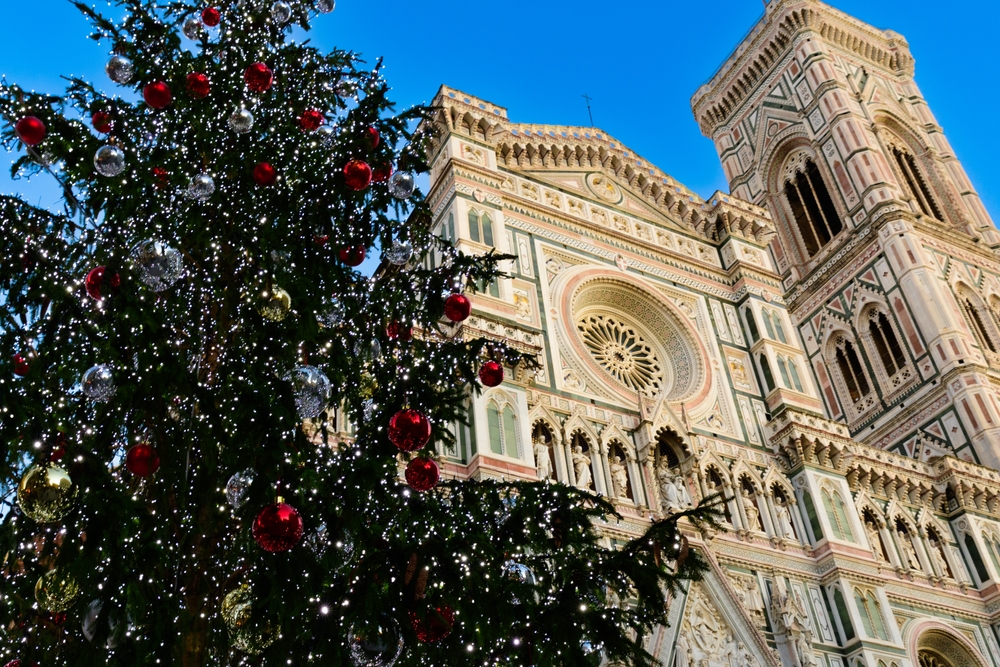
christmas tree florence

Florence is one of Italy’s most beautiful cities and at Christmastime it becomes a magical place with its lights decorating the historical streets, the squares and the Renaissance monuments. The festive atmosphere combines with the cultural wealth of the city, enabling you to enjoy its artistic splendour and soak up the Christmas spirit. Here are some suggestions for enjoying the magnificence of Florence to the full at Christmas:

  • Stroll through the Santa Croce Christmas Market: inspired by the traditional markets of Germany, this Christmas market sells a wide range of artisan products, Christmas decorations and local delicacies.
  • Visit Florence Cathedral (Il Duomo): attending Christmas Mass in this majestic cathedral is a very special spiritual experience. The solemn atmosphere and architectural beauty in this place of worship offers both the faithful and tourists a unique opportunity.
  • Go ice skating on Italy’s largest rink: during the festive season, in the city’s Parco delle Cascine, a huge ice rink is installed, covering over 1300m2, within a Christmas village that also features a Ferris wheel and numerous other activities for children. 

Christmas in lights in Lyon

light festival lyon

Lyon is one of those cities that shines with a special light at Christmas, and that’s not just a metaphor. In December, Lyon can be seen in all its glory as it invites you to go on a sensory journey, with lights, music, food and a friendly atmosphere, where the magic of the season oozes from every corner of the city.

Here’s what to do in Lyon at Christmas:

  • Enjoy the Fête des Lumières: there’s no better time to visit Lyon than in the month of December, when the city holds its famous Festival of Lights. This event, taking place from 5 to 8 December 2025, turns Lyon into a place of your dreams, with projections and light shows on its main monuments. The most iconic include the Basilica of Notre-Dame de Fourvière and the Place des Terreaux, where the lights play with the architecture to create a hypnotic visual spectacle. 
  • Enjoy the Christmas concerts and performances: during the festive season, Lyon has a rich programme of concerts, opera and ballet. The Lyon Auditorium and the Lyon Opera House often stage classical music concerts, with typical seasonal works such as Handel’s Messiah or The Nutcracker. Going to one of these events is a wonderful way of immersing yourself in the elegance and musical tradition so characteristic of this city.
  • Try the local cuisine: Lyon is famous for its food, and what better time than Christmas to enjoy a wholesome dinner in one of its welcoming restaurants or bouchons (typical restaurants)? Make sure you try the excellent tablier de sapeur (a speciality consisting of tripe marinated in white wine and cooked in a broth), or a platter of local cheeses.

Do you feel the urge to pack your Christmas spirit in your suitcase and go on an unforgettable trip? If you need more inspiration, take a look at all the Volotea destinations and look out for our next posts. We will continue to give you suggestions to set your winter off right!

Autumn is a season of transformation. The crisp air, lively foliage and promise of cosy evenings by the fireplace make it the ideal time for an escape. As the summer crowd disperses before the cold of winter arrives, autumn offers a unique blend of experiences.

This is the season when the colours of nature shine brightest, with landscapes painted in shades of gold, red and orange. It’s also a time when local cuisine thrives, with harvests bringing the best of the season to the table. Whether you want to savour fine wines, enjoy tranquil beaches, or explore cultural wonders, autumn has something for everyone. Here are six Volotea destinations that capture the essence of this enchanting time of year.

Naples, Italy: living history and authentic flavors

Naples, located in southern Italy, is a vibrant city where history, culture, and gastronomy intertwine at every corner. With views of the imposing Vesuvius and as a gateway to the Amalfi Coast, it is a fascinating destination to discover at any time of year. Neapolitan autumn, with mild temperatures and a calmer atmosphere than in summer, is the perfect moment to explore its cultural and culinary richness.

Why Naples is perfect in autumn:

  • Exploring Pompeii and Herculaneum: the ancient Roman cities, buried by Vesuvius’ eruption, can be enjoyed without the intense heat or summer crowds.
  • Pleasant climate: autumn offers mild days, ideal for strolling through Naples’ historic center, a UNESCO World Heritage Site.
  • Neapolitan gastronomy: taste authentic pizza in its city of origin, along with traditional dishes such as sfogliatella or pasta alla genovese.
  • Excursions to the Amalfi Coast: with fewer tourists, the towns of Amalfi, Positano, or Ravello are more accessible and authentic.
  • National Archaeological Museum: admire one of the world’s most important collections of Greco-Roman art, without the long high-season queues.
  • San Gregorio Armeno: in autumn, nativity-scene and sacred art enthusiasts can stroll along this famous street, discover its artisan workshops, and get ahead with Christmas shopping before it fills with thousands of visitors in December.

Bordeaux, France: a wine lover’s and culinary paradise

castello vigneto bordeaux

Bordeaux, located in the southwest of France, is synonymous with world-class wines and gourmet cuisine. Autumn in Bordeaux is particularly special because the vineyards come alive with the harvest season, offering an immersive experience in the art of winemaking.

Why Bordeaux is perfect for autumn:

  • Vineyard tours and wine tastings: explore the renowned vineyards of Médoc, Saint-Émilion and Pessac-Léognan, where you can watch the harvest and take part in wine tastings.
  • Gastronomic delights: autumn is truffle season in Bordeaux. Savour the dishes based on this culinary treasure, paired with local wines.
  • Autumn foliage: the vineyards themselves are a sight to behold, with rows of vines turning red and gold.
  • La Cité du Vin: visit this world-renowned wine museum to learn about the history and culture of wine in an interactive setting.
  • River cruises: cruise along the River Garonne to admire Bordeaux’s beautiful architecture and autumn landscapes.

Marrakech, Morocco: a Mix of Culture, Shopping and Adventure

shopping medina marrakech

Marrakech in autumn is a feast for the senses. Cooler temperatures make it an ideal time to explore this vibrant city and nearby desert landscapes.

Why Marrakech is perfect for autumn:

  • Jemaa el-Fna Square: immerse yourself in the lively atmosphere of this iconic square, where you can shop for spices, fabrics and handicrafts.
  • Majorelle Garden: stroll through this beautiful garden, where the contrast of autumn light with the vibrant blue of the buildings is every photographer’s dream.
  • Desert hikes: take a trip to the nearby Sahara Desert to take a camel ride and experience the serenity of the dunes under the starry sky.
  • Palace tours: explore the stunning Bahia Palace and El Badi Palace, both of which offer a glimpse into Morocco’s rich history.
  • Hammam Experience: relax in a traditional Moroccan hammam and indulge in regenerating spa treatments.

Tenerife: Sun, Sand and Scenic Hikes

Parque Rural de Anaga, Santa Cruz de Tenerife, Spain
Parque Rural de Anaga, Santa Cruz de Tenerife

Tenerife, the largest of the Spanish Canary Islands, offers a unique autumn getaway where you can enjoy days on the beach and explore the natural beauties of the island.

Why Tenerife is perfect for autumn:

  • The beaches: with mild temperatures and fewer crowds, autumn is perfect for sunbathing on the beautiful beaches of Tenerife such as Playa de las Américas and Playa del Duque.
  • Teide National Park: Hike this UNESCO World Heritage Site, home to Spain’s highest peak, Mount Teide, and admire the volcanic landscape in the crisp, fresh air.
  • Whale watching: in autumn the waters around Tenerife teem with marine life, an excellent time for whale and dolphin-watching excursions.
  • Anaga Rural Park: explore the lush forests and dramatic cliffs of this park, where autumn colours create breathtaking scenery.
  • Local Festivals: participate in the island’s autumn festivals, which celebrate everything from wine to music and traditional dances.

Lille: a Cultural Paradise with a Festive Atmosphere

Grand-Place, Lille, France

Lille, located in the north of France, is a fascinating city that combines a rich history with a lively cultural scene. Autumn is the ideal time to visit, as the city’s museums come alive and the Christmas market begins to take shape.

Why Lille is perfect for autumn:

  • Museum visits: visit the Palais des Beaux-Arts, one of France’s largest museums, to admire an impressive collection of European art.
  • La Piscine Museum: located in a former swimming pool, this unique museum in nearby Roubaix presents modern and contemporary art in a beautiful Art Deco setting.
  • Exploring the old town: stroll through the cobbled streets of Vieux Lille, where historic buildings are shrouded in autumn colours.
  • Christmas Market: starting in late November, Lille’s Christmas market transforms the city into a winter wonderland, complete with festive lights, crafts, and seasonal produce.
  • Gastronomy: savour regional dishes such as carbonnade flamande (beef stew) and sample Lille’s famous waffles, perfect for warming up on a cool autumn day.

Florence: a Journey Through the History and Beauty of Nature

ponte vecchio firenze tramonto

Florence, the cradle of the Renaissance, is a city that enchants all year round. However, autumn exerts a particular charm, especially for those who wish to combine cultural exploration with the beauty of nature.

Why Florence is perfect for autumn:

  • Casentino Forests National Park: just outside Florence, this national park is one of the best places in Italy to see autumn foliage, with vibrant colours that paint the wooded hills.
  • Uffizi Gallery: autumn means fewer tourists, which allows you to calmly admire the masterpieces of Michelangelo, Botticelli and Leonardo da Vinci.
  • Florentine cuisine: savour autumn specialities such as ribollita (Tuscan vegetable soup) and enjoy the season’s harvest with freshly squeezed olive oil.
  • Piazzale Michelangelo: admire the panoramic view of Florence against the backdrop of autumn nuances from this iconic vantage point.
  • Tuscan Wine Tour: visit the nearby vineyards in the Chianti region to taste some of the best Italian wines during the harvest season.

Autumn is a lovely time to travel, offering a perfect blend of cultural richness, natural beauty and culinary delights. Whether sipping wine in Bordeaux, wandering the souks of Marrakech, basking in the sun on the beaches of Tenerife, exploring the museums of Lille or admiring the autumn foliage in Florence, each destination offers a unique and unforgettable experience. Pack your bags and embrace the magic of autumn in one of these amazing locations!

Florence needs no introduction; it’s an open-air museum, the cradle of the Renaissance, a city with a thousand secrets revealed around every corner. But there’s even more to this magnificent city than its art, sculptures and frescoed palaces. Florence is also alive with notes, improvisations and groove.  

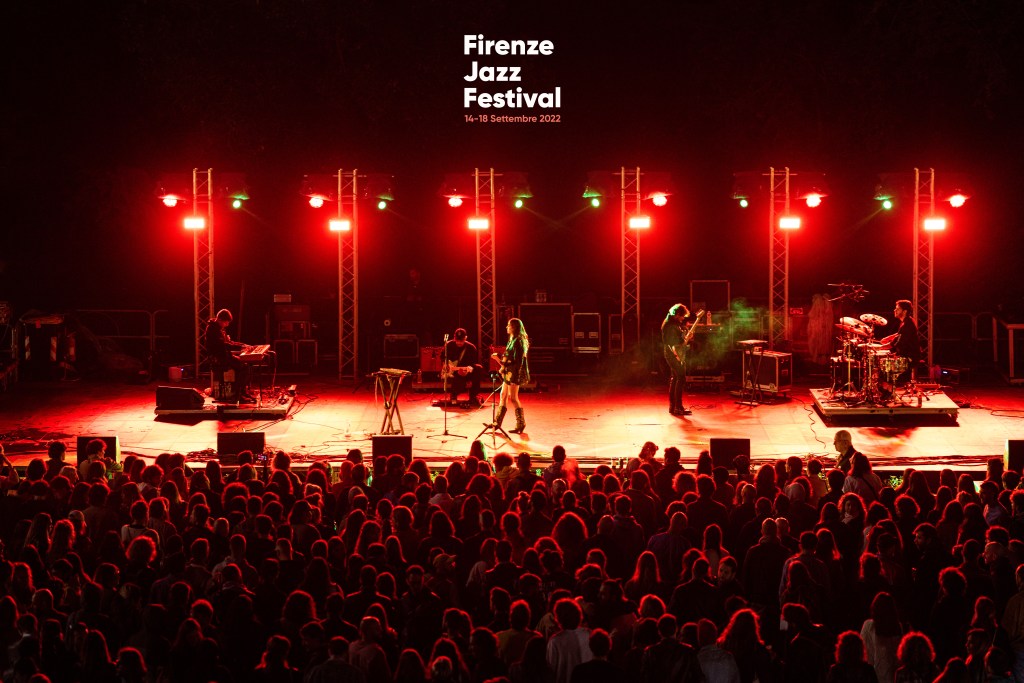
And every year, at the beginning of September, the Firenze Jazz Festival, a grand event held across multiple venues and now in its ninth year, shows how in the heart of Tuscany there’s room for a vibrant, innovative and engaging music scene.

Dates, locations, tickets: the key info

The 2025 edition of the festival will be taking place from 2 to 14 September, culminating in the showstopper performances on 12, 13 and 14 September on the Main Stage at the Anfiteatro delle Cascine, surrounded by the greenery of the city’s most popular park. Over these three days, international artists and jazz legends will take to the stage:

  • 12 September: Alfa Mist – only performance in Italy
  • 13 September: Bassolino, Coca Puma, Planet Funk
  • 14 September: Alabaster DePlume, Orchestre Tout Puissant Marcel Duchamp

‘Early bird’ Main Stage festival passes are available online at €24 (instead of €40 if purchased later), and include priority entry as well as, for a final toast, a complimentary glass of wine or soft drink courtesy of the Consorzio Chianti Rufina. The daily playlist and single tickets are available from the festival’s official website (under “buy now”).

firenze jazz festival

A kaleidoscope of music and vibes

Firenze Jazz Festival is not just about the Main Stage: it’s a musical journey across the city’s iconic spots, an experience merging the past and the present. Some of the most attractive locations are:

  • Villa Strozzi: Built in the 16th century, this villa has an imposing Renaissance-style façade and overlooks a large garden. Over the years, Villa Strozzi has been used for various purposes, including as a stately home, a convent and the headquarters of cultural institutions. Today, Villa Strozzi hosts exhibitions, events and cultural activities, making a valuable contribution to the city’s vibrant artistic and cultural scene.
  • Villa Bardini: dating back to the first half of the 17th century, it blends in gracefully with the green of its gardens, adorned with sculptures. This charming location, with its hilltop position offering wonderful views of the city, not only hosts some of the festival’s activities but has in the past hosted major fashion events, including shows by prestigious houses such as Prada and Gucci.
concerto villa bardini firenze
  • Forte Belvedere: As well as being one of the best viewpoints in the city, this fort is an exceptional piece of architecture created at the end of the 16th century by Bernardo Buontalenti at the request of Ferdinand I de’ Medici. It forms the last section of the Vasari Corridor, created to link the Palazzo Vecchio to the Palazzo Pitti and the Boboli Gardens through a series of passageways, bridges and gardens. 
  • There are also some great events taking place outside of the city’s historical centre, such as concerts in the Parco Mediceo di Pratolino, in Empoli, and even concerts at the hu Firenze Certosa camping in town campsite. A combination of great names, original acts, the fusion of artistic influences: from klezmer to funk, from electronica to Salento folk, to avant-garde jazz.

Highlights of the 2025 edition

As well as the abovementioned Alfa Mist and Planet Funk, the following unmissable acts are also appearing:

  • David Krakauer Acoustic Klezmer Quartet at Villa Bardini (7 September), Eleonora Strino Trio (6 September) and Francesco Cangi & The Lonely Rockets (10 September).
  • Isaiah Collier Parallel Universe at the Anfiteatro della Limonaia at Villa Strozzi (2 September).
  • La Paranza del Geco, one of the most important artistic companies dedicated to performing and preserving the traditions of southern Italy’s folk music, consisting of numerous musicians, singers, percussionists and dancers, in Impruneta (11 September)
  • Performance by Silvia Bolognesi Jungle Duke in the Parco Mediceo di Pratolino (28 September).

The festival brings together professional jazz artists, as well as those venturing into this language for the first time: events for enthusiasts and for newcomers offer authentic experiences that are never ordinary.

firenze jazz festival 2023

Florence: the complete cultural destination

By bringing music into the parks, historical villas and less familiar locations, the festival demonstrates how Florence is not just about visual art and ancient architecture; it’s a living, breathing city, bursting with culture in all its forms. As artistic director Francesco Astore says, the people of Florence play an active and enthusiastic role: the Firenze Jazz Festival has harnessed a widespread sentiment that over the years has turned into a unified group project involving over 20 partners, through which the community actively participates, with a passion. Florence loves culture; it’s in its DNA, and this aspect is also an essential ingredient of the FJF.

Useful info: how to get to the festival

  • From the airport or train station: Florence is well connected. From Amerigo Vespucci Airport (Peretola), there are buses and trams that will take you to the centre in around 20 minutes; from there, all the venues are easily walkable or a short taxi or bus ride away.
  • By car: there is parking on the outskirts (e.g. Cascine, Forte Belvedere), and it’s best to book in advance at weekends during the festival.
  • Sustainable mobility: you can cycle to many locations (Villa Strozzi, Cascine) or take the bus: an enjoyable and eco-friendly option.

Tickets and passes

  • Early bird Main Stage Pass: €24 (entry for the 3 days + complimentary wine/soft drink).
  • Single tickets: available from the official website; prices vary according to the location and evening.
  • Free events: you don’t need a ticket for the final evenings in Piazza del Carmine (13‑15 September); just turn up and enjoy the music.
joan thiele firenze jazz

Why Volotea loves Florence around these dates

Volotea brings to Florence visitors who love art, history and… playlists never heard before. The Firenze Jazz Festival is the perfect occasion not only to return to the “cradle of the Renaissance”, but to explore its more modern and surprising side. Imagine a long weekend, visiting the Cathedral, the Uffizi, Boboli and a jazz performance in the Lemon House or surrounded by greenery, sipping on a glass of Chianti. A multi-sensory, cultural and musical experience, to be enjoyed with friends or alone: dipping into the past, with your eyes and ears on the future.

Some handy tips

  1. Book your Main Stage Pass soon: the early bird price is a real bargain and guarantees the most exclusive entry, including a complimentary drink.
  2. Map out the notes: combine concerts with cultural visits (e.g. Museo Bardini + acoustic concert, Belvedere + jazz at sunset).
  3. Head towards the free events in Piazza del Carmine: magical moments accessible to all, including the evening of electronica with Coca Puma, Bassolino and Planet Funk.
  4. Go for the camping option for an immersive experience with live music and convenient shuttle buses during the Main Stage dates.
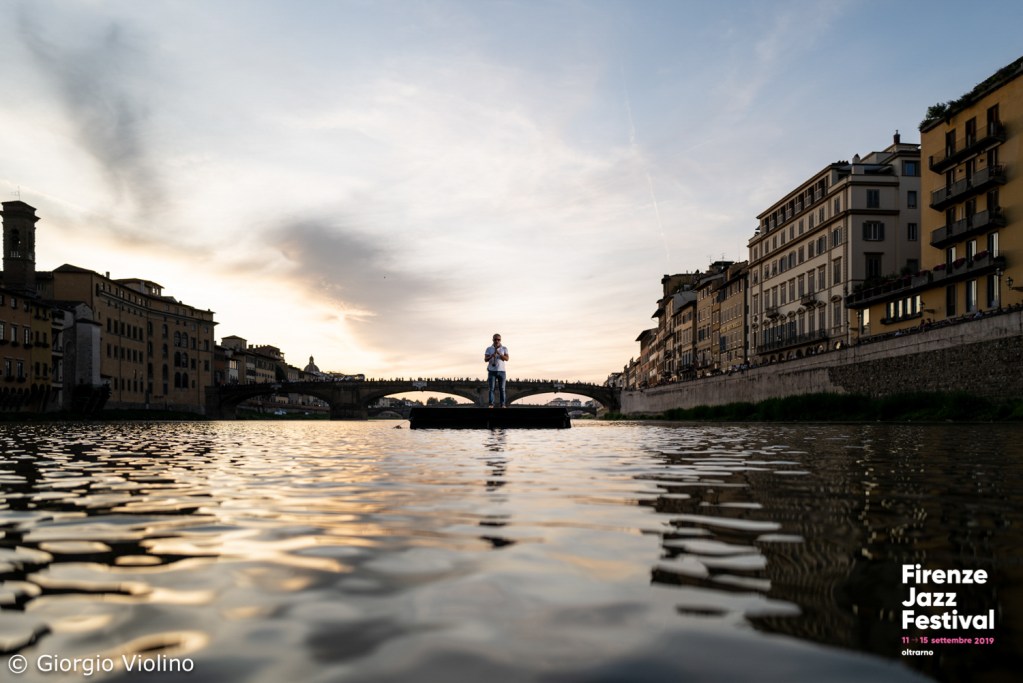
zattera arno firenze jazz

The Firenze Jazz Festival 2025 is not only one of Italy’s main jazz festivals – it’s an invitation to enjoy Florence through music, with a fusion of artistic influences, wonderful nights and beautiful venues. The perfect backdrop against which Volotea passengers can experience unforgettable moments, of art, history and, of course, amazing vibes.

Visit the festival’s official website, choose your flight and… be surprised by the less familiar side of Florence, the one that sounds different, modern and vibrant. See you next time; we’re leaving you on a high note!

Have a great trip and… enjoy the music!

The city of Florence attracts visitors from all over the world due to its extraordinary cultural and artistic riches. Today I’ll take you on a tour of the famous Uffizi Museum, one of the most fascinating art destinations in the world.  

I’ll tell you everything you need to know about visiting the museum, including its exhibition rooms, opening hours and ticket prices. Read the entire article to also discover essential local experiences and other museums in Florence that you should definitely include in your itinerary.

Hi, I’m Flu, a family travel designer in Florence, and I’m here to give you a customised itinerary for Tuscany.

Let’s get started!

The Uffizi Museum: general overview

The Museum is located in the magnificent Palazzo degli Uffizi, a historic building (once a Medici residence) situated in the heart of Florence along the Arno River.

esterno musei uffizi

Its location is also ideal for visiting the famous Ponte Vecchio bridge, which is just a stone’s throw away.

The Uffizi collection boasts masterpieces by artists such as Botticelli, Leonardo da Vinci, Michelangelo, Raphael, Giotto and many others, and the works are exhibited in chronological order.

botticelli uffizi
The birth of Venus, Sandro Botticelli
Adoration of the magi, Leonardo da Vinci

You can therefore trace the evolution of art from the medieval period up to the Renaissance and, if you so wish, you can get an accompanying audio guide at the entrance for 6 euros.

Uffizi Florence – Opening Hours

  • The museum is open from Tuesday to Sunday from 8:15 a.m. – 6:30 p.m. Last admission is at 5:30 p.m.
  • It is closed on Mondays (except 10 and 24 April, 1 May and 14 August 2023)
  • It can get very crowded, especially in the summer, so my advice is to visit early in the morning or just before closing time to avoid long queues.
interno galleria uffizi

I recommend checking the opening hours on the official Uffizi website before your visit, as they may vary depending on the season.

Uffizi Florence – Tickets

As for ticket prices, it all depends on the season and the type of ticket you choose. In fact, you can include visits to places like the town hall, called the Palazzo Vecchio, or the Boboli Gardens all in the cost of your ticket.

  • Full-price ticket: 26 euros
  • The 39 euro ticket also includes admission for 5 consecutive days to the Boboli Gardens, the Pitti Palace, the National Archaeological Museum and the Opificio delle Pietre Dure Museum. It also gives you priority access.
  • Admission to the museum is free for those under 18 (proof of identity required) and other categories that you can consult here.

Uffizi: when is it free?

You can enter the museum for free on the following dates:

  • 25 April
  • 2 June
  • 4 November

And thanks to the “Sundays at the Museum” initiative, you can enter the Uffizi for free on the first Sunday of the month. Check this page on the official website for all the free Sundays in 2023.

sculture uffizi

Where to buy a ticket for the Uffizi in Florence:

  • Uffizi Courtyard Ticket Office (on the ground floor)
  • Orsanmichele Church
  • Pitti Palace
  • Online on the official website uffizi.it

How to visit the Uffizi with children

It’s not always easy to keep children entertained on visits to cultural cities and major museums like the Uffizi in Florence.

This is why a family-friendly project has been running for some time now that allows you to “borrow” the Uffizi Activity Bag, which can be picked up free of charge upon reservation once you’ve purchased your ticket.

It’s a transparent bag filled with fun, antistress material for doing some simple activities while in the museum. The bag contains a museum map, activity cards, headphones and some postcards that you can take home as a souvenir from your visit to the Uffizi in Florence.

What to do near the museum: local tips

As I mentioned before, the Uffizi Museum in Florence is located in the historic centre, within walking distance of the Ponte Vecchio and other famous attractions. So, I recommend taking a walk over Italy’s most famous bridge for some seriously Instagram-worthy photos.  

ponte vecchio firenze

If it’s a romantic experience you’re after, I suggest a sunset boat ride on the river, which will allow you to see Florence from another perspective. The small boats take off from the riverfront right below the Uffizi.

gite in barca firenze

If you get hungry, near the Uffizi Gallery is the famous Via dei Neri, a street full of trattorias, restaurants, sandwich shops and also the historical home of one of the world’s most famous and beloved “schiacciaterias”: All’Antico Vinaio. 

If you’re gluten-free like me, Sgrano is the best gluten-free place in Florence, with restaurants in Via dei Neri 49 (for the famous “schiacciatine” flatbread sandwiches) and in Via dei Benci (for the “osteria”, a wine bar serving exceptional first and second courses that are always gluten-free).

Another fascinating aspect of Florence that many tourists don’t know about are the Tower Houses. In the Middle Ages, there were as many as 160  and up to 65 metres tall.

case torri firenze

They had been built by the city’s wealthiest and most important families and were connected internally with the main house. These tower houses consisted of one room per floor, with the kitchen on top and a storeroom/pantry space in the basement.

Today you can see some of these beautiful towers in a small neighbourhood near the Uffizi, in Via dei Cerchi and Borgo San Jacopo.

Other museums worth visiting in Florence

If art is your passion, you’ll find the world’s most famous works in Florence. So don’t limit yourself to only visiting the Uffizi. Spend some time at other museums, many of which are also suitable for children thanks to their family-friendly workshops and guided tours.

Here are some of the museums that I recommend visiting while you’re in Florence:

I hope you find this article useful on your next visit to Florence.

 Find your flight to the Cradle of the Renaissance now on Volotea and start planning a weekend to remember. 

Florence needs no introduction. It’s the city that gave birth to Dante, was home to Michelangelo and has inspired whole generations with its palaces, museums and its timeless Renaissance feel.

But between taking a selfie in front of the Cathedral and finding the best artisan ice cream, there’s a polite (but firm) invitation that the city extends to its visitors: #EnjoyRespectFirenze.

This campaign is not just a hashtag; it’s an invitation to experience Florence not only as a tourist, but as a responsible guest. Because enjoying the city is an art, and like every art form, it needs care, respect and a bit of decorum.

campagna #enjoyrespectfirenze

The good tourist’s handbook: how not to make a bad impression

It’s not hard to be a respectful tourist in Florence; you just need a bit of common sense and awareness of your surroundings. Just remember: you’re walking among people who are working, studying and going about their daily lives. You’re not on a film set, but in a real city, with a beating heart and spaces that need to be shared.

So, keep the noise down: whilst your excitement is understandable, the decibels can wait. Avoid singing, shouting, making loud phone calls. Florence is already full of its own music; it doesn’t need an improvised soundtrack.

Dress appropriately, especially if you’re going inside churches or holy sites: covered shoulders and plain clothing are signs of respect, not medieval religious rules. And lastly, be careful where you stop: pavements, shop entrances and pedestrian streets are not relaxation areas. Don’t sit down in the middle of where people are walking and don’t take up spaces where people need to get through.

These are simple actions, of course, but they make the difference between any usual tourist and a visitor whom Florence will welcome back with open arms. Here’s some more advice to bear in mind during your stay:

The Cathedral and its square are watching you

vista aerea duomo firenze

The Duomo di Santa Maria del Fiore, with its dome by Brunelleschi, is the beating heart of Florence. Every year, millions of people stop to admire it, take photos and climb its 463 steps. It’s a monument to human creativity… and to patience, as at certain times of year the queue can be quite long.

But a word of caution: eating your lunch on the steps or leaving water bottles lying around is not exactly showing much respect. By all means be enthralled and gaze at this beautiful sight, but there’s no need to turn the square into an improvised picnic spot.

In and around the Uffizi Gallery: this art museum is alive, treat it with care

Visiting the Uffizi is like stepping into a book on the history of art, but the book is actually real and three-dimensional. Botticelli, Caravaggio, Leonardo, Rafael… they all have their fans. And yet, in the middle of all this beauty, there’s always someone who gets carried away with a camera flash or commenting too loudly.

Remember that the museum not only houses a collection of art, but it’s a living place that deserves silence, respect and maybe also a short pause to reflect on what you’re looking at. And no, you don’t have to post everything in real time. Sometimes, looking is more than enough.

The Ponte Vecchio: feel romantic, but with style

The Ponte Vecchio is the symbol of Florentine romance. It’s hard to resist the charms of its ancient shops and the lights reflecting on the River Arno. But also here, you can show your love for the city by behaving appropriately: no attaching padlocks to the parapets, no defacing the ancient stonework with declarations of love. You can be in love and respectful at the same time. The bridge already holds centuries of stories; it doesn’t need any more marks carved into it with a penknife.

ponte vecchio firenze

Piazzale Michelangelo: a view with good manners

One of the city’s most stunning views can be enjoyed from Piazzale Michelangelo. This is where the sunset turns Florence into an impressionist painting, and where people often come at the end of the day to meet up with friends.

A perfect plan, as long as you don’t leave a trail of rubbish, bottles and cigarette ends behind you. The city is for everyone; so let’s try to keep it that way; save any evidence of your visit for your photos (and maybe for some nice memories to recall).

Eat, drink, but without intruding

We all know that Tuscan cuisine is one of the tastiest in Italy. From bistecca alla fiorentina to pappa al pomodoro, every dish is an experience. But there’s no need to eat everything on the street, maybe sitting on some church steps or at the entrance to a museum. We’d advise you to enjoy the local cuisine in the right places, i.e. in traditional restaurants or those favoured by the locals! Perhaps sitting at a table with a view, watching the world go by.

Move around peacefully: on foot, on a bike or on public transport

Florence is a city that’s very walkable. There’s a surprise on every corner: a traditional shop, a secret courtyard, an unexpected headstone. A bike is also a quick, fun and eco-friendly way to get around the city (and if you don’t have one, there’s always bike sharing!); and thirdly, the bus and tram network connects the main points of interest, the station and the airport.

The #EnjoyRespectFirenze campaign promotes sustainable and responsible mobility, as beauty needs to be appreciated slowly, with no collisions or car horns.

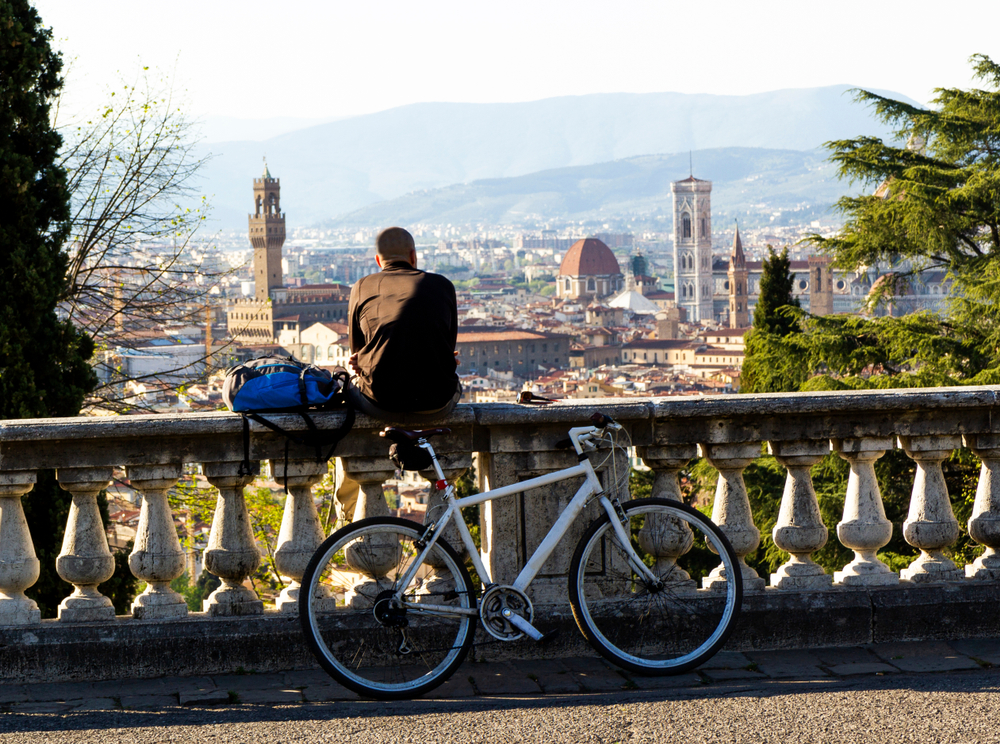
bicicletta piazza michelangelo firenze

The #EnjoyRespectFirenze campaign: an invitation, more than a message

Devised by Florence City Council, this campaign has been created to promote responsible tourism, to prevent the city from becoming a “theme park” for uninformed visitors. Through a combination of posters, videos, social communication and local initiatives, #EnjoyRespectFirenze aims to educate without moralising, to invite politely but firmly.

The official website of the campaign (which we’d advise you to visit) features some useful materials, advice on how to behave, events relating to sustainability and tips on how to be a more ethical tourist. How to enjoy Florence as a performer, rather than just a spectator.

Some insider tips on the smart way to enjoy Florence

  • Be smart with your timings: visit the sights first thing in the morning or in the late afternoon. Fewer crowds, more charm.
  • Stray off the beaten track: from San Niccolò to Oltrarno, Florence has some authentic and less crowded spots.
  • Support the local artisans: buy from small producers, visit the traditional shops. This is the best way of finding a true piece of Florence to take home with you.
  • Use reusable water bottles: the city has plenty of drinking fountains for refilling them.
  • Take part in local events: markets, fairs, shows. You’ll discover a Florence that’s alive, aside from the usual itineraries.

Florence will welcome you with its history, its works of art and its breathtaking beauty. But it asks something of you in return: your respect. Because only then can this fragile balance between the past and present continue to charm those who’ll be coming here after you.

So do, of course, enjoy Florence. But do it with style, with awareness, with that bit of respect that makes every trip more authentic. Because when you treat it well, beauty will always come back to you.

“You don’t get old at the table,” a Tuscan saying goes, and the Florentines certainly took it literally, in view of their love for good food and good drinking. 

Florence, the cradle of the Renaissance, is a city that enchants you not only due to its artistic and historical heritage, but also for its rich culinary tradition. Strolling its streets, you will be fascinated by the majesty of the Duomo, the beauty of the Ponte Vecchio and the elegance of Piazza della Signoria. But it is by sitting down at the table that you discover the most authentic soul of the city, created out of genuine flavours and dishes that tell centuries-old stories.​

Eating Well in Florence Without Spending a Fortune

If you want to enjoy the pleasures of good Florentine cuisine without spending a fortune, here are some tips for you; a selection of restaurants, taverns and kiosks where you can enjoy real local cuisine without emptying your wallet.

The Historic Centre

The beating heart of Florence. Here are its most famous monuments: the Duomo with the magnificent dome of Brunelleschi, the Uffizi Gallery and the Ponte Vecchio. Among its streets animated by tourists and street artists, there are still (some) corners where you can enjoy a quick and tasty meal without spending too much.

  • All’ Antico Vinaio – Via dei Neri 65/r
    Famous for its stuffed dumplings, this place has become a reference point for those looking for a tasty and hearty snack. The “Favolosa” with crumbs, pecorino cream, artichoke cream and spicy aubergines is among the most valued offers.
all'antico vinaio firenze
  • The’ Girone De’ Ghiotti – Via dei Cimatori 23/r
    Specializing in stuffed dumplings, it offers a wide range of combinations with fresh and local ingredients. The quality of the cold cuts and cheeses used turns each bite into a unique experience.

San Lorenzo

An authentic and lively district, it is famous for the Central Market, a gastronomic paradise with fresh produce stalls and local cuisine shops. Perfect for an informal lunch with traditional Tuscan dishes at affordable prices.

mercato centrale san lorenzo firenze facciata
  • Trattoria Sergio Gozzi – Piazza San Lorenzo 8/r
    One of the oldest trattorias in Florence, it offers traditional dishes such as ribollita, Florentine tripe and steak. The family atmosphere and low prices make it a must for those seeking authenticity.

Santa Croce

Historically the district of artisans and intellectuals, Santa Croce is today an area full of typical trattorias, small shops and welcoming places. Here you can breathe an authentic atmosphere, between medieval alleys and the splendid basilica that houses the tombs of Michelangelo, Galileo and Machiavelli.

  • Il Bufalo Trippone – Via dell’Anguillara 48/r
     A small wine shop with a cellar that offers local cold cuts and cheeses, as well as stuffed dumplings to accompany with a selection of Tuscan wines. An ideal place for a tasty and casual break.

San Frediano

In the Oltrarno, considered one of the most authentic districts of Florence, San Frediano is the perfect place for those who want to discover the most authentic city. Among artisan shops, hidden squares and historic taverns, here are some of the best trattorias at affordable prices.

  • I’ Brindellone – Piazza Piattellina 10
     Located in the heart of the Oltrarno, this trattoria is renowned for its Florentine steak, ribollita and other typical dishes. The convivial atmosphere and the value for money make it one of the favourites among the locals.
biastecca alla fiorentina
  • Al Tranvai – Piazza Tasso 14
    A small room with a vintage atmosphere, where you can taste traditional dishes such as tomato and tripe. The name, which means “tram” in Florentine, recalls the shape of the place and its proximity to an old tram line.  ​

Sant’Ambrogio

A Florentine district par excellence, where the local market and historic taverns keep the city’s culinary tradition alive. Frequented more by Florentines than tourists, it is the right place for those seeking out a genuine gastronomic experience.

  • Rocco – Sant’ Ambrogio Market
    Inside the market, this historic place offers homemade dishes such as pasta alla carrettiera and stew. The sharing of tables and the informal environment make it an authentic experience.

Street Food and Kiosks

  • Il Trippaio del Porcellino – Piazza del Mercato Nuovo
     Historical kiosk where you can taste the traditional sandwich with the lampredotto or the Florentine tripe. An unmissable culinary experience for those who want to immerse themselves in the true essence of Florentine street food. ​ ​
panino con la trippa firenze
  • I’ Trippaio di San Frediano – Piazza dei Nerli
    This kiosk offers specialties such as sandwich with tripe or lampredotto, prepared according to tradition and highly appreciated by the locals. ​

As you can see, in Florence you can taste typical dishes without it costing a fortune. Whether you choose a historic trattoria or a street food kiosk, the city offers endless possibilities to delight the palate without sacrifices. Because, as a Florentine would say “sated body, comforted soul!”

SHALL WE INSPIRE YOUR NEXT TRIP?