archive.php
Outdoor events aren’t just for the summer; whilst there aren’t that many music festivals in winter, Europe’s cities are full of festivals of light, making them shine with a special magic.

The shorter days and long winter nights offer the perfect opportunity to brighten them up with lighting effects, art installations, video mapping and drones, taking us into a world of fantasy and art. These festivals turn the streets and buildings into vibrant canvases, where light and technology interweave with the urban architecture to create a unique and enchanting atmosphere.

If you want to experience the magic of these enlightened worlds, here are the best festivals of light in Europe for winter 2024-2025.

Festivals of light in Volotea cities

Luci d’Artista, Turin
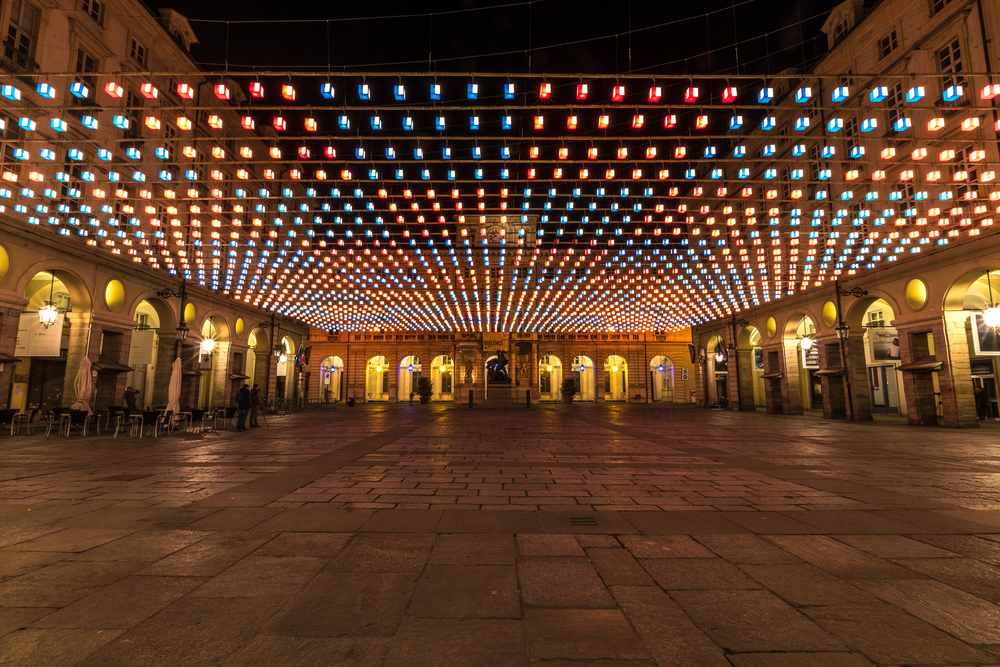
festival luci d'artista torino
  • Where: Turin, Italy
  • Dates: From 28 October 2024 until 14 January 2025
  • About it: From the end of October until the middle of January, Turin becomes an open-air museum of art, with the Luci d’Artista festival. This event invites renowned contemporary artists to create light installations to fill the city’s streets with colour and creativity. These works, ranging from large-scale pieces to subtler creations, bring a unique and enchanting atmosphere to Turin during the winter season. It’s a great opportunity to see how the city unites its artistic and historical heritage with the avant-garde art of light.
  • For more information, visit the event’s website.

Cœur de Ville en Lumières, Montpellier

  • Where: Montpellier, France
  • Dates: From 28 until 30 November 2024
  • About it: This charming festival turns the heart of Montpellier into a spectacle of light and art. The city’s most iconic buildings, such as the Ópera Comédie and the Faculty of Medicine, act as canvases for video mapping projections that tell stories and transport us into other worlds. Every year, local and international artists create amazing visual effects to enhance the architectural beauty of Montpellier, blending history and modernity in a truly magical display.
  • For more information, visit the event’s website.

Fête des Lumières, Lyon

  • Where: Lyon, France
  • Dates: From 5 until 8 December 2024
  • About it: The Lyon Festival of Lights is one of Europe’s most famous events. Over four nights, the French city lights up with stunning art installations that adorn its historic buildings, squares and rivers. Since it was first celebrated in the 19th century in homage to the Virgin Mary, this festival has grown to become a world-renowned spectacle of art, where artists from various parts of the world display their light creations. It’s an event that combines tradition, contemporary art and technology in the most amazing way.
  • For more information, you can read our article on the Fête des Lumières and visit the event’s website.

Green Line Festival, Florence

festval green line firenze
  • Where: Florence, Italy
  • Dates: From 7 December 2024 until 5 January 2025
  • About it: The festival highlights the city’s key monuments, squares and buildings, such as the Ponte Vecchio and the Palazzo Vecchio, with stunning spectacles of light and projections. Lighting effects and video mapping, light installations and projections, workshops and educational activities invite you on an imaginary journey from the city’s squares to the cathedral.
  • For more information, visit the event’s website.

Copenhagen Light Festival

Copenhagen Light Festival
  • Where: Copenhagen, Denmark
  • Dates: From 2 until 24 February 2024
  • About it: The Copenhagen Light Festival illuminates the chilly nights in the Danish capital with dazzling installations along its streets and canals. This event combines art, sustainability and technology to reflect the essence of Copenhagen; interactive light installations and light sculptures transform every corner of the city, making every stroll a fascinating experience. Some displays can also be enjoyed from the water, adding a unique dimension to this magical experience.
  • For more information, visit the event’s website.

Bright Brussels Light Festival
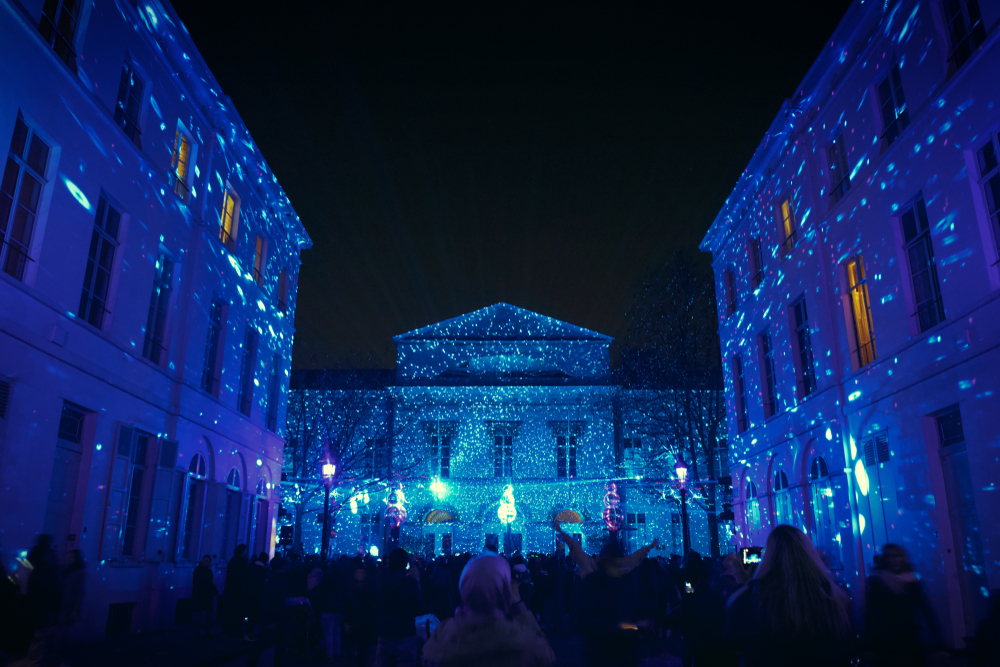
Bright Brussels Light Festival
  • Where: Brussels, Belgium
  • Dates: From 8 until 11 February 2024
  • About it: This festival brightens up Brussels with light installations all over the city. The combination of historical heritage and contemporary light art makes Bright Brussels a perfect event for enjoying the Belgian capital in a different way. The festival route takes visitors through different districts and areas, showing both the well-known monuments and the hidden corners of the city, all wrapped up in a magical atmosphere that is truly captivating.
  • For more information, visit the event’s website.

Llum BCN, Barcellona

  • Where: Barcelona, Spain
  • Dates: From 9 until 11 February 2025
  • About it: Barcelona also lights up in winter with its Llum BCN festival, held in the technology and cultural district of Poblenou. This festival turns the streets and buildings of the city into a canvas of light and technology, with works by artists from all over the world who explore the interaction between light and urban spaces. Llum BCN not only stages stunning installations and spectacles, but also invites you to reflect on contemporary issues such as sustainability and living in the urban environment. It’s an immersive experience that attracts both art lovers and families.
  • For more information, visit the event’s website.

Europe’s festivals of light are definitely an experience you can’t afford to miss if you’re looking for a different way of enjoying art and culture. As well as offering an amazing visual experience, these events also provide unforgettable moments for both adults and children. So come and enjoy the magic of light!
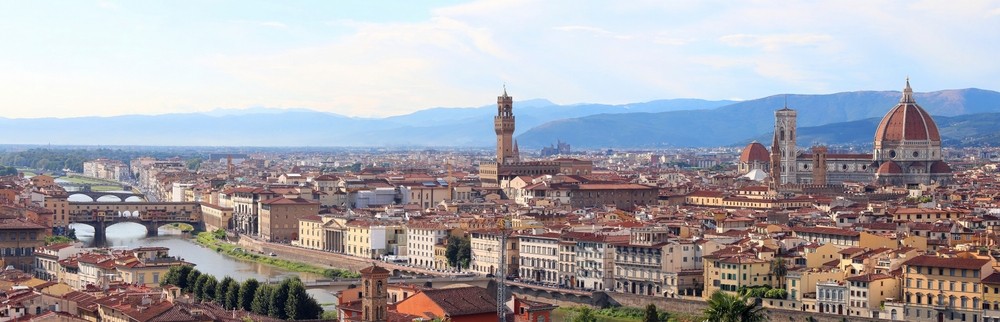
Florence, with its history and cuisine, is the most popular Tuscan city for those seeking good food, art and culture all in one place. And today, in this article, I’ll be taking you on a tour of the four historical quarters of Florence, encapsulating everything that makes this city so unique.

Let’s enjoy an unforgettable weekend of culture and fine food and wine.

THE FOUR HISTORICAL QUARTERS OF FLORENCE

Not many know that what we now consider to be the historical centre of Florence is in fact made up of four ancient quarters of the city: Santa Maria Novella, San Giovanni, Santa Croce and Santo Spirito.

panorama firenze

Santa Maria Novella

This quarter, running along the right bank of the River Arno, features unmissable sights such as the Ponte Vecchio and the Piazza della Repubblica, as well as some of the city’s key museums, in particular those housing modern and contemporary art, such as the Museo Novecento and the Palazzo Strozzi.

The latter is considered one of the most important exhibition spaces in Italy and holds some amazing exhibitions. There are two scheduled for 2024: Fallen Angels by Anselm Kiefer (22 March to 21 July 2024), dedicated to one of the greatest masters of 20th and 21st century art, famous for his highly impactful works exploring the themes of memory, myth, war and existence; then from 27 September 2024 to 26 January 2025 you can visit Painting without Rules by Helen Frankenthaler, featuring a wide selection of works created between 1953 and 2002 by one of the greatest American artists of the 20th century.

For more details on exhibitions, opening hours, tickets and events, take a look at the Palazzo Strozzi official website.

PLACES TO EAT IN THE QUARTER OF SANTA MARIA NOVELLA

Why not try somewhere with a real touch of glamour, right in the centre?

My suggestion is a delightful venue: Ristorante Sofia Loren, which, not only offers a wonderful menu, inspired by Neapolitan cuisine, but will amaze you with its sophisticated ambience, created by the history and heritage of the legendary Sofia Loren, who has captured the hearts of so many generations with her beauty and talent.

ristorante sophia loren firenze

Besides a wide range of dishes and pizzas (from the classic Margherita to the more refined “Dolce Sofia” with crème pâtissière), the furnishings are lovely and the staff really nice!

And you’re right in the heart of Florence, in the Piazza della Repubblica, just a short walk from the city’s main sights.

Location: Ristorante Sofia Loren, Via dei Brunelleschi 11, Florence

SANTO SPIRITO E SAN FREDIANO

Described by Lonely Planet as “the coolest neighbourhood in the world”, this is the most authentic and artisan part of Florence.

It’s known as “Oltrarno” as it’s on the other side of the Arno, on the left bank, and is just a short walk from the Piazza del Duomo.

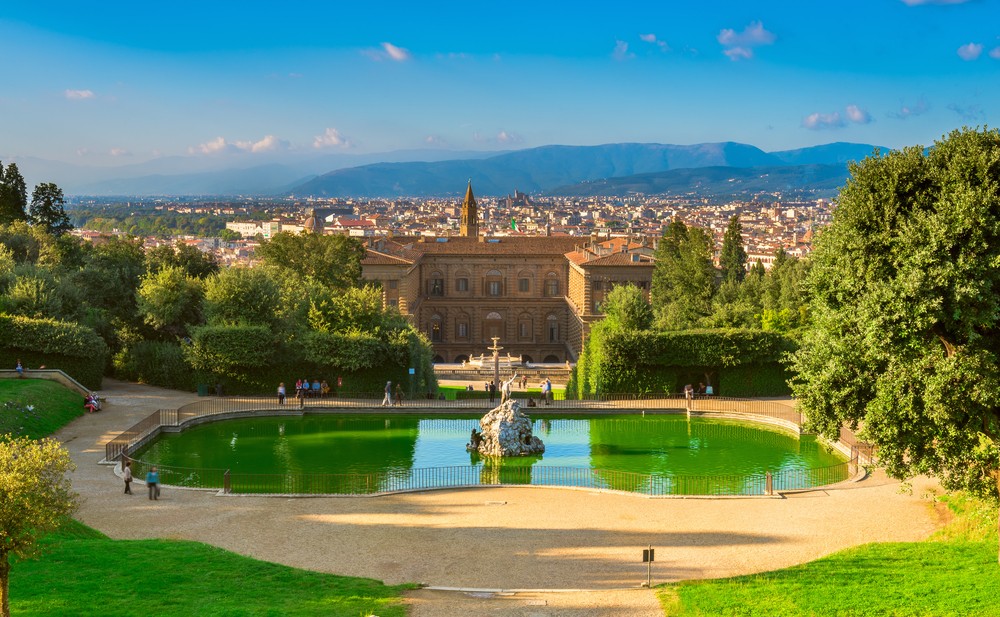
This is where you’ll find the Pitti Palace, the Santo Spirito church, the famous Boboli Gardens and Piazzale Michelangelo, but it’s also the place to go in the evenings for a drink or dinner, as the area is full of bars and restaurants, some of which are truly special.

giardini di boboli firenze

One I’d recommend is the Restaurant-Cocktail Bar The Stellar, which is bound to amaze you. Located on the ground floor of a former palace in Piazza di Cestello, in the heart of the San Frediano neighbourhood, The Stellar has a unique, elegant and sophisticated atmosphere, but most importantly, we’ve always eaten well here and it’s also one of our favourite places in the spring for dinner and drinks with friends in its inner courtyard.

the stellar firenze

Location: Piazza del Cestello.

SAN GIOVANNI

Here we’re right in the centre of the city, in the quarter comprising the Piazza Del Duomo, San Lorenzo, the Medici Chapels, as well as the Galleria Dell’Accademia, housing the original David by Michelangelo.

This is an extensive area with plenty of restaurants, pizzerias and eateries of all kinds. So, I’d like to recommend an experience that’s a bit different from the usual “tourist snack”.

Make your way to the Mercato Centrale, also known as San Lorenzo Market, where you’ll not only find the outdoor market for a bit of shopping for artisan products, but also an indoor area with tables and benches where you can savour dishes made daily with fresh ingredients.

Lorenzo de’ Medici at the Mercato Centrale: a cookery class, Florentine style

And if, like me, you like trying your hand at anything, then a visit to the Lorenzo de’ Medici Cookery School is an absolute must.

scuola cucina lorenzo de medici firenze

It’s located in Florence’s Central Market itself and runs a whole host of Tuscan and Mediterranean cookery courses.

You’ll be guided by an expert chef who will reveal the secrets behind every recipe and you’ll be cooking in a modern kitchen with high-quality professional equipment.

From the traditional pappardelle al ragù to the perfect preparation of ribollita, as well as typical Tuscan sweets, you’ll discover how to cook traditional dishes from the region in an authentic and enjoyable way.

Of the many interesting courses on offer at the school, the highlights for me are the course on traditional Tuscan cuisine, the pizza course, the course on filled pasta, the fish course and the patisserie course.

Location: Central Market, Florence

Contact details and info: info@cucinaldm.com

SANTA CROCE

This quarter features the Palazzo Vecchio, Dante’s House, the Uffizi Gallery and the Museo del Bargello.

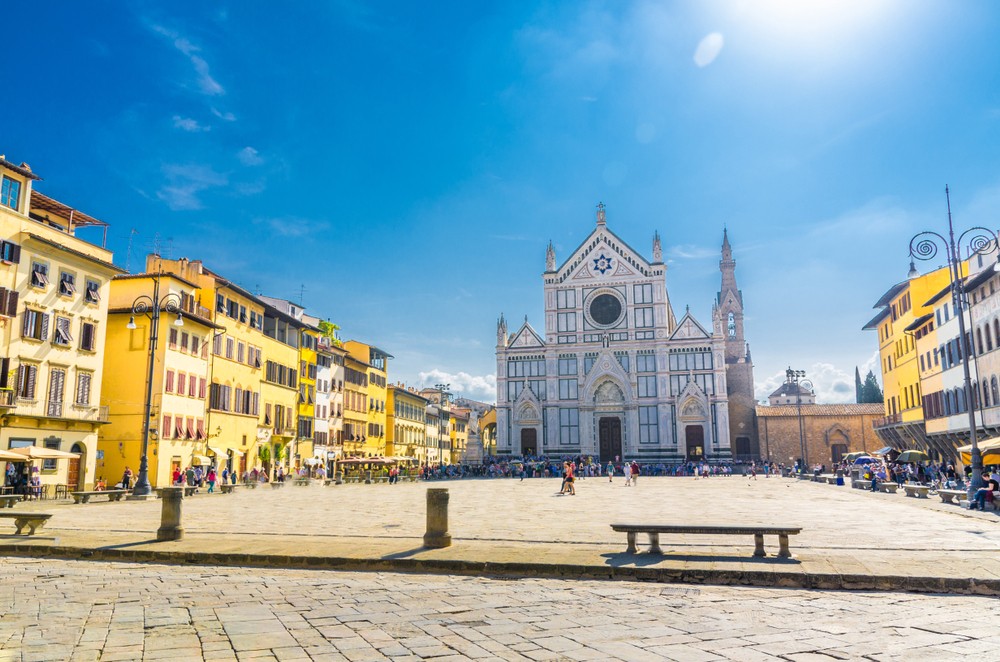
It’s named after the Church of Santa Croce, situated in the square of the same name, and in my view this is one of the finest churches in the whole of Florence.

piazza santa croce firenze

Inside you’ll find the tombs of many artists and illustrious figures, such as Michelangelo Buonarroti and Galileo Galilei.

A point of interest: inside the Church of Santa Croce there’s a beautiful statue in Carrara marble that’s reminiscent of the Statue of Liberty.

It’s called “Libertà della poesia” (Freedom of Poetry) and it does seem that it might have been the “inspiration” for the artist who soon after created the Statue of Liberty that stands in New York.

The city of Florence is an unmissable destination for anyone visiting Italy and Tuscany. A city that delights you with its wealth of history that’s unrivalled the world over, its rich and original cultural assets, its delicious cuisine and its cool neighbourhoods, all waiting to be explored. I’m sure this weekend of Florentine food, wine and culture has inspired you and given you the urge to pack your bags; I look forward to seeing you in my city!

Have you thought of visiting Florence? We’d like to put a soundtrack to your trip! We’ve created a special Florence playlist, exclusively featuring local artists, for you to discover what you can listen to there.

To find out more information on Florence and the beautiful surrounding area, we got in touch with Edoardo Florio Di Grazia, a local artist. We asked him some questions to find out what he thinks of your next destination and to find out if he has any recommendations for you.

Hi Edoardo, how are you? Thank you for taking the time to answer a few questions for us.

Thank you, I love to answer questions about music and travel!

How would you introduce yourself to Volotea passengers who might not know you?

I could describe myself as a story seeker, using music to travel and find a home.

Marc Twain said that every person is a book. I think songs and stories are hidden everywhere. I travel, in every way, to find them. I’m like an antenna looking for a signal, and to find it I need to be constantly on the move.

Music is my way of telling and sharing these stories.

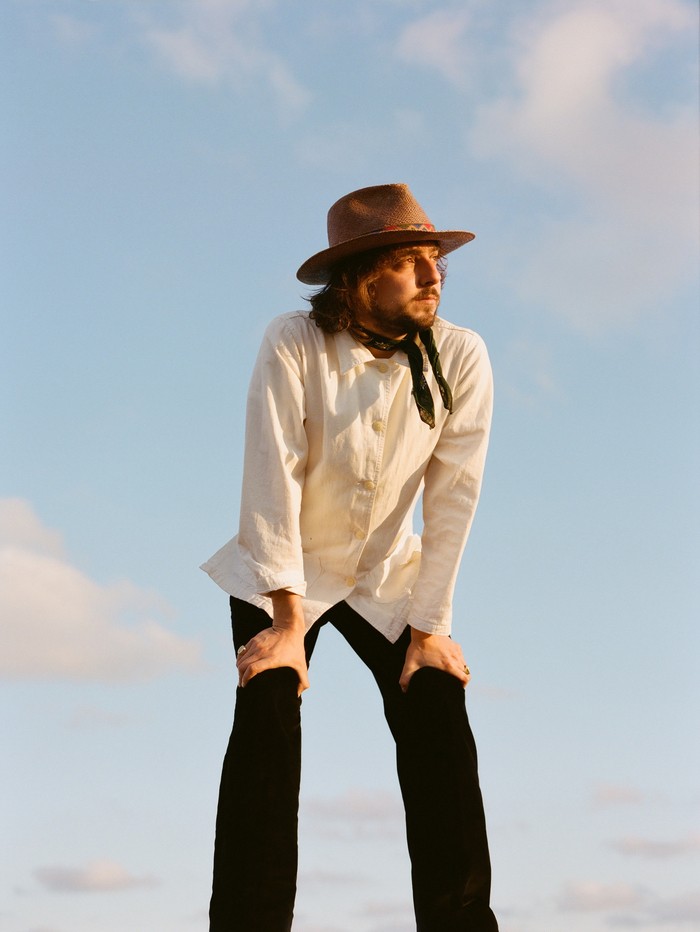
edoardo florio di grazia

You were born and raised in Florence, how do you think this city has influenced you and your music? Can we expect an album soon?

I was born in Florence and here as a child, aged five, in a record store in Via Gioberti called Nardi Dischi (sadly no longer there), I realised that music would be my life. Florence is a small city, but it is also a gateway to the world. Many artists have passed through here and throughout history. Growing up in the midst of all this artistic wealth can intimidate you or give you the desire to convey your own universe too. 

The medieval part of the city made up of workshops and cellars is the one that inspired me the most. The minstrel is a figure that has always fascinated me, and I try to be today’s version, travelling from place to place gathering stories and singing them.

Travel today as in the past, basically, is necessary to tell where you come from. And also to understand who you want to be in the future.

In 2024 my debut album will be released by Comet Records, an indie label from Paris. This is a journey album, written and recorded between France and Italy with musicians from many countries. The album, Ambra e Corallo (Amber and Coral), is named after the materials of the necklace made for me by my father that I have been wearing since my early days.

Travel and roots come together.

If someone was visiting you for the first time, where would you take that person first and why?

To the convent of San Marco where there is an incredible museum. You can see the work created by Beato Angelico there and visit the frescoed cells including the one that was occupied by Girolamo Savonarola who represents the irreverent soul of the Florentine people.

I would then take my guest for a glass of red wine accompanied by bread with olive oil in San Frediano, the old working-class neighbourhood of Florence and now the vibrant heart of the city. But if they were particularly lucky and happened to be in Florence with me on 24 June, the feast day of the city’s patron saint John the Baptist, I would definitely take them to see the final of Calcio Storico held in Piazza Santa Croce. An event like no other on earth, that transcends the realms of sport.

What are your top three restaurants/bars? And what local dish must we order?

If I can only choose three, I would say:

  • Todomodo, a magical bookshop in Via dei Fossi where you can eat and drink divinely whilst also finding books that can change your life. The vibe of the place and its customers make it special; seeing is believing.
  • Santo Bevitore in Via Santo Spirito, a restaurant that looks to the future without forgetting the past. Recommended for its food and, again, for its atmosphere.
  • Enoteca Bellini, a small wine bar with an amazing list of fine wines. A great place for meeting up with my friends.

As for traditional Florentine dishes, I would choose:

  • lampredotto: a must for anyone coming to Florence
  • ribollita or pappa al pomodoro depending on the season
  • tagliatelle with porcini mushrooms or pappardelle with wild boar (again depending on the season) for those who want to know the meaning of la dolce vita.

Florence is full of stunning museums and art galleries, which are your favourites?

Aside from the most famous museums, such as the Uffizi, which in any case are of course unavoidable, and San Marco museum of which we have already spoken, my top list is :

Museo Bardini, where you can find the collection of the great antiques dealer Stefano Bardini, and the museum is adjacent to Boboli Gardens, a dream especially in autumn and spring.

Museo del Bargello, an eclectic museum with a collection ranging from the jewels of the Medici family to the sculptures of the Neapolitan artist Gemito. A unique journey through the history of art in Florence.

– Italian Football Museum of Coverciano, a little gem for football lovers in particular, located inside the headquarters of the Italian national team just outside Florence. You can see trophies, shirts and photos from the 30s to the present day. A must for anyone wishing to understand one of the greatest Italian passions.

edoardo florio di grazia

Where can we go to listen to live music?

In all seasons there are many festivals where you can listen to good music. My favourites are: Musica dei popoli and the Florence folks festival, occasions when music from all over the world passes through Florence. Also the Heartbeat Festival Florence is a very interesting event. 

Unfortunately, many of the old live music venues no longer exist, due to municipal policies that fail to give due consideration to the world of music. The Auditorium Flog, for example, was once the temple of music for every Florentine.

But I’d recommend to anyone visiting Florence today and looking for the music scene that they check out Manifattura Tabacchi, in the winter season, and the Anfiteatro delle Cascine, in the summer season.

And what local music stores should we visit for some crate digging?

The most interesting place to find some vinyl gems is the historic Contempo Records store in Via de’ Neri, which opened in 1977.

But my favourite is a small shop in Via dell’Oriuolo run by Maurizio, called Occasioni Musicali. Maurizio isn’t that keen on the usual tourist and before he’ll let you in he needs to know whether you have a true love for music, in which case, the doors of his unique and inimitable kingdom will open. You’ll breathe in the air of a 50s Florence that no longer exists.

That’s where I bought my most precious records, instruments, and music books that I still cherish today.

What would be a good medieval-themed walk around Florence?

A good option would be to follow the route taken by the Medici family from the Palazzo Vecchio to the Pitti Palace, stopping at all points, including the Vasari Corridor.

Or visit the Florence of Michelangelo, including his childhood homes and visiting the secret room, only recently opened to the public, inside the Medici Chapels, where the artist took refuge for two months in 1530 to escape the revenge of Pope Clement VII. The chamber, measuring around 30 square metres, is full of charcoal sketches by Michelangelo, who used the walls as a kind of notebook, to plan his future projects.

What I’d recommend more than anything, as a Florentine and history lover, would be to do a bit of research before visiting the city and devise some themed routes, avoiding the standard tourist routes like the plague.

If you could leave on a holiday tomorrow, what Volotea destination would you choose and why?

If I had to leave from Florence, for example, I would stop in Bordeaux for a few days to see some friends from Arcachon Bay, where I hide a piece of my heart and my life. Then I would take a flight and go straight to Algeria to discover the roots of Raï, Algerian folk music. I would definitely come back with some songs. You know what? I think I will organise this trip tonight!

The Teatro del Maggio Musicale Fiorentino owes its name to the prestigious Maggio Musicale Festival, the oldest in Italy, a record it shares with the Salzburg and Bayreuth theatres in Europe.

Created in Florence in 1933, after the establishment of the Stabile Orchestrale Fiorentina in 1928, which soon became one of the major European orchestras in Europe, it immediately acquired a strong and significant international reputation. The Festival soon established itself as a hub for the dissemination of the great European musical culture by pointing out, introducing and consolidating, through its repertoire as well as through contemporary compositions, with an overall interdisciplinary vision of the performing arts.

The Maggio Festival has thus become a point of reference for the greatest names in the world of music, leading conductors and artists of the highest order, who for decades have performed on the Florentine stage of what was once the glorious Teatro Comunale and is now of the Teatro del Maggio. The theatre, which opened in 2014, has taken on the festival’s iconic name and continues to preserve and perpetuate its reputation in a continuous dynamics with the Festival, which is held in the spring and early summer, the opera, symphonic and concert seasons, and the other activities spread throughout the year.

Teatro del Maggio – © Michele Monasta-Maggio Musicale Fiorentino

The Teatro del Maggio is a large modern building fronted by a garden, designed as one of the largest squares in Florence. In addition to its common areas, three large foyers and an internal cloister with an internal garden, a large bar, and a refreshment area, the complex comprises the Sala Grande, the heart of the Maggio’s opera productions – a theatre with more than 1,800 seats and excellent acoustics, as well as recently installed stage machinery that makes it a technological jewel unique in Europe.

Hall of Teatro del Maggio – © Michele Monasta-Maggio Musicale Fiorentino

The main Maggio building also houses the Zubin Mehta Auditorium, which will open in December 2021: a modern concert hall intended for the Maggio’s rich symphonic and concert activity, which can also be adapted as an opera stage. It has about 1,000 seats, but can be adapted to a smaller capacity, and its acoustics are among the best in the world, certified by both Italian and international university studies and research.

Auditorium Zubin Mehta – © Michele Monasta-Maggio Musicale Fiorentino

Finally, the Lastly, on the roof of the theatre is a large, white amphitheatre, streamlined and clean: 2,200 seats to enjoy opera or symphonic performances in an open-air setting, facing the greenery of Cascine Park with the wonders of the Florentine skyline as a backdrop. In addition to these three “public” spaces, there are three large rehearsal rooms: the Orchestra Room, the Chorus Room, and the Conductor’s Room, which can also be open to the public, as well as numerous other rooms, of various sizes, used for rehearsals or lessons.

Amphitheatre – © Michele Monasta-Maggio Musicale Fiorentino

In addition to the great multi-purpose complex of the Teatro del Maggio, there is another precious space not far away: the Goldoni Theatre, a small gem, with its classical horseshoe-shaped layout. The Goldoni Theatre was built in the 19th century, with 350 seats, and is located in the historical centre of Florence, in the Oltrarno district. One of the most avant-garde musical and cultural centres in Italy, the Teatro del Maggio Musicale Fiorentino is in fact not only a theatre of the highest international level, but also a modern, multi-purpose complex for conventions, fairs, exhibitions, and events that can be held in a space that is unique in Tuscany and among the most technologically advanced in Italy.

Goldoni Theatre – © Michele Monasta-Maggio Musicale Fiorentino

It is not only its history that has made the Maggio Musicale Fiorentino famous throughout the world, but also its conductors, including Vittorio Gui (who created the Stabile Orchestrale Fiorentina in 1928 and renamed it in 1933 as the Orchestra del Maggio Musicale Fiorentino), who was succeeded as permanent conductor by Mario Rossi (in 1937) and, after the war, Bruno Bartoletti. He was succeeded as permanent conductor by Riccardo Muti (1969-81) and then Zubin Mehta, Main Conductor from 1985 to 2017 and currently Honorary Director for Life, Fabio Luisi (April 2018-July 2019) and, since March 2022, Main Conductor Daniele Gatti.

Zubin Mehta and the Orchestra del Maggio © Michele Monasta

Also highly renowned throughout the world are the theatre’s ensembles: the Orchestra and Chorus of the Maggio Musicale Fiorentino. Throughout its history, the Maggio Orchestra has been led by some of the greatest conductors such as Victor De Sabata, Antonio Guarnieri, Gianandrea Gavazzeni, Tullio Serafin, Wilhelm Furtwängler, Bruno Walter, Otto Klemperer, Issay Dobrowen, Erich Kleiber, Arthur Rodzinski, Dimitri Mitropoulos, Herbert von Karajan, Leonard Bernstein, Thomas Schippers, Claudio Abbado, Lorin Maazel, Carlo Maria Giulini, Georges Prêtre, Wolfgang Sawallisch, Carlos Kleiber, Georg Solti, Riccardo Chailly, Giuseppe Sinopoli, and Seiji Ozawa. Distinguished composers such as Richard Strauss, Pietro Mascagni, Ildebrando Pizzetti, Paul Hindemith, Igor Stravinsky, Luigi Dallapiccola, Krzysztof Penderecki and Luciano Berio conducted their works at the Maggio Musicale Fiorentino, often in first performances.

The Maggio Orchestra and Chorus © Pietro Paolini – TerraProject – Contrasto

The Coro del Maggio, established in 1933 (the year when the Festival was created), under the leadership of Andrea Morosini, is one of the most prestigious Italian vocal ensembles in both opera and symphonic music. It is also active in chamber music and contemporary music, with important premieres of contemporary composers, such as Krzysztof Penderecki, Luigi Dallapiccola, Goffredo Petrassi, Luigi Nono, and Sylvano Bussotti. In recent years, the Chorus has expanded its repertoire to include major classical and modern symphonic-choral compositions: its willingness and ability to perform pieces from different periods and styles in the original language have made it one of the most flexible ensembles, highly appreciated by international conductors, and it has played central roles in significant artistic and civic anniversaries.

The Maggio Orchestra and Chorus © Pietro Paolini – TerraProject – Contrasto.jpg

Il Maggio also has an international centre for advanced training to provide the most demanding and prestigious professional education for young talents who intend to devote themselves to opera arts and crafts: the Accademia del Maggio Musicale Fiorentino.

Courses are aimed at young opera singers, collaborating conductors, set designers, iron builders, wood builders, prop makers, stagehands, audio/video technicians, and theatre tailors, as well as those who wish to acquire and develop specific skills in the field of performance organisation and management. The education plans aim to provide specialised and innovative skills and competences, while maintaining a close link with the musical theatre tradition. The teaching approach is characterised by a strong integration of classroom training and work experience on the field, as well as effective interaction among the various professional profiles involved.

Classroom and workshop activities are thus followed by significant stage experience which, under the guidance of internationally renowned artists, makes it possible to consolidates the capacities achieved and offers students the opportunity to really experience the complex dynamics of opera production.

Gala evening at the Opera of Florence – © Michele Borzoni – TerraProject – Contrasto.jpg

Young people and Maggio

Attracting new audiences is at the heart of the Maggio’s cultural and artistic vision: given its institutional role on the international scene, the very high artistic level provided by the constant presence of great artists and excellent ensembles such as the Maggio Orchestra and Chorus, the Theatre offers those under 30 the benefits of the Maggio Card. The card is valid for one year and entitles holders to EUR 15 for performances of the Maggio Musicale Fiorentino Seasons, as well as reduced tickets for exhibitions at Palazzo Strozzi.

Thanks to a partnership with Unicoop Firenze, under 30s can obtain the Maggio Card for free until December 2023.

Where can I buy tickets?

At the maggiofiorentino.com website and at the Maggio Ticket Office, which is open:

– Tuesday to Friday: 10am-1pm/3pm-6pm;
– Saturday: 10am-1pm;
– Two hours before performances;
Closed on Sundays and Mondays

If you think it’s hard to enjoy art-intensive cities with children, I promise Florence will change your mind.

Florence’s historic centre is an open-air museum, which you can fully explore on foot whilst entertaining the bambini with plenty of fun and interesting activities. Tuscany has something for the whole family, so let me let you in on what Florence and its surrounding area offers for the littl’uns.

Whether it’s a picnic on a children’s farm or an adrenaline-pumped day at a theme park, these ideas won’t fail to disappoint!

1. Lunch on the Fiesole hills: Fattoria di Maiano a few minutes from the city centre.

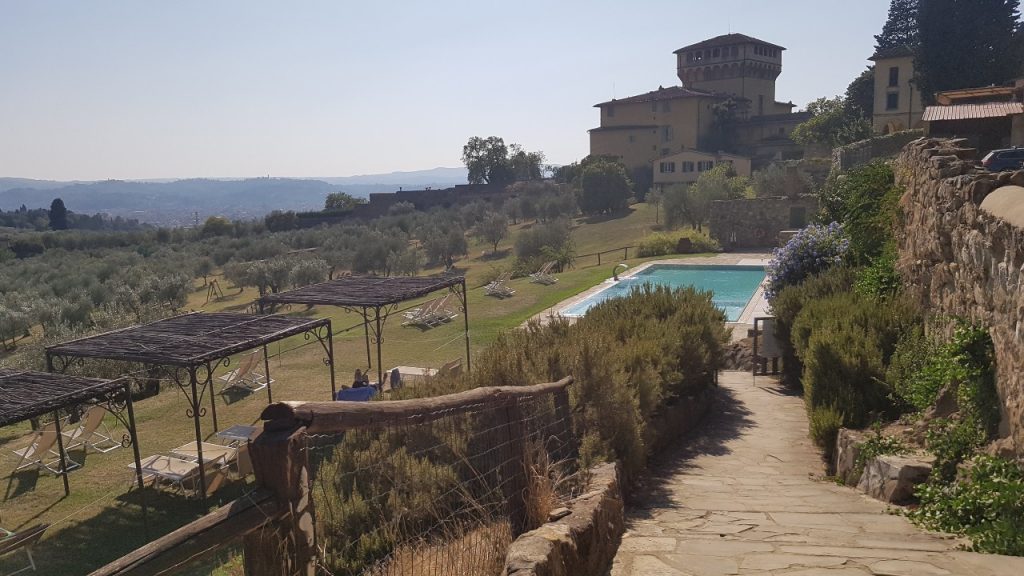
fattoria di maiano firenze panorama

A must if you come to Florence with children, particularly in the spring and summer.

Fattoria di Maiano is something you really don’t expect to be a few minutes away from a large city. The farm stands in the middle of the green countryside, with free-range animals, a botanical garden, a pond and tower, trekking routes, learning activities, a swimming pool, and its own local products.

fattoria di maiano firenze

Escape from it all and explore the Botanical Garden. Picnic on the baskets sold on the farm. There are many free areas with tables and benches in the shade of the olive trees.

The farmhouse also provides accommodation options, with rooms and apartments for tourist stays, an outdoor swimming pool, and a renowned restaurant that offers excellent typical Florentine specialities.

Where: Via Benedetto da Maiano 11, Fiesole. About 15 minutes from central Florence by car. Tel: (+39) 05559432

2. IL Gigante Theme Park

The Il Gigante Theme Park, the largest in Tuscany, is about 20 minutes from Florence.

parco avventura il gigante firenze

The park is in the middle of a forest on the Florence hills, which also has a bar offering sandwiches, drinks, coffee, and eating areas.

The park offers 18 routes for adventure-loving children (from the age of 3) and adults. All the equipment to complete the routes is provided on-site. There is a large free parking area in front of the entrance, and the beautiful Villa Demidoff park/museum is across the street. Entry to Villa Demidoff park is free.

There children can see the huge COLOSSO dell’APPENNINO statue, as well as other smaller statues scattered all over the park.

gigante dell_appennino villa demidoff firenze

Where: Via Fiorentina, 276, 50036 Vaglia (FI)

3. Take a river trip down the Arno

If you are looking for a romantic activity different from the usual tours on foot, you will love this. Trips are made on small boats, similar to gondolas, and take about one hour. Italian and sometimes bilingual (usually Italian and English) are available.

The view from the boat is unique, and if you are an amateur photographer, you’ll be able to take some fantastic pictures, especially at sunset.

tramonto fiume arno firenze

4. Climbing the 463 steps to the top of the Duomo

Those 463 steps didn’t scare you away, did they? Challenge the children to climb up to the top: the view is spectacular! Tickets to the dome can be easily bought online or on-site. I recommend buying them well in advance, particularly in the high season (summer).

vista cupola duomo firenze

Where: Piazza del Duomo, Florence

5. Rose Garden below Piazzale Michelangelo

The beautiful Rose Garden is below the famous Piazzale Michelangelo. Entrance is free.

giardino delle rose firenze

The garden is open throughout the year from 9 am to 8 pm, but the best time to go is when the roses are blooming. It’s a must for those taking Instagram shots in Florence. The views are breath-taking!

vista piazzale michelangelo firenze

The garden is a 20-minute walk from the city centre (but bear in mind that it’s a rather steep slope). Driving is another option – the taxi fare is pretty cheap.

Where: Viale giuseppe Poggi 2, Florence.

6. Visiting the historic centre with PARTECIPART

Your children are not excited by the idea of so many monuments, statues, and museums? No problem. The all-women team at Partecipart will solve the problem.

Who are they? Eugenia, Francesca, Laura, and Marta, 4 young friends who are art historians and tourist guides, have created “experiences” and tours adapted to every family.

Quizzes, treasure hunts, DIY kits with pencils, maps, and competitions to do with the children, as well as guided visits to the main museums in Florence to learn about the works of art there in a fun way. The Partecipart speak Italian, Spanish, French, German, and English.

Contact: Eugenia (+39) 3204093941-Francesca (+39) 3387172178-LAURA (+39) 3661856259-MARTA (+39) 3337613187

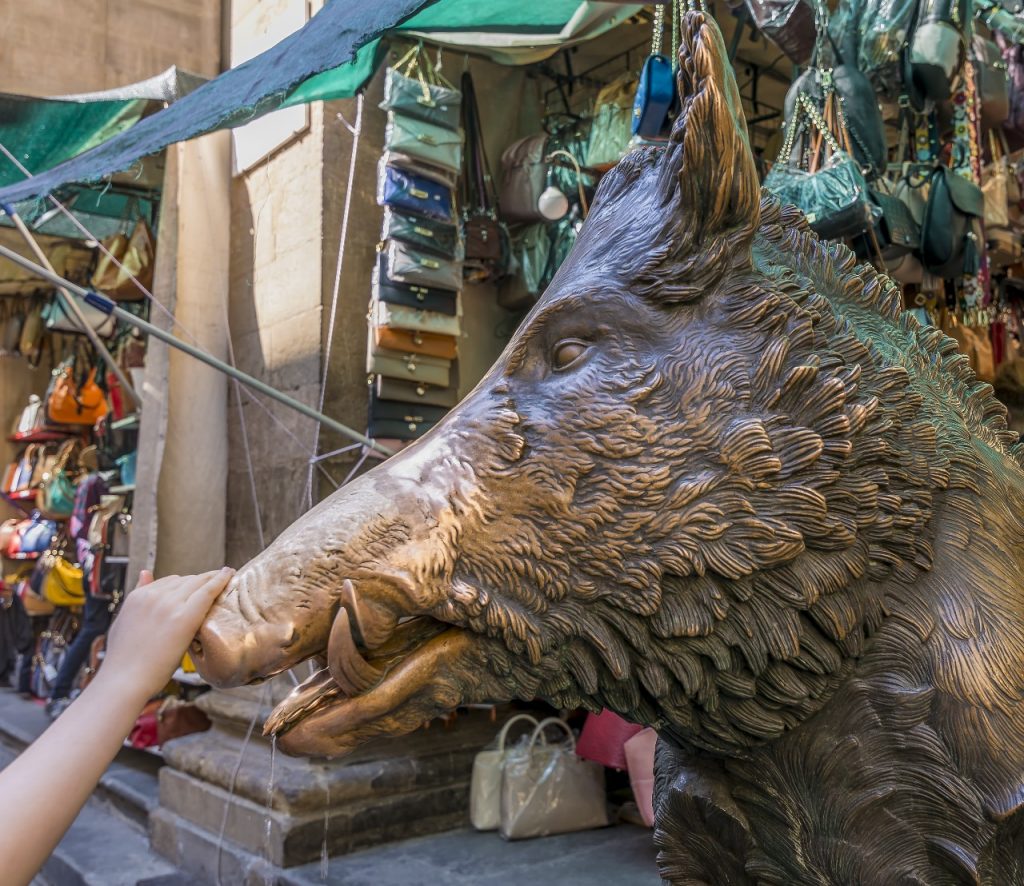
7. Try your luck at the Fontana del Porcellino

When you are walking through the streets in the city centre, towards Mercato Nuovo, try your luck at Fontana del Porcellino.

The tradition is this: take a coin and pet the snout of the bronze boar after whom the fountain is named, then drop the coin. If it falls on the drain, Fortune will smile on you.

fontana del porcellino

Where: Piazza del Mercato Nuovo

8. Try machines invented by Leonardo da Vinci

When I think about museums, the first thing that comes to mind is “Do not touch”, “No photographs”, and so many other “NO” signs. Not exactly suitable for children, is it?

For this reason, when I travel with my kid, I’m always on the lookout for interactive museums where he can do fun, age-appropriate activities. In Florence there are so many museums that offer family experiences – one of our favourites is the Leonardo da Vinci Museum.

Here you will find the reproductions of the most famous machines invented by the Florentine genius, and activate all the fully-functional mechanisms. Our favourite is the Large Tank.

The museum also has an interactive laboratory area where you can try to build Leonardo’s inventions, such as the Self-Supporting Dome or The Bridge. Will you succeed, or will it all come tumbling down?

Where: Via dei servi, 66/r. Tel: (+39) 055282966

9. Dinner in Piazza Santa Maria Novella- Ristorante LA BOTTEGA

In Florence you can eat well practically anywhere, but our favourite sport is romantic and welcoming, directly on piazza di Santa Maria Novella.

ristorante la bottega firenze

La Bottega is a historic restaurant in the Florence city centre, combining typical Tuscan dishes with the delicious Sardinian cooking, perfectly cooked using high-quality ingredients.

Their pizza is made using a slow-raising natural yeast dough, and is delicious. Grazziano, the owner, will be happy to give you his recommendations.

Where: P.za di Santa Maria Novella, Florence. Tel: (+39) 055282438

10. Write a tiny love letter at Dante and Beatrice’s church

We all know about Dante’s love story with Beatrice. But if you are not Florentine, you may overlook this little-known church where Dante first saw Beatrice for the first time as a boy.

Santa Margherita dei Cerchi is the church on via Santa Margherita which is also known as Dante and Beatrice’s church, because it is said that it is here that Dante first saw and fell madly in love with her, at the age of 9.

Interesting fact: inside the church there’s a pink basket where anyone can leave a slip stating their love or something nice. Bring paper and pen and ask the children to draw or write something. That will be a good excuse to go into the church ;).

Now that you know how to have fun with children in one of the most beautiful cities in Italy, all you have to do is find a cheap flight and explore the wonderful Tuscany!

Surrounded by the Tuscany culture and atmosphere, Pisa is a lot more than a beautiful photo, a lot more than a tower and a lot more than a city. To reach the top of its iconic Tower of Pisa you will have to climb 249 steps until you reach its melodic bell tower. Let’s not forget its important cultural legacy: Pisa today is the host of three of Italy’s most relevant universities. Pisa is a mixture of knowledge, little backstreets, classic Mediterranean flavours and a lot of history.

Florence: the Capital of the Renaissance, the home of numerous landmark masterpieces of Western art, yet genuinely popular, with a population famous for their sharp tongue and bawdy humour. The first fashion capital of Italy, with the most sophisticated restaurants and shops, but also a university town, with an intense nightlife. So do marvel at the history and the art, but don’t forget to have a real Italian aperitivo, go to a market and visit the trendiest wine bars, and you’ll discover a lively and vibrant city.

Set in the medieval Santa María neighbourhood, close to Ponte di Mezzo, the Tornalibro bookstore opened its doors in 2007. So what makes this store so special compared to other bookstores? This space, dedicated to the cult of literature, was born through the restoration of an ancient house-castle, making it ideal for a few minutes of relaxation, while time traveling through the pages of


their timeless books. Here you can find a bit of everything: new releases, second hand titles, and even rare classics. If you are looking for a unique and special souvenir or gift, this might be the perfect option to find something extraordinary. They also host a number of events, talks, recitals, presentations and exhibitions, so have a look at their programming and plan your visit well ahead.

Welcome to the oldest botanic garden in the world. While you may, or may not, be a plant enthusiastic, this spectacular park, located next to the famous Piazza dei Cavalieri, will captivate you with its vast range of historical, medicinal as well as aquatic, plants. Some more than 200 years old! The garden is also the host of the

Botanic Museum, filled with educational and scientific collections. Feel like Alice in Wonderland as you stroll through this space complete with pureness, making it perfect for a restful walk and a few minutes of contemplation. On sunny days this lovely garden is the ideal place for a picnic with friends.

To enjoy a good lunch or dinner without falling into a tourist trap you are better off to move away from the lovely Piazza dei Miracoli. When walking along the river close by you will find the Piazza Chiara Gambacorti, a buzzling and pleasant square, slightly off the tourist path. Here you will find Il Bistrot, an authentic Italian restaurant without trickeries. Their great


service and attention make it worthwhile to trust their food recommendations. Try their original pasta dishes with different sauces, or the fresh fish combined with a local wine, such as the Chianti Colline Pisane. By the way, do not cut the spaghetti! That is seen as quite a inelegant gesture in Tuscany. And to finish off, try their tiramisu, which is indeed spectacular.

Some cities are ideal to be enjoyed on a bicycle and Pisa, being mainly flat, is one of them. If you have a day off, rent a bicycle and spend the day along the extensive Arno riverbank, surrounded by magical backstreets, or “lungarni”. When it is time to refuel and take a break, a stop at the classic homemade ice cream parlour De’Coltelli is quite the treat. Really delicious! You can also head


towards the beaches at Marina di Pisa, Calambrone and Tirrenia, dotted with blue sun loungers and striped parasols, making you feel as if you are part of a movie. And if you are of the adventurous sort we recommend you head towards the beautiful city of Lucca, some 38 kilometres away, while passing through some very impressive landscape.

SHALL WE INSPIRE YOUR NEXT TRIP?