If you look for photos of Balos Lagoon on Google, you’ll find thousands of images with pinkish-white sand, impossibly clear turquoise waters and a kind of beach nirvana straight out of an Instagrammer’s imagination. But the reality, as always, is a bit more interesting (tastier, dustier, and yes, also more fun!).
Today, we’re not going to tell you how pretty Balos is —you know that already— but how to enjoy it without ending up looking like a lobster among the hordes of tourists, and how to really connect with this unique corner of Crete. Because Balos is about much more than a picturesque beach: it’s about history, wild landscapes, local life… and we’ll give you a couple of tips to make you feel like a genuine Cretan insider.
Where is Balos and why does everyone want to go there?
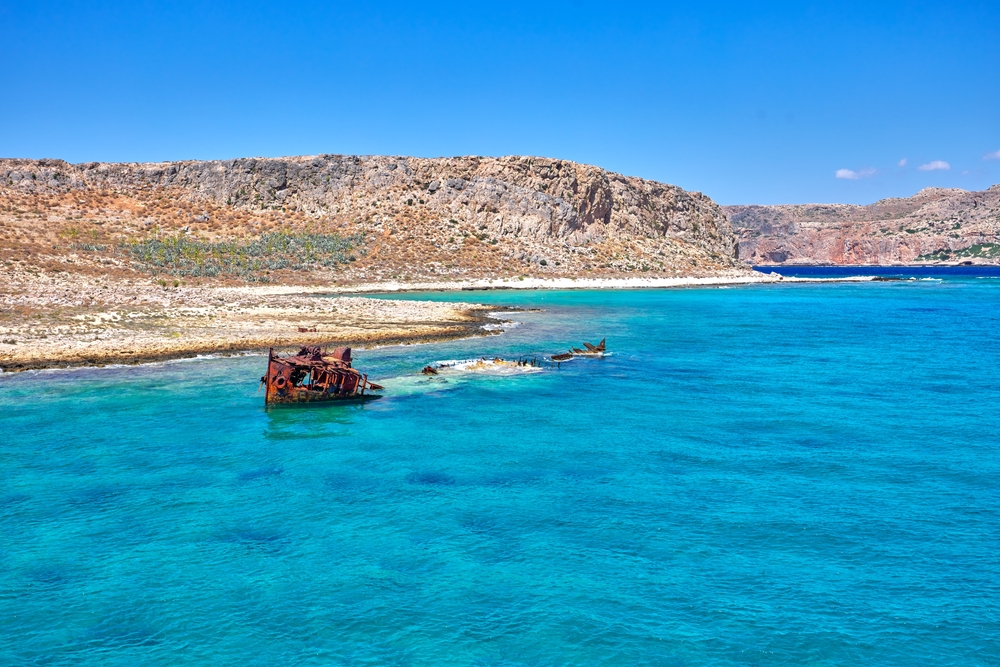
Balos is on the northeast tip of the island of Crete, in the region of Chania, and forms part of a protected nature reserve. Technically, it’s a lagoon formed between the Gramvousa Peninsula and Cape Tigani, giving it that distinctive shape you see in aerial photos.

The beauty of this spot lies in its magical combination of colours: crystal-clear waters ranging from electric blue to emerald green, sand banks that look like whipped cream, and an arid mountain watching over it all. Spoiler alert: you’re going to want to stay for good. Or at least take a long siesta under your beach umbrella!
How to get there without losing heart (or your sense of humour)
Here’s where the tip comes in. There are three ways of reaching Balos:
- By car (and a bit of a 4×4 adventure): From Kissamos, you take a rough and ready dirt track (around 7km of potholes, dust and goats with attitude). At the end of the track there’s a carpark (payment required), followed by a 20-minute walk down to the lagoon. Be warned: the way back is uphill. But the views from the path are worth every ounce of sweat. A pro tip: wear comfortable trainers; flip-flops are for the sand, not for negotiating stony ground.

- By boat from Kissamos harbour: more comfortable, with more tourists. It usually includes a stop at the island of Imeri Gramvousa, with its Venetian castle and idyllic waters. This is ideal if you have children with you or you prefer not to drive.
- On foot from Kaliviani: only for the brave. A walk of about 10km through remote landscapes, with the smell of wild sage and absolute silence. If you choose this option, set off nice and early and take plenty of water with you, as if you’re crossing the Sahara.
Avoiding the crowds (yes, it is possible!)
If you don’t like crowds, you’ll be glad to know that Balos is a whole different world before 10am or after 5pm.
Most tourists arrive in boats that moor up between 11am and 3pm, so if you get up very early or you’re someone who stays around until late to watch the sun go down, you’ll have the lagoon practically all to yourself. Sunset from the viewpoint is out of this world.

Things to do (besides floating in turquoise waters and taking photos)
- Go up to the viewpoint: There’s a viewpoint on the path from the carpark where you can take THE photo. Don’t rush; savour the moment. If you take some fruit with you it’s the ideal spot for a mini Cretan picnic with a view.
- Go snorkelling, simple but fun: it may not be the Great Barrier Reef, but the waters of Balos are perfect for floating and watching small fish. Ideal for beginners and children.

- Explore the island of Gramvousa: if you’re going by boat, take the opportunity to walk up to the Venetian castle. From there you’ll get the best view of Balos. But do make sure you take some water with you; the climb in full sun is hard work.
- Pick up microplastics or litter if you come across any: yes, you, the responsible tourist. Sometimes the wind blows things into the sea. If every visitor picks up one plastic bag, Balos will shine a bit more brightly. And the loggerhead sea turtle will thank you for it.
Facilities and amenities (this is important)
At Balos there are no hotels, bars or showers. Just one single, very basic beach kiosk, selling drinks and snacks. N.B.: take food, water, suncream and an umbrella with you.
The organised boat trips tend to include food on board or on land, but if you’re doing your own thing, it’s a good idea to take a picnic. And if you want to eat really well, wait until you get back to Kissamos or Kaliviani.
Where to eat after Balos (because the sea gives you an appetite)
- Gramboussa Restaurant (Kaliviani): Cretan home cooking, stunning views and generous portions. The moussaka is something else.
- Stelios & Katina (Kissamos): A friendly atmosphere, fresh fish and a terrace ideal for watching the sun go down.
- Castello Taverna (Kissamos): A local little gem. Order the “dakos” (Cretan bread topped with tomato and feta) and a carafe of house wine. But be careful: you may not make it back to the airport.

Little things to make your visit great
- Respect the flora and fauna. The Balos dunes are covered in fragile native plants. Don’t stray from the paths or take sand or pebbles away with you (yes, people do… but not you).
- Avoid loud music or speakerphone. The lagoon’s natural silence is part of its magic. Just listening to the wind and the water is pure luxury.
- If you fall in love with this place, come back in the off-season. September and early October are ideal: the water is still warm, it’s less busy and the locals are more relaxed.

Balos is not just a place, it’s an experience
Visiting Balos Lagoon is not something to be ticked off your travel list. It’s a little adventure, a salt bath, a living picture postcard. A moment when nature pats you on the back and says: “hey, slow down, take a breath, you’re in Crete”.
And like any magical place, you need to treat it with respect. So when you come back another day (because you surely will), Balos will still be that idyllic spot where the sea and the sky meet with a kiss.