archive.php
Every 23 June, the city of A Coruña is transformed. The smell of roasted sardines fills the streets from midday onwards, the locals come out in force to meet up with friends and family and planks of wood inundate the beaches on the peninsula of A Coruña, just like in the lead-up to a bonfire night. This is the magic of San Juan, which for almost a decade has been a Fiesta of International Tourist Interest on this part of the Atlantic.

The Bonfires of San Juan, A Coruña

The tradition goes that with the arrival of the summer solstice, on the shortest night of the year, fire has purifying properties. On the Noite Meiga (magic night), A Coruña’s festivities par excellence, thousands of people come together on the sands.

Gradually, as night approaches, the numerous bonfires are lit, although the beaches of Riazor and Orzán are where the celebrations reach their highpoint. At midnight, a huge bonfire, built there two days earlier, starts burning, as the crowds bathe in the waters of Riazor, in a traditional purifying ritual. The sky is alight with fireworks and the festivities spill out onto the streets of A Coruña until the following morning.

San Juan A Coruña 2024

The festivities of San Juan in A Coruña are a time for great celebration and joy, with cultural traditions combining with social and gastronomic activities for everyone to enjoy together.

Here’s a summary of everything you need to know about this festival:

  • May and June: the preparations begin for the festival of San Juan. Throughout the month of June, numerous traditional, cultural, social and sporting activities are held.
  • Concerts and cultural events: cultural events such as chamber music concerts, recitals, exhibitions, ballet and regional dancing are held in traditional parts of the city.
  • 23 June 2024: the main day of the San Juan festivities. The whole day is full of parades with bands, bagpipes, traditional dancing and processions of giants and cabezudos (carnival figures with large heads).
  • Plaza de María Pita, A Coruña: this square becomes the stage for a music festival during the San Juan celebrations.
  • Sardiñadas: one of the most popular traditions is the sardiñada, where sardines are grilled and shared with neighbours and friends in the city’s neighbourhoods.

The Programme for San Juan A Coruña 2024 – 23 June

Whilst the festival begins with the first plates of sardines and grilled meats at midday, the main course arrives around midnight by the bay. The festivities burst into life with the firework display that lights up the Bay of Orzán and the burning of the falla, or effigy, when the clock strikes midnight.

san juan coruña

And only then can the bonfires be lit by the crowds of families and friends on the beaches.

Festivities on the beach of Riazor

The design of the falla installed on Riazor Beach changes from year to year. Every June it updates its figures to relate to the affairs of the last few months in the city, with frequent references to sports teams such as R.C. Deportivo and H.C. Liceo, as well as other symbols of the city, such as the Tower of Hercules lighthouse. So this is one of the most sought after photos towards the end of the month.

falla san juan riazor 2022

Sardiñadas 2024 y otras tradiciones gastronómicas

“Polo San Xoán, a sardiña molla o pan”, as the famous saying goes (roughly translated as “At San Juan, sardines soak the bread”). And in A Coruña you can’t imagine a celebration without its corresponding delicacies. In this case, all you need is a good loaf of bread and the sardines that arrive in the early hours of the morning at the fish market, the Lonja, to enjoy the traditional “sardiñada”. As per usual in the Atlantic Diet, the quality of the ingredients makes any dish shine.

sardiñada san juan coruña

It is also customary to find churrascadas on the grills (pork and beef, normally accompanied by potatoes) and original reinterpretations of these two delicacies.

Another classic is the ‘queimada’, a drink made from a blend of aguardiente de orujo (a local brandy), sugar, coffee beans, orange and lemon. But to make it properly, you can’t just put these ingredients together. It needs to be made outdoors in a clay receptacle, once night has fallen, and most importantly, whilst reciting alongside the blue flame that burns the alcohol, the corresponding ‘conxuro’, or spell, which begins like this: “Mouchos, curuxas, sapos e bruxas” (“Little owls, barn owls, toads and witches”).

San Juan beyond the bonfires

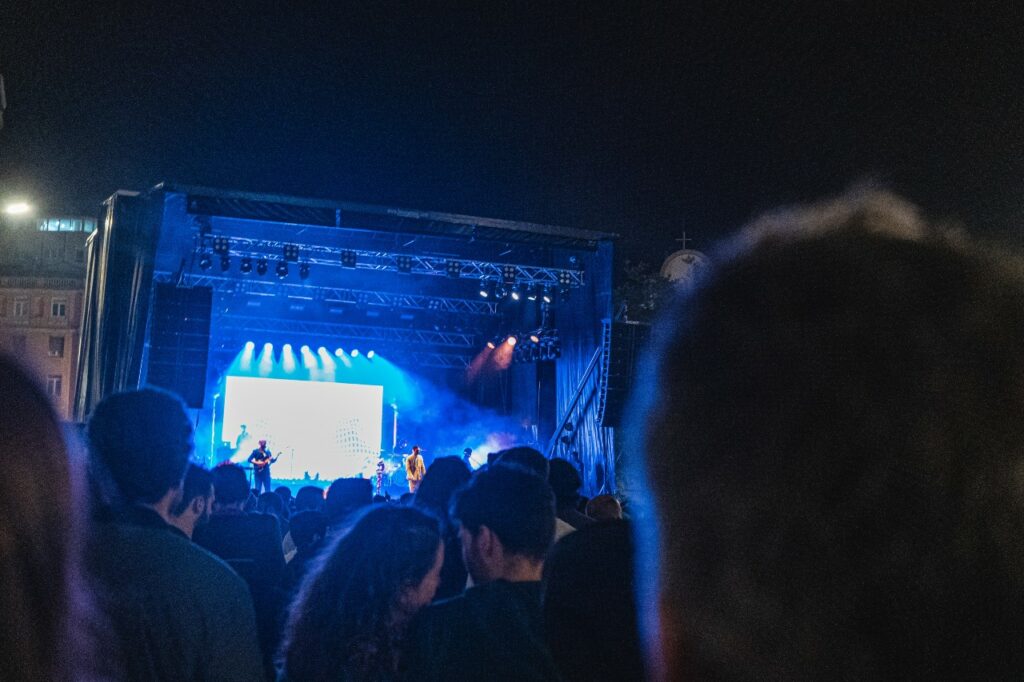
But it’s not all bonfires and sardines. San Juan is celebrated throughout the streets of A Coruña with an extensive programme of activities, starting before the 23rd arrives. Concerts, parades, performances of traditional dance and theatre, as well as workshops for the whole family, fill the city in the days leading up to the special night. San Juan reaches all neighbourhoods of A Coruña, with residents organising in their streets (many of which are now pedestrian, such as Pardo Bazán) popular sardiñadas and concerts.
concierto riazor san juan

Calle San Juan in A Coruña

One of the epicentres is, of course, the street of San Juan. Hundreds of people gather in the bars to celebrate the first days of sun and warmth in this area where people normally relax, very close to the Campo da Leña. This was the very square in which the bonfires of San Juan were erected between the 19th and 20th centuries, in an area close to the old church dedicated to this saint.

Nowadays, on Noite Meiga itself, the light from the bonfires that illuminate the beaches of Riazor, Orzán and Matadero accompanies the concert held on the esplanade next to the Palacio de los Deportes sports arena. But the spirit of San Juan can be found in all corners and on all beaches of the city, not just on the central beaches of Riazor and Orzán, which inspired the young Picasso.

Jumping over the bonfire at San Juan 2024

This is also the night when we can rid ourselves of the curse by saying “meigas fóra” (away with the witches), because we know that “habelas, hainas” (they do exist!). To do this, you need to jump over the bonfire (the number of times varies per house), on which everything you want to leave behind is also burned.

salto hoguera san juan

And the following morning, tradition dictates that you wash your face with the water of the seven herbs of San Juan: fennel, fern, codeso (a yellow flowering shrub), St. John’s wort, mallow, rosemary and lemon verbena. This ritual wards off witches and the evil eye, cleansing the spirit of whoever performs it.

Summer 2024 in A Coruña

Although summer technically starts a few days earlier, on 21 June, anyone from A Coruña will claim that spring is not over until Noite Meiga has passed. This festival marks the official beginning of summer in A Coruña.

For weeks on end, as the sun sets late over the Atlantic Ocean, the beaches fill up with bathers and surfers, and the streets get ready to host concerts, musical performances and more festivals. The Morriña Fest, Atlantic Pride and the Feira das Marabillas in July, and the fiestas of María Pita with the Festival Noroeste Estrella Galicia throughout the month of August, pick up the baton from San Juan for a summer of celebration in the city.

hoguera falla coruña san juan

In A Coruña we have so many reasons why San Juan, or San Xoán, is a unique and unmissable experience, a definite date in the diary of anyone who loves to travel, and the best way of welcoming summer again. Come and join us for the most typical fiesta of our city and be amazed by Noite Meiga on the Atlantic coast.

There are places where the sunsets are special, where every day is a new adventure, and where every evening paints a different picture which, if you’re lucky, is like nothing you’ve ever seen before.

A Coruña‘s geographical location makes it a special place for marvelling at spectacular, brightly-coloured sunsets. It takes the sun about an hour to set at the end of each day in this Herculean city, at which time the sky takes on a new colour palette which reaches its peak intensity at the end of the day.

A Coruña is on a peninsula, meaning you’ll be facing Orzán, Riazor, San Pedro, and the city’s Tower of Hercules when you enjoy its sunsets. This is the city’s western coastline, which faces the Atlantic, though watching the sky turning red and reflecting off the windows of the Galerías de la Marina is another view worth treating your eyes to.

bahía riazor atardecer

These places serve as viewpoints for the sunset each day which, depending on the day, can take on unique characteristics and different backgrounds. Also, you can watch the sun as it sets over the horizon of the Atlantic, and if you wait a few more minutes, you’ll see how the light from beyond the horizon produces a range of fascinating colours; and if you’re lucky and there are clouds in the sky, they light up spectacularly.

The Best Places to Admire the Sunset in A Coruña

If you’re lucky enough to be spending a few days in this north-western Galician city, we have some recommendations for the best places to enjoy the sunsets, where all that’s missing is a bowl of popcorn to make you feel like you’re watching an exclusive show.

1. San Pedro Mountain

monte de san pedro atardecer coruña

This park, which juts out into the Atlantic, is perfect for enjoying the most panoramic scenery you’ll find anywhere in A Coruña. Its privileged location was used to guard and defend the city, and the calibre of the two large cannons you can visit here are testament to that. Whether laying down in the grass or just going for a walk, every sunset over the Atlantic will make whatever you’re doing an enjoyable experience.

2. Ventana al atlántico

O Portiño atardecer A Coruña

Under San Pedro Mountain you’ll find O Portiño, a location reachable by car with a bit more wilderness to it. In the sea facing this location, you’ll be able to see the Islands of San Pedro, which have been declared a National Landscape of Local Interest. At this viewpoint, you’ll find the Ventana al Atlántico sculpture, an unparalleled frame for a photograph with the ocean in the background, and the perfect place for watching how the sun sets every day, as well as discovering exceptional natural surroundings. In this area, you can also find a small port and some bars where you can watch the ‘solpores’ ( ‘sunset’ in Gallego) as you sip a cold, fresh beer.

3. The Tower of Hercules

torre de hercules atardecer A Coruña

On top of its history and patrimonial interest, plus the fact that it’s the oldest operating lighthouse in the world, what also makes this tower an interesting location are its spectacular surroundings, comprising of a large park where nature thrives and combines with the strength and determination of the Atlantic. Don’t miss the Tower of Hercules’ Sculpture Garden, which is home to 18 sculptures. One such sculpture which always catches people’s eyes is the Rosa dos Ventos, by Tono Correa Corredoira. This circular mosaic pays homage to Celtic countries, and it reflects every ray of the setting sun’s light.

rosa dos ventos escultura a coruña

This sculpture is one of A Coruña’s most photographed scenes, and if you manage to pay it a visit as the sun is setting, you’ll take what is likely to remain your profile photo for a long time. Also, in the area surrounding the Tower of Hercules you can find the Ara Solis sculpture by Silverio Rivas, in honour of how the sun sinks every day into the Finisterrae coruñés (the end of the earth according to the Romans). It forms an arch through which the sun falls over the Illas Sisargas, the islands located in Malpica de Bergantiños, which you can make out on the horizon from the provincial capital.

4. The A Coruña Promenade

Atardecer Paseo Maritimo A Coruña

It’s the longest in continental Europe and borders a large part of the city, from La Marina to O Portiño. It borders the Bay of Riazor, between the Tower of Hercules and the Millennium, where you can find the city’s largest and most well-known beaches. There are a few viewpoints along the way between the beaches of Riazor, Orzán, and Matadero, which are perfect for putting your feet up while listening to the sound of the Atlantic. Amongst these viewpoints, you’ll find As Lagoas (also known as Finca dos Mariño), the Surfers Fountain, the Coraza (part of the ancient city wall dividing the beaches of Orzán and Riazor), and also the Esclavas Esplanade, which juts out into the Atlantic and provides a view of both the beaches and the ocean.

5. The Mera Lighthouses

faros de mera atardecer

These two adjacent lighthouses are found opposite the Tower of Hercules. Once a boat sees them line up, they know they’re entering the city’s waters. They face the UNESCO World Heritage lighthouse, so the sun rests right on top of this symbolic tower. This place is a favourite for photography lovers who seek the perfect backlighting for a photo of the sun hugging the Roman tower. What’s more, it’s in the local council of Oleiros, and nearby you’ll find the towns of Mera and Santa Cruz, must-see places if you end up with some free time for a little getaway around the outskirts of A Coruña.

We hope this guide will help you enjoy the very best sunsets of this dreamy city on the Atlantic coast.

Photography, painting, fashion… A Coruña has always been an inspiring place for artists of all kinds. With its streets steeped in history and its breathtaking landscapes, constantly lapped by the Atlantic, this city in the northwest of the peninsula has been and continues to be home to creatives. Its numerous exhibition spaces, with touring and permanent exhibitions, also make the city the perfect meeting place for lovers of art and culture.

All year round, A Coruña boasts an excellent network of both history and science museums that help us learn more about the city, but also about ourselves. But the Aquarium, the Domus, the Castle of San Antón and even the Tower of Hercules are joined by the different foundations, galleries and newly emerging spaces that hold exhibitions in the city, many of these international in nature and coming to Spain for the first time. And almost all of them are free!

The history of fashion in a unique world exhibition

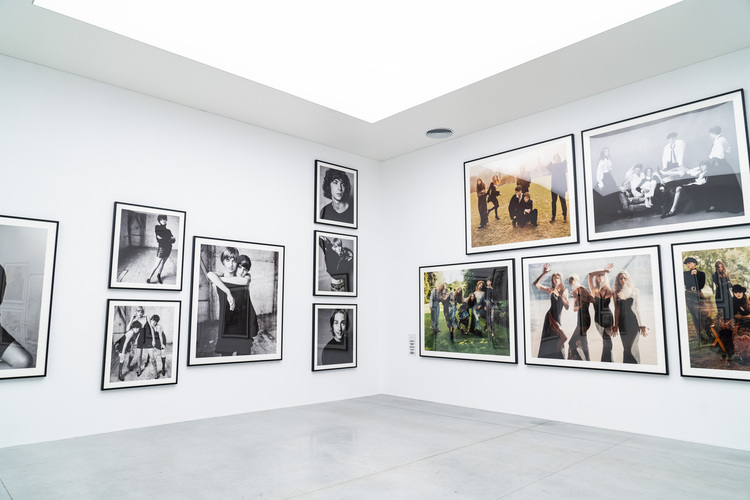
Steven Meisel 1993: A Year in Photographs consists of around 100 photographs that capture the most prolific year in the life of this fashion photographer. This is the number of photographs that the public can view at the exhibition promoted by the Marta Ortega Pérez Foundation in the Galician city, which continues to establish itself as a leading light in the fashion industry, not only nationally, but also internationally.

expo meisel a coruña

The studio of the creator of numerous covers for Vogue and Per Lui, among others, has selected exclusively for this homage the images that occupy the walls of a space that’s worth a visit in its own right. The exhibition is showing at the Muelle de Batería in A Coruña, a port area that is usually closed to the public, but which the team behind the exhibition have made it their business to transform. The port silos are now a café and merchandise shop that respects the urban and port aesthetic, with a modern touch.

As visitors pass an artificial lake and a walkway that appeals to all the senses, they enter some containers which inside take them back to the era of the supermodel. Once inside, videos on the four walls introduce them to the figure of Meisel through the eyes of those who know him best, with contributions from Hamish Bowles, Edward Enninful, Grace Coddington, Anna Sui and Naomi Campbell. In the neighbouring rooms, the history of fashion.

expo meisel a coruña sala interna

Meisel’s aim was to capture to perfection the soul of the models and the outfits they were wearing, from the most classic to the most subversive and ingenious, whether in black and white or in colour. It was the birth of the supermodel.

The exhibition, the second large photography show to be organised by the MOP Foundation in A Coruña, is open from Monday to Sunday until 1 May 2023.

Discover how instant photography began

Lovers of photography have another must-see very close to the docks; they just need to cross the Méndez Núñez gardens. Right in the heart of the Cantones area is the Barrié Foundation, which is currently complementing its permanent exhibition with the free exhibition Proyecto Polaroid: en la intersección del arte y la tecnología (Project Polaroid: in the intersection of art and technology).

expo polaroid a coruña

Whilst these days it seems normal to us to see a photo seconds after taking it, it has not always been this way. With the arrival of Polaroid, the instant photo was popularised thanks to a revolutionary technology. Photos went from simply having a documentation purpose to becoming one more form of artistic expression.

Ansel Adams, André Kertész, Dennis Hopper, Andy Warhol and Robert Mapplethorpe, among others, are the creators of the images included in this Proyecto Polaroid. It was then that photography started to talk to art and technology, and the exhibition itself displays experimental instant photos, edited and modified in multiple ways, which set the course of photography on a commercial level, but also socially and culturally.

expo polaroid a coruña

Now, over 300 works tell this story in A Coruña, taking us from the 1940s up to the present day. The Galician city is one of the stops on its international tour, before it goes to Taipei and after visiting cities such as Vienna, Hamburg, Berlin and Singapore. The exhibition is showing for the first time in Spain at the Barrié Foundation until 9 July 2023

The city of the first Picasso

Maybe today you’re the one photographing the beaches of Riazor, Orzán or the iconic Tower of Hercules. But just over a century ago, a young painter who would leave his mark on the world of art had already portrayed them with an impeccable technique. This painter was Pablo Picasso.

Not many people know that the artist from Malaga spent part of his childhood in A Coruña, specifically between 1891 and 1895. It was here that he began to develop his artistic career, learning from his father and his teachers at the A Coruña School of Fine Arts. Half a century after his death, A Coruña is pulling out all the stops in 2023 with the Picasso Celebration, in conjunction with cities such as Bilbao, Madrid, Barcelona, Malaga and Paris. 

Over the coming months, different spaces in the city are commemorating the painter. One of the key venues is the Casa Museo Picasso, which is offering guided tours of his former family home, as well as theatre performances within the Proxecto Vinte (which includes one inspired by the artist’s family life, coinciding with the anniversary of his death on 8 April). It is also hosting the exhibitions ‘Abrindo a nosa colección’, (Opening our collection) with documents and works from the municipal archive, and others such as ‘El Guernica, una viñeta universal‘ (Guernica, a universal vignette), ‘Carteles en homenaje a Pablo Ruiz Picasso‘ (Posters in homage to Pablo Ruiz Picasso) and ‘Na miña casa‘ (In my house).

Abrindo a nosa colección picasso a coruña

Alongside this, the city’s Museum of Fine Arts is showing until June the exhibition ‘Picasso, blanco en el recuerdo azul’ (Picasso, white in the blue memory), which explores the artist’s evolution with references to his A Coruña period. Meanwhile, the Kiosco Alfonso is hosting until April at ‘En pretérito seguinte’ (In the following past tense) contemporary artists in the city who, like Picasso, were inspired by A Coruña when creating their works. The María José Jove Foundation is showing until the end of the year the exhibition ‘Ruiz A Coruña 1894 – Picasso París 1922’.

The Palexco convention and exhibition centre is also participating, with the exhibition ‘O vento comezou de novo. O mundo de Pablo Ruiz contado por Villalobo’ (The wind started up again. The world of Pablo Ruiz told by Villalobo) with around 100 works created between 1970 and 2022 by Nelson Villalobo, who pays homage to Picasso in his own artwork. At the Luis Seoane Foundation the series of conferences ‘Amantes, musas, modelos. Picasso e as súas mulleres‘ (Loves, muses, models. Picasso and his women) between February and October, explores the influence and relationship of Picasso with different women in his life.

picasso a coruña

The International Festival of Muralism in April, various concerts in the city’s concert halls and the WOMEX festival in October are taking place in addition to the Picasso Celebration in A Coruña during this year of 2023.

As usual, the city’s cultural agenda never stops and offers numerous programmes to enhance a visit over several days to the unmissable places in this city on the Atlantic.

Pablo Picasso, one of the most influential artists of the 20th century, was inspired by many cities. There is his native Málaga; Barcelona, where he grew up; and Paris, where he inspired new artistic movements, but it was in A Coruña where Picasso the artist was born.

It was in October 1891 when the Ruíz Picasso family moved to 14 Calle Payo Gómez in A Coruña, close to the School of Fine Arts, where his father would become a teacher just a year after the school’s inauguration. Between the ages of 10 and 14, Picasso took to the streets of A Coruña with his paintbrushes, marking the beginnings of a stellar career.

A Coruña’s mark on Picasso

Inspiration was all around him, and the young Picasso poured this into his initial works. Some of his first drawings depict the people of A Coruña, places such as the Church of San Jorge, and the downtown beaches of Riazor and Orzán, all of them stop-offs on the fantastic Picasso tour that can be taken through the city today.

playa de Riazor Coruña
Riazor beach

The Tower of Hercules, dating from the Roman period and the oldest operational lighthouse in the world, deeply inspired Picasso – it was a sight that resonated with the Málaga-born artist in the late 19th century. The painter depicted this World Heritage Site in an oil painting on panel and in one of the newspapers he edited. Father and son even renamed the lighthouse “Torre de Caramelo” [Candy Tower], in reference to the way the sunlight reflects off the granite. This is also the title of one of Picasso’s works.

torre de hercules coruña
Tower of Hercules

From his early years as an artist came “The Barefoot Girl”, his first masterpiece, which can now be seen in the Picasso Museum in Paris, although it was A Coruña that became the first city to host a Picasso exhibition.

The first of these was at number 20 Calle Real, which was then a furniture shop, where some of his earliest canvases would be displayed in the shop window, which he probably painted at the School of Fine Arts. Soon enough he would exhibit again in another establishment on the same street, after receiving rave reviews from the local press, who predicted a “brilliant future” for the artist.

It was at this time that some of his recurring leitmotifs began to appear; the fauns, which would feature in a plaster sculpture, or “Man with a Lamb”, which had already appeared in his A Coruña iconography in a charcoal drawing from 1894, not to mention the many doves. It is said that one of the best pictures painted by his father, an oil on canvas depicting a dovecote, bore some of the young Pablo’s strokes on the birds’ legs.

Picasso’s adventure in A Coruña came to a tragic end in 1895, when the family left for Barcelona after the death of his sister Conchita from diphtheria. She was buried in the Cemetery of San Amaro, one of the oldest in Europe, and the setting for the work “Responso por la muerte de Conchita de Picasso” [Response to the death of Picasso’s Conchita], which he would paint shortly afterwards.

cementerio de San Amaro
Cementery of San Amaro

Picasso’s mark on A Coruña

Pablo Picasso’s presence in the city of A Coruña is still palpable today. The School of Fine Arts is no longer situated in the Plaza de Pontevedra, as it was in the late 19th century. In its place however, is the Eusebio da Guarda Secondary School, and a statue of the Dove of Peace that Picasso designed for the 1949 World Peace Congress in Paris that can be seen outside.

plaza de pontevedra coruña

The new art and design school, the “Escola de Arte e Superior de Diseño”, now bears his name and has been located on the seafront promenade since 1988. A hundred years earlier, the Málaga-born artist had studied subjects such as ornamental and figure drawing, with his father José Ruiz Blasco and the masters Román Navarro and Antonio Amorós y Botella as his teachers.

During his years as a student, Picasso went from copying prints by French artists to completely mastering academic life drawing, excelling among his peers.

Casa Museo [House Museum]

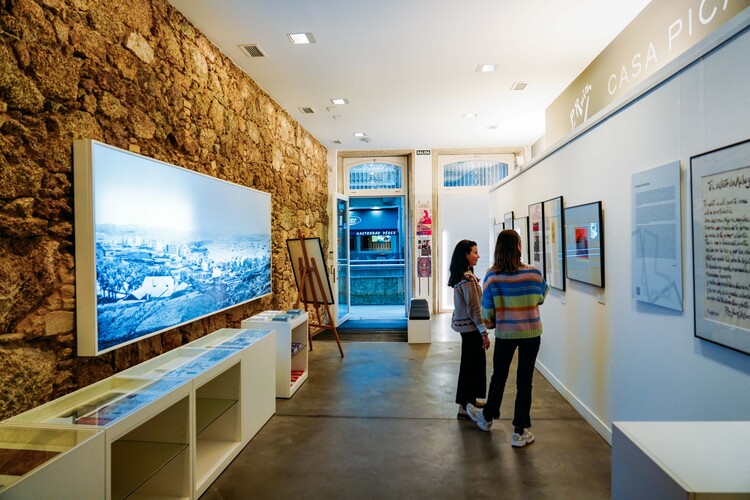
Today you can visit the house where the artist grew up, at number 14 Payo Gómez, that has now been converted into a House Museum. Situated in a classic A Coruña-style building with wooden galleries, it will transport you back to the 1890s when Picasso was taking his fledgling steps as an artist. Astonishingly, the easel and the bench he used to paint are still there!

casa museo picasso

On the walls you can see reproductions of Picasso’s work in A Coruña and an original engraving. In all, there are more than 30 works in the Casa Museo, where you can visit the permanent exhibition “Soño e mentiras de Franco” [Franco’s dreams and lies].

casa picasso coruña

In 2023, for the International Year of Picasso, which is being celebrated jointly by Spain and France, the first floor of the Casa Museo will be renovated, coinciding with the 20th anniversary of its inauguration.

A Coruña will celebrate the 50th anniversary of this universal artist’s death with the exhibitions ‘Universo Picassiano – Homenaje a Pablo Picasso en su etapa coruñesa’ [Picassian Universe – Tribute to Pablo Picasso during his time in A Coruña] at the Kiosco Alfonso, ‘El Humor habla de Picasso’ [Humour talks about Picasso] at the Encuentro mundial de Humorismo [World Meeting of Humourists] and ‘Picasso blanco en el recuerdo azul’ [White Picasso in blue memory] at the Museum of Fine Arts. The third edition of the International Congress on Art and Education will also be held at the Luís Seoane Foundation and there will be a series of lectures on the depiction of women in Picasso’s work.

Situated on the Atlantic coast, A Coruña combines the best of land and sea in its cuisine, offering both traditional formulas that never disappoint and cutting-edge innovations.  

Life in A Coruña revolves around food, with countless events on the calendar and the custom of gathering with family and friends for wine, tapas, or brunch. The key that sets the Atlantic diet apart is the quality of the local product.

The classics

If you visit A Coruña, you must try the customary regional cuisine (from Galicia and, specifically, A Coruña). There will be no shortage of shellfish, like barnacles, scallops, Dublin Bay prawns, velvet crab, and king crab on your platter.

percebes a coruña
Percebes (barnacles)

A classic is the “á feira” octopus (pulpo), topped with delicious olive oil and paprika with cachelos (boiled potatoes). 

pulpo “á feira” coruña
Pulpo “á feira”

But in this city, gastronomy extends beyond the monarchs of the sea. From neighbouring Betanzos comes the famous ‘loose egg’ Spanish tortilla. To eat like a true A Coruña native, try the empanada, ideal for a family feasts or a day at the beach. We also enjoy our meat. During Entroido (Carnival), it is customary to enjoy lacón (cured ham) with turnip top, while in the summer months, gatherings are organised around a churrasco (grilled meat).

empanada gallega
Empanada

A Coruña also offers the perfect meal pairings. In addition to our regional wines, Estrella Galicia beer is 100% local. The city even houses the Estrella Galicia museum.

museo estrella galicia
Estrella Galicia museum

Reinventing tradition

By putting a spin on traditional A Coruña cuisine and revamping the culinary panorama, an innovative array of recipes emerges, each worth trying: tartars of melon, prawn, tuna with avocado, and sea bass, marinated mackerel, king crab cannelloni, smoked octopus, and mushroom and Arzúa-Ulloa soup are just some of the city’s most avant-garde dishes.

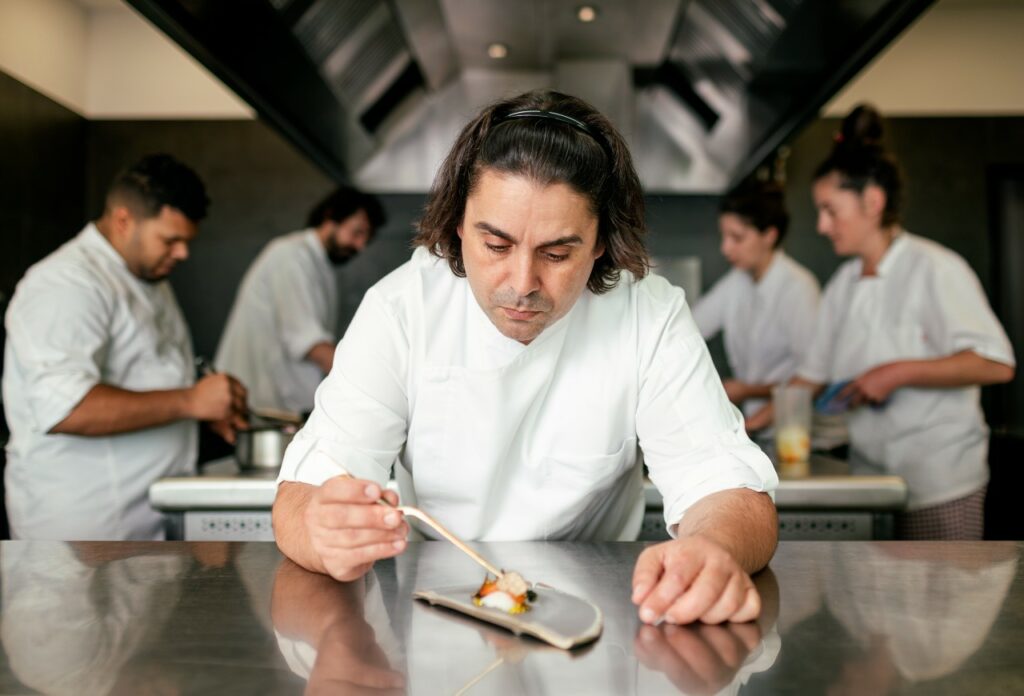
A Coruña’s cuisine regularly receives accolades. The city has a Michelin-starred restaurant, Árbore da Veira, as well as several featured in the guide, including A Mundiña, NaDo, Taberna de Miga, El de Alberto, Bido, and Culuca

estrella michelin coruña

Eating and socialising go hand-in-hand

In A Coruña, eating and socialising go hand-in-hand. If the shops and the beaches are empty, you’ll find people in the wine district. At sunset, the city centre fills with families, couples, and groups of friends out to enjoy some tapas.

Between Troncoso, Olmos, Barrera, Estrella, Franja and Galera, there is a network of local joints brimming with life that offer the best pinchos, tapas and raciones. For lighter meals, Victoria, Morriña, and Jaleo do not disappoint.

tapas a coruña

The most unique (and oldest) are A Troula and O Tarabelo, where you can try the ‘crocodile’ (grilled beet in fried potatoes) and drink wine from traditional cuncas (bowls). For vegetarian options, stop by Lola & Cía, and for a calamari sandwich in the Plaza de Ourense, try the renovated Quisco Down Experience.

During the week, locals and visitors alike tend to congregate in the Ensanche area. Near the Plaza de Lugo, beside the market and between the modernist buildings are several restaurants and bars. O Cabo is famous for its Spanish tortilla, while at Casa Rita, beside the Casa Museo Picasso, the specialties are pork loin and baby squid.

But enjoyment of the city’s gastronomy begins even before lunchtime. In the mornings, you can stop in for breakfast at Atlántico 57, with views of the sea, and La Granera, next to the tobacco factory that inspired Emilia Pardo Bazán. For churros, you have a choice between Bonilla a la Vista and El Timón, the two churerrías that divide the cities’ residents. 

churros bonilla a la vista

For those craving more than toast or who want to combine breakfast and lunch, the city offers a variety of brunch options. Miss Maruja in Zalaeta, Valentín and Waco Coffee in the city centre, and Ingooco and Mamá Chicó in Ensanche are excellent choices.

Looking for a place to bask in the morning light with a nibble and a vermouth? Take your pick. Beside the Plaza de Vigo are several restaurant patios, including the vermutería Chitin. Another great option for vermouth is El Almacén on calle Olmos, which also functions as a concept store. And among the classics, don’t miss La Gata in the historic Plaza de Azcárraga.

Kilometre 0

In case you’re wondering, the key to the success of A Coruña’s cuisine lies in its raw materials. Every morning tons of the finest seafood and shellfish arrive at the fish market, where the city’s restaurants and markets bid on the day’s haul. Individuals cannot participate, but they can attend this one-of-a-kind show as spectators. 

pescado fresco a coruña

The rest of the products arrive by land from the neighbouring Mariñas Coruñesas e Terras do Mandeo biosphere reserve, our local breadbasket. Some of its gems include bread and empanadas from Carral, sardines from Sada, mussels from Lorbé, as well as honey and other preserves. 

Gastronomy on the agenda

The biosphere reserve itself is on the A Coruña calendar. In October, it celebrates the Atlantic Region Culinary Fair, which focuses on the richness of sustainable, healthy agrifood and cuisine. 

Other major events include the Tapas Picadillo contest in November, which celebrates A Coruña’s tapas tradition, and the Boucatise Gourmet Sandwich Festival in December. Beyond the fairgrounds, partake in lacón during Entroido and sardines during San Xoán, integral parts of these festivities.

Now that we’ve whet your appetite and you know where to go and what to order, just choose when to come! We look forward to welcoming you!

A Coruña breathes in history and breathes out culture. Serving as a balcony looking out onto the Atlantic, the Glass City showcases the stunning architectural wealth of its façades and buildings to the sea and locals. Its streets offer visitors a visual route through neoclassicism, historicism, and modernism.

What can you see on a stroll around A Coruña? We will take you on a journey through its history and streets to learn how the break-through modernist style can be seen in some of the city’s main buildings, and can be still admired today.

The origins of modernist architecture in A Coruña

19th century industrialisation was key to the urban expansion of A Coruña and the housing of its workers. The bourgeoisie started to play a key role in local society, and the old city fortresses were knocked down. The old, fortified city made way for urban sprawl, and, with it, the new art trends that came from France and Catalonia at the end of the century, with modernism in the spotlight.

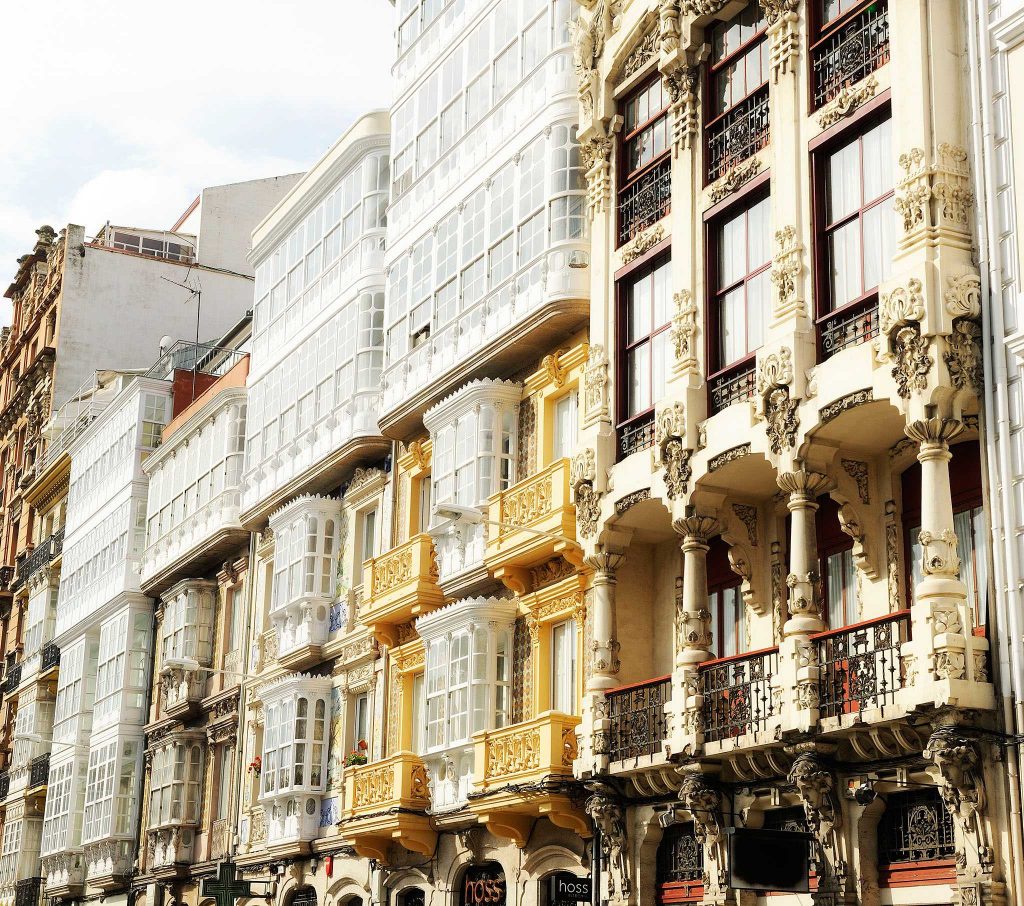
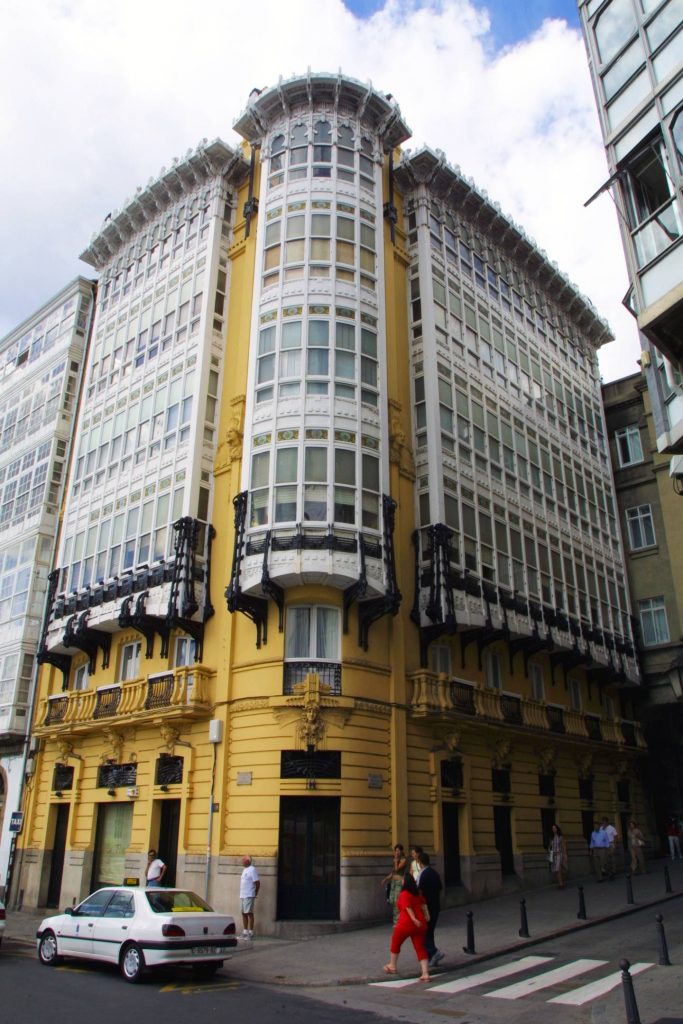
A Coruña, as a symbol of modernity in the Northwest of the Peninsula, constructed buildings following European guidelines. Its designs have broken away from academic architecture and clearly opt for expressive lines. Shapes have come alive. The buildings are like living creatures as opposed to the previous classicism. Façades are decorated with curved lines and floral, marine, and arabesque designs that seem to have a life of their own.

edificio coruña modernista

In the early 20th century, architects Antonio López Hernández, Julio Galán, Rafael González Villar, and Ricardo Boán, among others, imported the ideas of Austrian Otto Wagner and Belgian Víctor Horta, particularly when it came to using wrought iron on façades.

Modernism in A Coruña started at the outskirts of the historical centre and spread out throughout the urban expansion in the 20th century.

A route through the main modernist buildings in A Coruña

The route starts at Puerta Real, a few metres away from Plaza de María Pita, where you will also find some of the best restaurants in the city, which offer innovative dishes based on the riches of the Atlantic.

Casa Rey (1911) combines the new language of Art Noveau with glass balconies overlooking the sea. The movement of the curved façade, adorned with wrought iron and glass ceramics will charm you.

casa rey a coruña

A few metres away, you will find Casa Molina, (1915), with its spectacular façade of vegetable motifs crowned by a French-style hexagonal dome.

casa molina a coruña

Following the Modernist route down calle Real, we reach a jewel of Art Nouveau at number 22 (1902). Here Antonio de Mesa and Julio Galán took inspiration from Víctor Horta to fill a façade that is full of movement and ornamental motifs. Wrought iron is integrated into the windows, and curved shapes intertwine in a dance that turns the sculpture mural into a garden.

calle real 24 coruña

Time to take a break! Sit down on one of the benches in Méndez Núñez gardens and quietly admire Rafael González’s Kiosko Alfonso (1912). Now an exhibition hall displaying art inside and on its façade, this symbol of the Belle Époque was originally designed as a leisure space. 

kiosko alfonso coruña

Plaza de Lugo, a true milestone of A Coruña modernism is very near, atop the gardens. This area also offers travellers a shopping area, particularly for fashion and food.

At number 22 (1911), Julio Galán makes maximum use of wrought iron balconies with flower shapes flanking the main central galley. Next to Galán’s building, on the same square, Antonio Hernández designed Casa Viturro, between calle Compostela and the square. They are both monuments to the Zeigeist of the time when they were built.

casa viturro coruña

A few steps away stands Antonio López’s Casa Arambillet (1912). Modernism reaches its ultimate expression here, with a theatrical façade full of dynamic ornaments leading to a central garland that serves as the axis for the building.

casa arambillet coruña

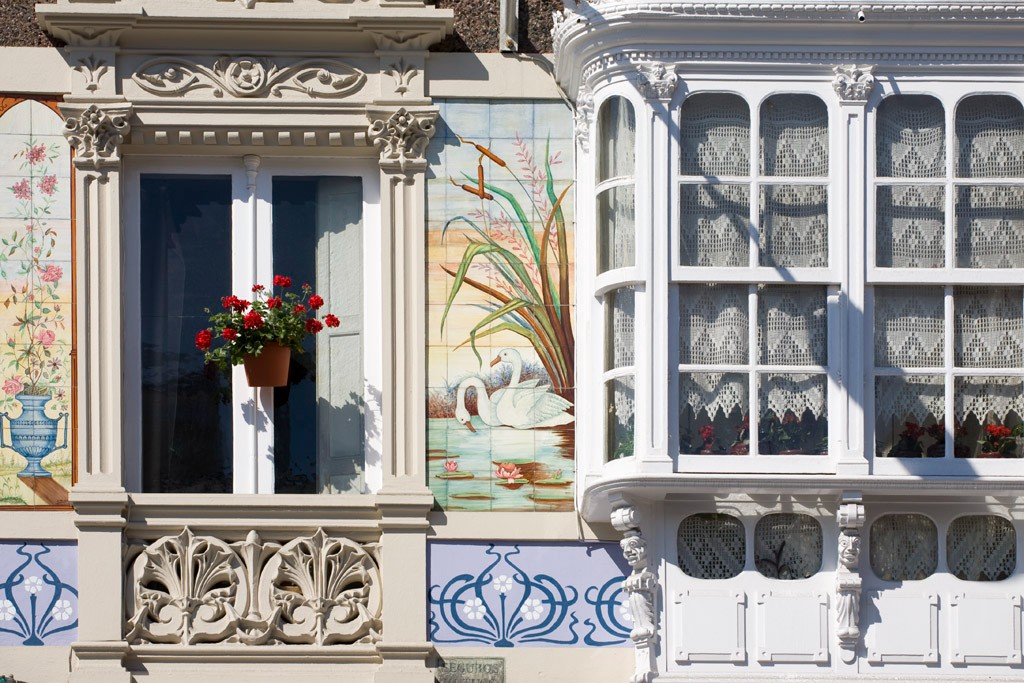
Casa de los Cisnes is number 11 on the same square. In 1905 Manuel Reboredo designed a modernist façade with tiles inspired by the shawls and fans that were then imported from the Philippines. The house is named after the swan and reed motifs. 

casa de los cisnes coruña

The route goes on to Plaza Pontevedra, where you will find Casa Salorio (1912), built on a triangular plot that Antonio López used to suggest a ship sailing into the centre of the square. A few metres away from the Atlantic, its windows resemble the portholes on an ocean liner.  The doorway is of particular interest, unique in the city due to its modernist coffering.

casa salorio coruña

We continue down calle San Andrés to admire Julio Galán’s Casa Fonte (1911). Spaces were left in the staircases to allow the light to reach the inside of the building, making it lighter. 

casa fonte de san andres

The smell of brine reminds us that the sea is nearby. However, our walk ends further inland, in one of the main streets in A Coruña. Colegio Labaca, a 1912 building by the architect Leoncio Bescansa, stands on calle Juan Flórez. The building is a mix of modernism and the neo-gothic style, with a pink façade that makes it even more unique.

colegio labaca coruña

This is the end of the many architectural routes through A Coruña. Modernism and its influence, still preserved in so many parts of A Coruña, encourage viewers to get lost in its streets and never leave. 

There are a number of locations you have to visit at least once in your life in A Coruña. This destination is also unique for reasons that can’t be seen, but rather tasted, smelt, or heard. The Atlantic gastronomy, along with the sound and smell of the sea crashing against its coastline, are just a few of the many reasons to pay a visit to this Galician peninsula.

Without a doubt, the city’s museums rank amongst some of its most interesting attractions. There’s something for everyone: art galleries, history museums, science museums… And there’s particularly a lot of science museums. They’re perfect for visiting as a family and having fun as you learn about marine environments, human beings, and the universe around you.

A Coruña has a network of science museums that you must factor into your plans if you’re travelling with children or are interested in natural environments.

The Finisterrae Aquarium

Aquarium Finisterrae A Coruña

This museum alone is worth a trip to A Coruña. The Finisterrae Aquarium, also known as ‘Casa de los Peces’ (the House of Fish), is a unique location where you can discover the secrets of the depths and the Atlantic environment of the region’s coastline. Located between Domus and The Tower of Hercules, its goal is to promote awareness about the ocean and teach people how to take care of it.

In the Aquarium, you’ll find various rooms to make you feel as though you’re at the bottom of the ocean. Well, not just ‘as though’: in the Nautilus Hall, dedicated to the adventures of Captain Nemo and named after the famous submarine from the Jules Verne novel, you’ll find yourself quite literally under the sea. Discover how fish behave in their natural environment, and get acquainted with one of the kings of the Aquarium, Gastón the shark, a male bull shark measuring 2.5 metres long and weighing 120 kg.

The other large hall in this aquarium is the Maremagnum Hall, where you can learn all about the ocean around you and gaze at up to 600 different species in its tanks.

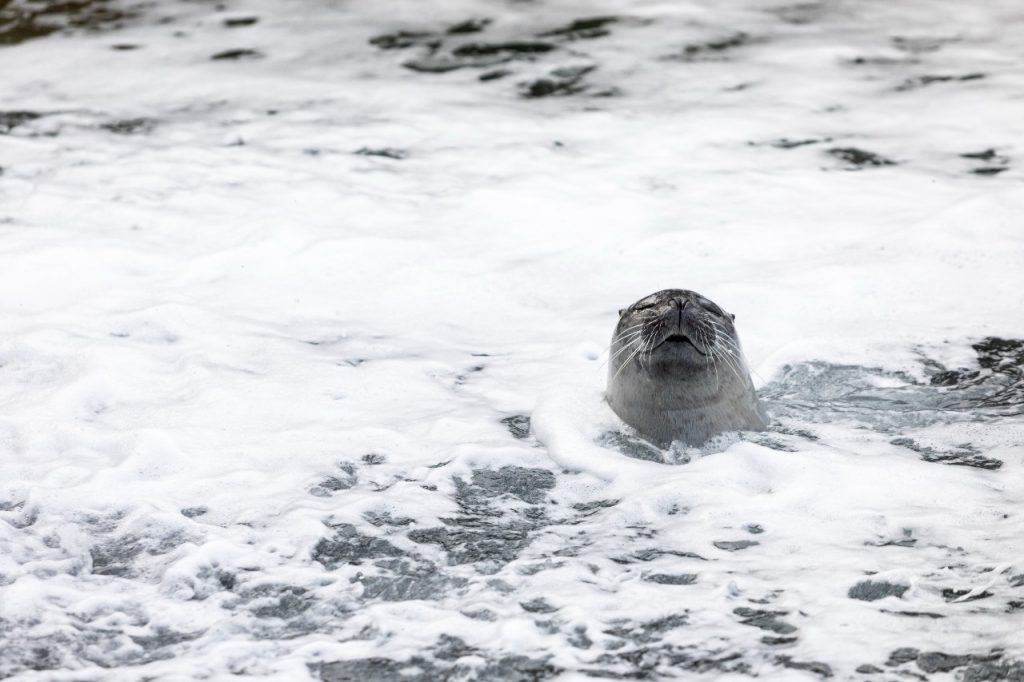
After visiting some other areas, your trip will finish up at the exterior pools, which are also connected to the ocean. Here, you can watch and learn about Atlantic seals.

Domus

museo Domus exterior A Coruña

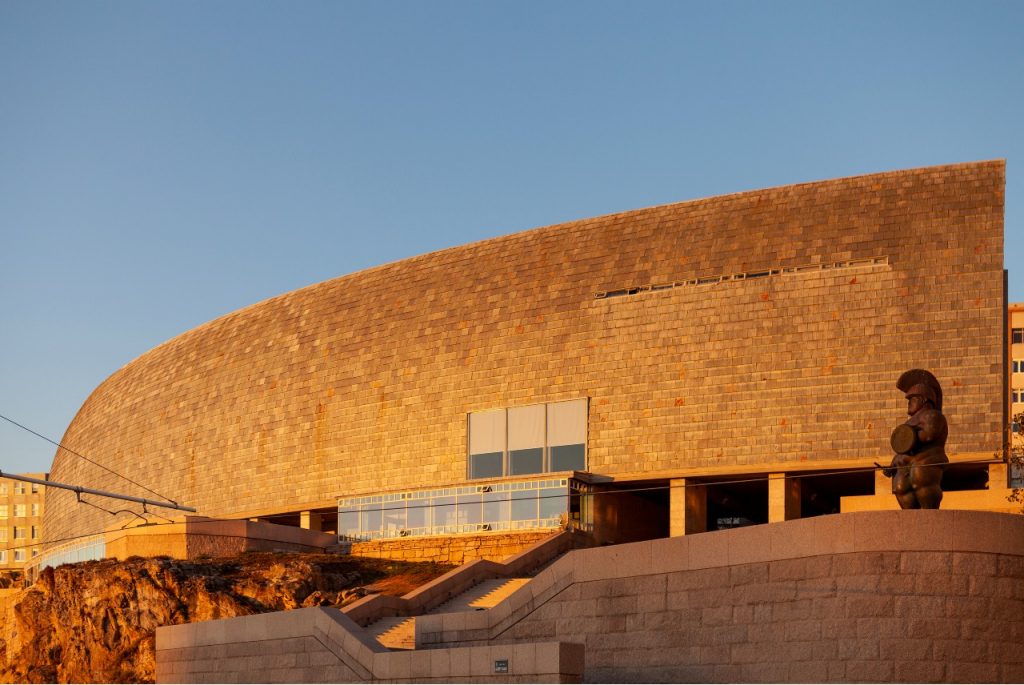
The second of these science museums, Domus, is eye-catching even from far away. Its impressive façade, shaped like the sail of a ship, was designed by César Portela and Japanese architect Arata Isozaki. In 2019, Isozaki was awarded the Pritzker prize, the highest form of recognition in the architecture world, and César Portela won the Premio Nacional de Arquitectura twenty years earlier.

This museum is dedicated to understanding human beings. As you enter, you’ll no doubt be surprised by the giant Mona Lisa, made from over 10,000 photographs of people from all over the world.

interior Domus A Coruña

Inside, you’ll find different halls with fun and interactive displays teaching you about demographics, the human body, nutrition, and your senses. The motto of these museums is ‘prohibited not to touch’, so prepare to get stuck in and learn through playing if you pay them a visit.

For more information, visit the official Domus website.

Casa de las ciencias

casa de las ciencias exterior A Coruña

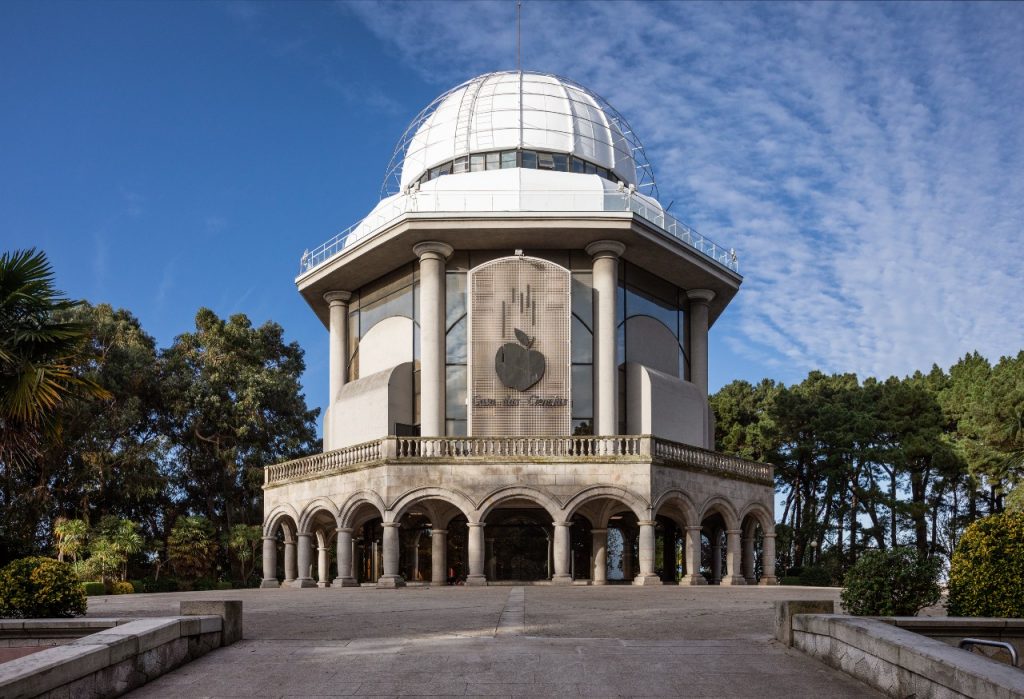
The last of those science museums I mentioned is the Casa de las Ciencias, found in an exceptional location in the city centre. This interactive museum, with over 35 years of history, is located the heart of Santa Margarita park. Umberto Eco called it the greatest museum in the world.

The first thing you’ll spot as you enter is a 14-metre-sall swinging Foucault pendulum in the central hall, allowing you to see the movement of the earth. There are also different exhibitions to explore across the three floors, where you can play with interactive displays on physics, nature, and astronomy.

And finally it’s off to the planetarium, where you can travel through space and time, learn how to look at the sky, and discover everything it has to offer.

planetario casa das ciencias a coruña

But there’s even more to Casa de las Ciencias: you can keep exploring in Santa Margarita Park, which surrounds the museum. Here you can try moving a 1,500 kg granite ball with one hand, or sit by an apple tree cloned from the very same that inspired Isaac Newton to discover the Law of Gravity.

The Museo Nacional de Ciencia y Tecnología

muncyt exterior

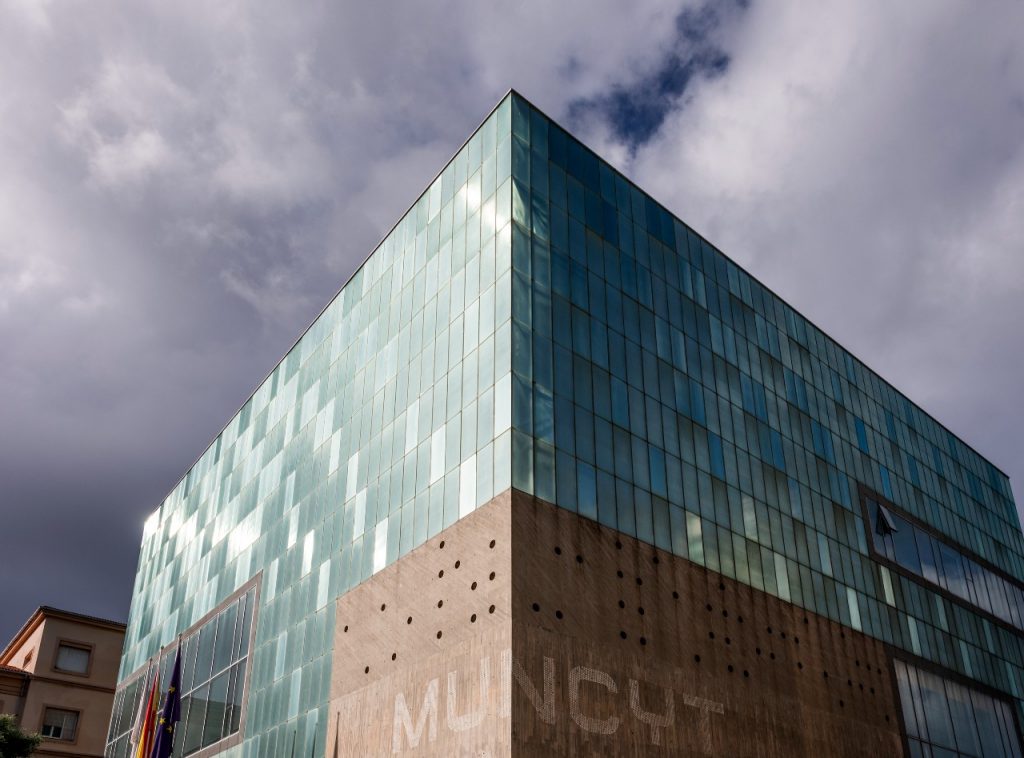
Finally, even though it’s not part of the Municipal Museums network, A Coruña is one of the sites of the National Science and Technology Museum (the Museo Nacional de Ciencia y Tecnología).

This museum is located in the Prisma de Cristal, an iconic building in the shape of a glass cube which won many prizes, including the Premio Nacional de Arquitectura Joven (the National Young Architecture Award).

This site boasts over 500 pieces on permanent exhibition, and recounts a large part of the history of Spain and science.

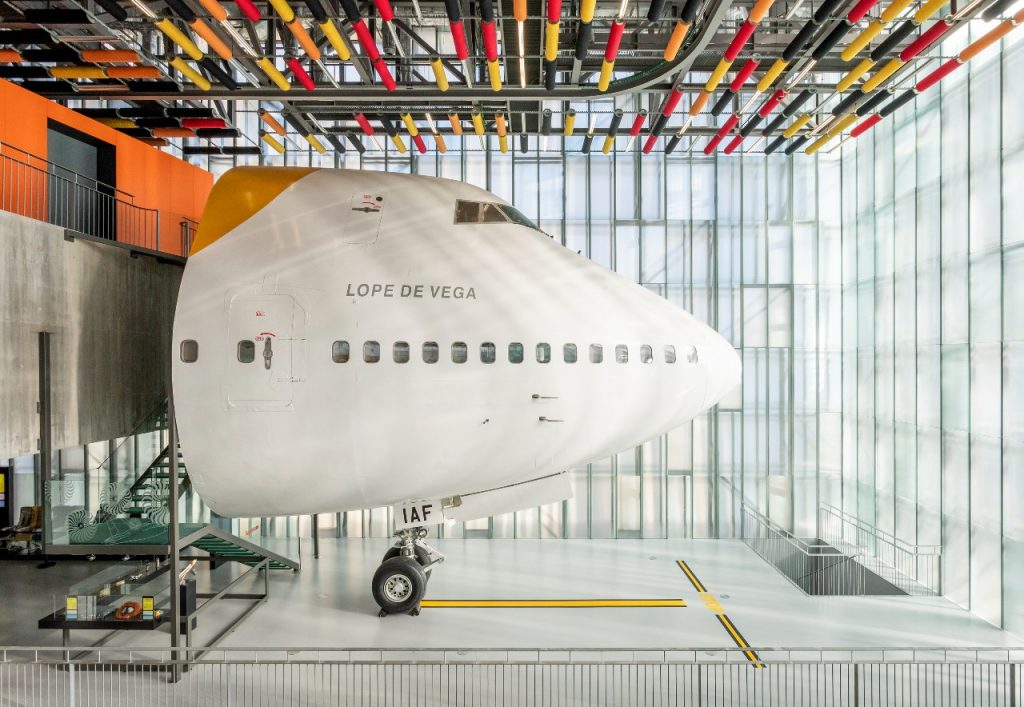
The most eye-catching piece, because of how big it is, is undoubtedly the cabin of the Lope de Vega plane (yes, that’s not a joke, it’s an actual-size airplane cabin, and it’s massive!). It was a Boeing 747 known as a ‘Jumbo’ for its large size. Pablo Picasso’s iconic Guernica was flown from New York to Madrid in this plane’s hold.

cabina avion lope de vega muncyt

In the rest of the exhibition, you’ll find a 19th-century lamp from The Tower of Hercules, a Seat 600, an IBM 600 computer (the first to be mass-produced), the prototype for the first mechanical encyclopaedia, and the particle accelerator that kicked off nuclear research in Spain.

For more information, visit the National Science and Technology Museum‘s official website.

Though there’s plenty to get up to here, A Coruña’s network of museums are a sure-fire way to spend some quality time as a family, and learn at the same time. And if that’s not enough, this Herculean city is also home to Casa Picasso (where the artist lived when he was here), the Pardo Bazán House Museum, the María Pita House Museum, the Casares Quiroga House Museum, the Archaeological museum, and more.

A Coruña is home to a must-visit location if you want to disconnect from the rest of the world and take in the fresh Atlantic Ocean air. You can run, jump, eat, relax on the grass, take great photos, see the best views of the city, and listen to the sea waves. San Pedro Mountain is a place where you’ll find whatever tickles your fancy.

The history of San Pedro Mountain

On this mountain, you’ll find an old defensive post, which was converted into a park in 1999. It covers an area of over 90,000 square metres, so it’s the perfect place for all sorts of activities.

The first thing you’ll spot in this park are the huge cannons. They’re two Vickers pieces, which were acquired in 1929, installed in 1933, and are 17 metres long. Why not hop on top of one for a classic A Coruña photo?

cañon monte de san pedro

These cannons were used to defend the coastline during the inter-war period and they were fired 23 times – but never used during wartime. They were last fired in 1977 so they could be cleaned properly, and the sound of the blast echoed across the city.

The views from San Pedro Mountain

The amazing views from San Pedro Mountain are one of its main attractions. On one side, you have a view of the Atlantic Ocean, right along the coastline down to Arteixo and the Sisargas Islands (in the province of Malpica de Bergantiños). On the other side, you can look over A Coruña, the Ártabra coast, and the A Coruña Estuary where you can spot Mera, Santa Cruz, and the Oleiros coast. Further down are the Betanzos, Ares, and the Ferrol Estuaries and coastline, with views stretching all the way to its outer harbour.

vistas monte san pedro

When the Atlantic begins to work its magic, you’ll see how quickly and drastically the landscape can change. One day, the weather’s sunny. The next, the city is covered in a blanket of clouds – or vice versa. It’s a real visual masterpiece.

The panoramic lift

These views are even more impressive when you go up the Panoramic Lift, which is shaped like a crystal ball. Hop on to go down the side of San Pedro Mountain, all the way to the seafront promenade. From the comfort of the lift, you can enjoy an exceptional view overlooking the bay as it takes you down to the longest promenade in Europe, more than 13 kilometres long.

And, there’s something else to discover on San Pedro Mountain: the Atlantic Dome. It’s the only 360-degree covered viewpoint overlooking all of Spain, which you can access from the lower floor. From this viewpoint, you can see all the attractions on offer in this location from a high-up and sheltered location.

ascensor monte de san pedro

The sunsets

The great location of this mountain means you can see beautiful sunsets, as if you were at the cinema watching a film. From there, you can watch the sun set and dip below the horizon. If it’s a bit of a cloudy day, the colours can end up becoming more scattered, causing an even more impressive array of lights and colours. But the show’s not over once the sun hides under the horizon, because a new range of arguably even more stunning tones come out to play until nightfall. Get your camera ready and prepare yourself for a once-in-a-lifetime experience.

puesta de sol monte san pedro coruña

The San Pedro Islands

Along the coast, under San Pedro Mountain, you’ll find O Portiño, an area filled with nature and easily reachable by car. Just a few metres out into the sea, you’ll find the San Pedro Islands, which were recently declared a National Landscape of Local Interest because of their biodiversity. You can see the islands from the park on San Pedro Mountain, and from the seafront promenade, you can also find the ‘Window to the Atlantic’ sculpture, a great seaside photo opportunity.

The maze and the park

The San Pedro Mountain Park is the perfect place to visit with your significant other or family. It’s a large park with lots of different attractions, where little ones and grown-ups alike can have fun. On one side, you’ll find a duck pond where you can learn more about these birds, and it’s something the kids will love just as much as the adults. Also, the area’s biodiversity means you’ll be able to see many different species of birds and hear their striking calls up close. On the other side of the park, there’s a large play-area, where kids can spend hours and hours playing.

But, one of San Pedro Mountain Park’s greatest attractions, the one everyone comes to see, is its English-style garden maze. This maze, which has been in the park since its reopening, has been replanted due to wear and tear and is currently growing back. You’ll be able to visit it again very soon though: it’s grown so much that you can’t even see the exit when you enter. When you’re inside, you’ll have to rely on your sense of direction to get to the middle and find the exit again.

laberinto monte san pedro

A top-tier restaurant

Lastly, one of A Coruña’s shrines to gastronomy can be found up on San Pedro Mountain; Árbore da Veira, the city’s only Michelin Star restaurant, ran by chefs Luis Veira and Iria Espinosa. Alongside magnificent views, you’ll have the chance to experience a spectacular range of flavours and sensations which put the region’s fresh and seasonal produce on show. It’s an experience you’ll need all five senses for.

Next door, you’ll find Taberna 5 Mares, which has a humbler offer of traditional dishes with a modern touch.

In short, if you’re planning a getaway to A Coruña, don’t forget to pay San Pedro Mountain a visit. It’s the perfect location to have fun and relax.
The park of Monte de San Pedro in A Coruña

In Galicia it rains, a lot. That’s a fact. It’s one of the regions of the world with the most rainy days a year, so even if the weather reports predict that it will stay dry, you could still feel a few drops when you least expect it. On the bright side, this community is famous for its beautiful green landscapes and its beaches, which more than make up for the weather. So, if you decide to discover A Coruña despite the weather, we have five ideas that you can enjoy even if it rains.

  • Visit the museums: A Coruña is a city with some fascinating museums, including Casa de las Ciencias, where you can learn all about science and technology, and The Domus, an interactive museum dedicated to human beings. The kids will love learning and playing at the same time.

The new MEGA museum explores the history, roots and production processes of Estrella Galicia beer, while the A BANCA Foundation hosts various exhibitions throughout the year and has a panoramic glass lift boasting views of the districts of A Coruña. And let’s not forget the Museum of Fine Arts, where you can find some of Goya’s engravings.


Ver esta publicación en Instagram

Una publicación compartida de Turismo A Coruña (@corunaturismo) el

  • Stroll through the aquarium: As an alternative to museums, the Aquarium Finisterrae is a great choice, particularly if you are travelling with children. It is inhabited by over 60 species, many of which belong to Galicia’s ecosystem, and not only can you meet the stars of the aquarium, a colony of seals, you can also play with them and feed them.

Ver esta publicación en Instagram

Una publicación compartida de Turismo A Coruña (@corunaturismo) el

  • Treat yourself to some tapas: We can all agree that Galician cuisine is among the finest in the world. Use the bad weather as an excuse to bar hop along Rúa Estrella, commonly known as wine street, and try some of the typical local tapas such as polbo á feira (Galician-style octopus) or raxo (pork) with potatoes.

Ver esta publicación en Instagram

Una publicación compartida de Turismo A Coruña (@corunaturismo) el

  • Feast on churros and chocolate at an unmissable venue: On a rainy winter’s day, there’s nothing better than some warming churros and chocolate. The must-see place to try them in A Coruña is the popular Bonilla a la vista churros and coffee shop on Calle Galera. It’s famous for its churros and its crisps, which it has been producing for over 60 years and which it exports internationally.

Ver esta publicación en Instagram

Una publicación compartida de Bonilla a la Vista (@bonillaalavista) el

  • Hit the dancefloor: The nightlife in A Coruña is not to be missed. Plus, many of the most fashionable venues are located in the same space, Los Cantones Village, an old shopping centre overlooking the port, where you can move from one pub to another without getting wet. In Riazor, try Playa Club – with its glass walls and beachfront location, it’s the ideal place to watch the sunrise from the beach, sheltered from the cold.

Ver esta publicación en Instagram

Una publicación compartida de Playa Club Coruña (@playaclubcoruna) el

A few years ago, a famous chain of Galician supermarkets created a phrase that reflected the attitude of Galician people and became famous in the region: “Se chove, que chova”, meaning “If it rains, let it rain”.  In A Coruña, people always look on the bright side despite the weather, and life in the city continues “amodiño”, as they say, at a slow pace and under an umbrella.

SHALL WE INSPIRE YOUR NEXT TRIP?