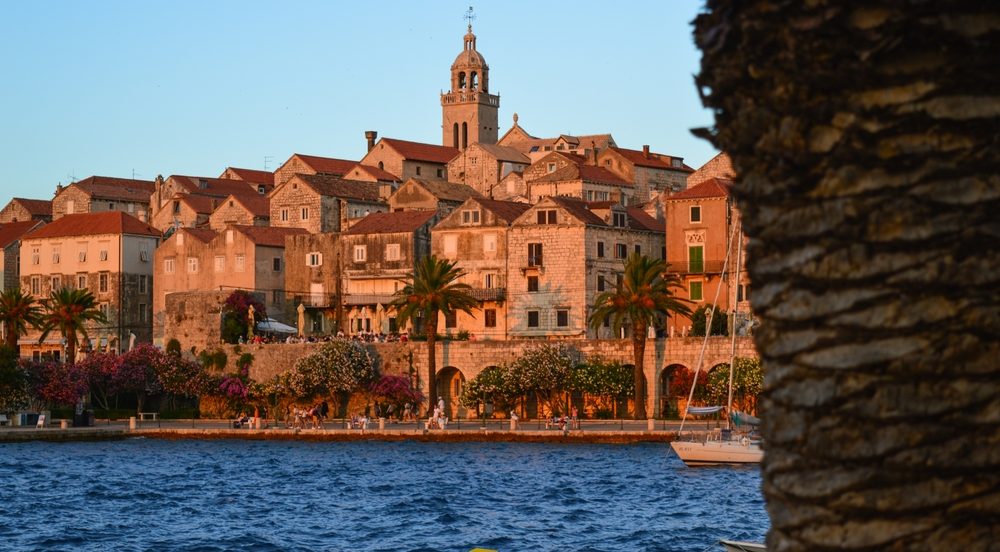
In this month of March dedicated to women, we explore European cities through the women who have shaped them — and continue to shape them: goddesses, writers, artists, chefs and pioneers who inspire our journeys.
Exploring a city is never a neutral act. We walk along streets shaped by centuries of history, we look at monuments, museums and squares… but for a long time, that history was almost always told from a male perspective. Today, travelling with a female lens means broadening our focus: discovering the women — real or symbolic — who have helped to build the character, culture and identity of the places we visit.
On the occasion of 8 March, International Women’s Day, we invite you to embark on a different kind of urban journey. Six European cities, six female perspectives, and six ways of understanding travel as an homage to, a discovery and a recognition of women. Because cities can also be understood through them.
Athens, under the protection of Athena
It is impossible to understand Athens without Athena — not only as a mythological figure, goddess of wisdom, strategy and the arts, but also as a founding concept. Athena embodies a form of power that was unusual in the classical imagination: not based on strength, but on intelligence, speech and strategy. Her selection as the city’s protector — over Poseidon — was no coincidence. By offering the olive tree, a symbol of life, work and balance, she defined the values upon which the city would be founded.
Her presence extended far beyond the temples. Athena shaped civic and social life through celebrations such as the Panathenaia, a grand urban festival combining ritual, sport, music and craftsmanship that involved the entire community. During these celebrations, Athenian women played an essential role: they were the ones who wove the sacred peplos offered to the goddess, a collective gesture that united femininity with the city’s very identity.
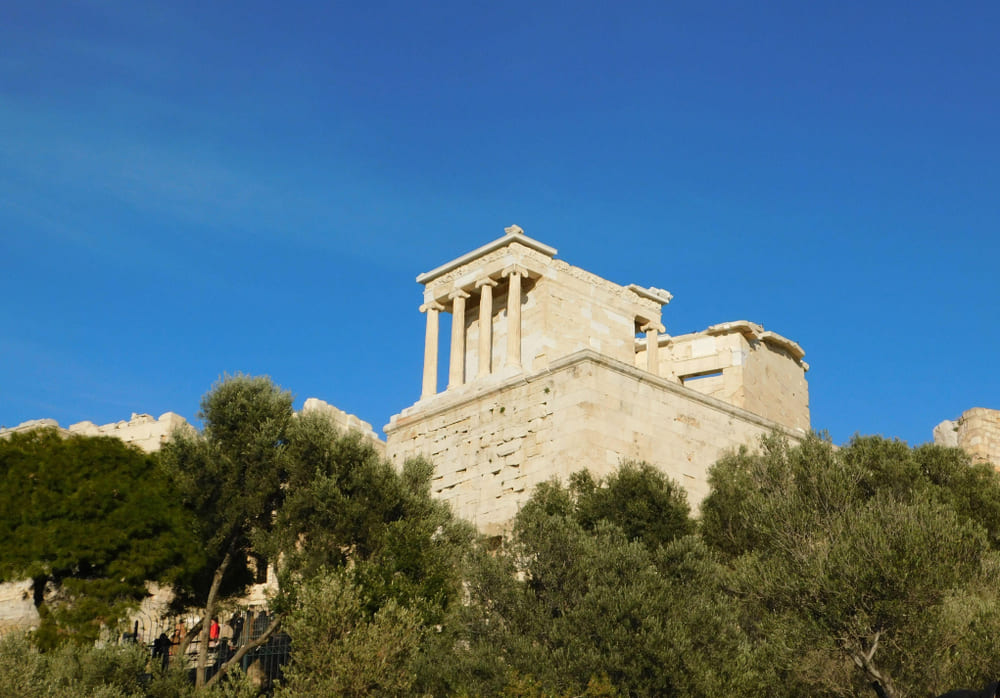
The Temple of Athena Nike, dedicated to victory understood as intelligence and foresight, encapsulates this vision perfectly. Walking through Athens with Athena as your guide means viewing the city from a female perspective that values reflection, creativity and shared responsibility — an invisible yet profound legacy that continues to shape the Athenian spirit.
In a more contemporary vein, there is a figure who perfectly represents Greek female artistic excellence of the twentieth century: Maria Callas. Although born in New York, she trained in Athens and always maintained a deep connection with the city. To connect with her legacy, you can visit the Stavros Niarchos Foundation Cultural Centre, home of the Greek National Opera.
Palermo, popular soul and female voice
Palermo is a city best experienced through the senses: in its markets, its music, its layered and contrasting streets. One of the female voices who best captured this vibrant, popular Palermo was Rosa Balistreri, an iconic singer and figure of Sicilian culture. Through her songs, Rosa gave voice to everyday life, intense emotions and the indomitable character of the island, transforming tradition into a living identity.
ollowing in her footsteps means discovering an authentic and deeply Mediterranean Palermo. The Kalsa district, with its squares opening onto the sea and its creative energy, reflects the free and popular spirit that shaped her work. Historic markets such as Ballarò or Vucciria allow you to understand the city through its bustle, aromas and daily life — elements that inspired so many of her songs. And the Teatro Massimo, the city’s grand cultural temple, symbolises that Palermo where music and emotion occupy a central place.
Visiting Palermo through the eyes of Rosa Balistreri means embracing passion, authenticity and the pride of a city that expresses itself through song.
Florence, power and refinement with Catherine de’ Medici
Born in Florence in 1519 and later Queen of France, Caterina de’ Medici was one of the most notable female figures of the European Renaissance. Raised in the refined humanist environment of the Medici family, she grew up surrounded by art, politics and power — an education that would deeply influence her approach to governance. In France, she not only exerted decisive political influence, but also acted as a patron and ambassador of Italian Renaissance taste, promoting the arts, architecture and cultural life at court.
Today, her Florentine story unfolds through specific places. Palazzo Medici Riccardi, her birthplace, helps us understand the context of power and sophistication in which she was formed. The Le Murate complex, where she took refuge after being orphaned, speaks of a childhood marked by political instability. The Medici Chapels symbolise the historical significance of the family to which she belonged and their artistic legacy.
Florence, seen through Caterina, is a city where power, culture and strategy also had a female face.

Curiosity: when Caterina left Florence to settle in Paris, not only did she bring artists and craftsmen with her, but also the refinement of Florentine cuisine. She is credited with introducing new habits, ingredients and a more sophisticated culinary vision to the French court, leaving a lasting influence on the country’s gastronomic culture. Further proof that the Florentine spirit travelled far beyond Italy with her.
Barcelona and the literary voice of Mercè Rodoreda
Mercè Rodoreda is one of the great voices of Catalan literature and a key figure for understanding 20th-century Barcelona. Through novels such as La plaça del Diamant, she portrayed everyday life, memory and the city’s wounds, giving a voice — with unprecedented sensitivity — to female experiences in a Barcelona marked by war and post-war hardship. Few writers have captured the city with such delicacy, and La plaça del Diamant transformed this corner of the Gràcia neighbourhood into a universal literary symbol.
Plaça del Diamant is today a quiet, everyday, deeply Barcelonian place. Walking through the area means stepping into an intimate, feminine and resilient city, far from the major tourist icons.

Through Rodoreda, Barcelona reveals itself in details and emotions.
“And I went into Plaça del Diamant (…) and I covered my face with my arms to protect myself from I don’t know what and I let out a hellish scream. A scream I must have been carrying around inside me for many years, so thick it was hard for it to get through my throat, and with that scream a little bit of nothing trickled out of my mouth, and that bit of nothing that had lived so long trapped inside me was my youth and it flew off with a scream of I don’t know what…letting go?”
— La plaça del Diamant, Mercè Rodoreda
Madrid, a creative capital in the feminine
Madrid is a city constantly reinvented through its female creators. Painters, illustrators and writers dialogue with tradition while driving the cultural scene towards new forms of expression. A good starting point to understand this energy is the Museo Reina Sofía, where female presence in contemporary art is increasingly visible, as well as creative districts such as Barrio de las Letras or Carabanchel, which have become true artistic laboratories.
Among the most recognizable voices of this creative Madrid is Valeria Palmeiro, artistically known as Coco Dávez, a multidisciplinary artist based in the capital whose work revolves around colour as an emotional language and identity as her creative territory. Her renowned Faceless series, begun in 2015, proposes featureless portraits where the absence of a face allows us to project ourselves onto others using collective memory and chromatic intuition. Her work has been exhibited in galleries and cultural spaces across different countries and she has collaborated with international brands and institutions.
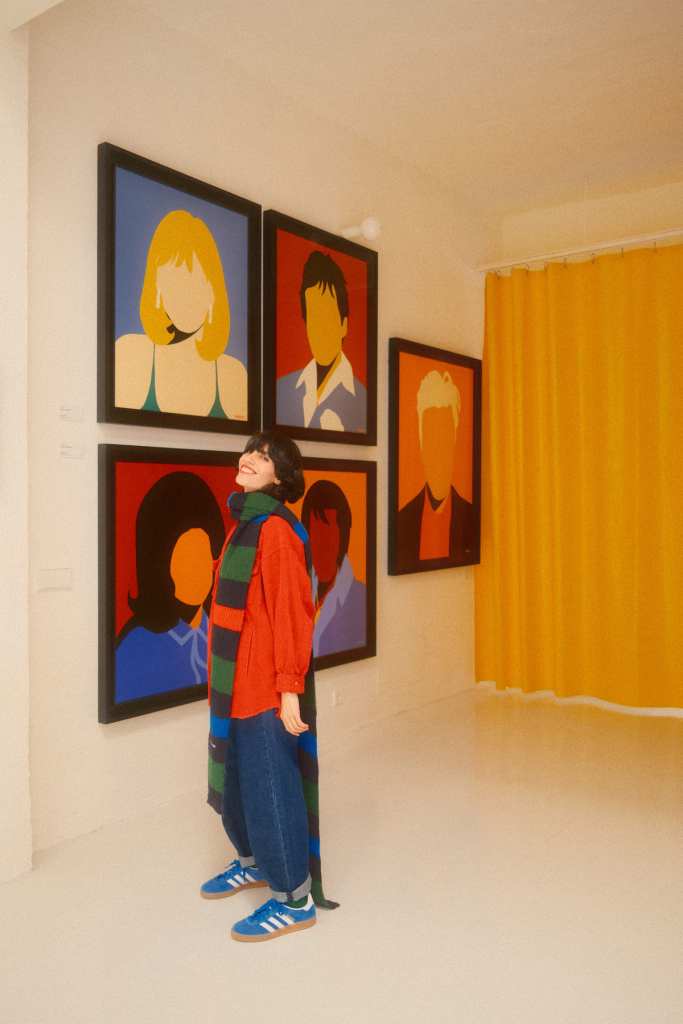
Madrid is where her work has grown and evolved. The city is not only her home but also her creative laboratory: here she has a studio in Carabanchel, where she develops her artistic practice, offers mentorships and occasionally opens her doors to the public for meetings, visits and cultural events. For her, Madrid represents movement, diversity, community and a constant energy that directly dialogues with her way of understanding art.
Lyon and the flavour of Eugénie Brazier
Lyon is synonymous, among other things, with outstanding gastronomy, and much of this reputation is owed to women. Pioneer chef Eugénie Brazier, the first to earn three Michelin stars, paved the way for the famous Mères lyonnaises. These popular cooks were mostly women of humble origin, who, between the late 19th and early 20th centuries transformed domestic cooking into unpretentious haute cuisine. Having worked as cooks for bourgeois families, many of them lost their jobs due to economic crises or wars and went on to open their own small restaurants.
Their cooking was sincere, generous and product-based, rooted in traditional regional recipes: hearty, well-executed dishes, without artifice. Over time, these establishments became must-stop destinations for travellers, politicians and food lovers, establishing Lyon’s international fame as a culinary capital. Among the most famous were the aforementioned Eugénie Brazier, Marie Bourgeois and Mère Fillioux, who was the mentor of the legendary Paul Bocuse.
During your visit to Lyon, you should not miss a dinner at the restaurant once owned by Eugénie, La Mère Brazier, where traditional cuisine is celebrated as cultural heritage. This local excellence proves that Michelin-starred chefs are not only men.

A wish for 8 March
Travelling with a female lens means broadening the narrative, recognising voices have long been overlooked, and celebrating the women who have shaped — and continue to shape — the cities we love to visit.
This 8 March, Volare wishes to see every trip as an opportunity to discover new female role models and that there will be more and more outstanding women shaping the cultural pulse of our cities in the future.
Happy International Women’s Day to everyone!