Thousands of visitors from all over the world and hundreds of works of art, shows and international exhibitions: it’s the Venice Biennale.
The event, which gathers the avant-garde and the fruits of the world’s most creative and innovative minds in the Lagoon, presents and explores art in all its forms, from painting to dance, bringing thousands of nuances to life, to be discovered walking through the streets and gardens of one of the most beautiful cities in the world.
Here’s all the information you need to discover, experience and visit the Venice Biennale!

What is the Venice Biennale?
The Venice Biennale is one of the most important international arts events in the world and one of the most famous events in the lagoon city – after the Carnival, of course!
Originally created to host works of figurative art, today the Biennale is dedicated to all forms of artistic expression: from music to theatre, passing through architecture and dance, and then on to cinema, with the Venice International Film Festival, the oldest film festival in the world.

The Biennale has come a long way to get here though! Many things have changed since the first Biennale, in particular the venue, which has expanded considerably.
After invading the Giardini Napoleonici in the Castello district, one of the six areas into which Venice is divided, the exhibition has now spread throughout the whole city (including the Lido!), yet more confirmation of the fact that art really knows no boundaries.
The history of the Biennale (in a nutshell)
It seems that the history of the Venice Biennale began at the tables of the famous Caffè Florian, one of the liveliest public lounges on the Lagoon and now a historic venue, looking out onto St Mark’s Square.
Since it opened in 1720, the Florian has hosted some of the most important national and international figures, including Riccardo Selvatico in the late nineteenth century: playwright, poet and above all, mayor of the city from 1890 to 1895.
Over steaming cups of coffee and cicchetti (small plates and bar snacks), Selvatico and his peers speculated for years about a project that would bring all the latest artistic innovations to Venice. Their dream became reality on 30th April 1895, when the First International Art Exhibition of Venice was opened.
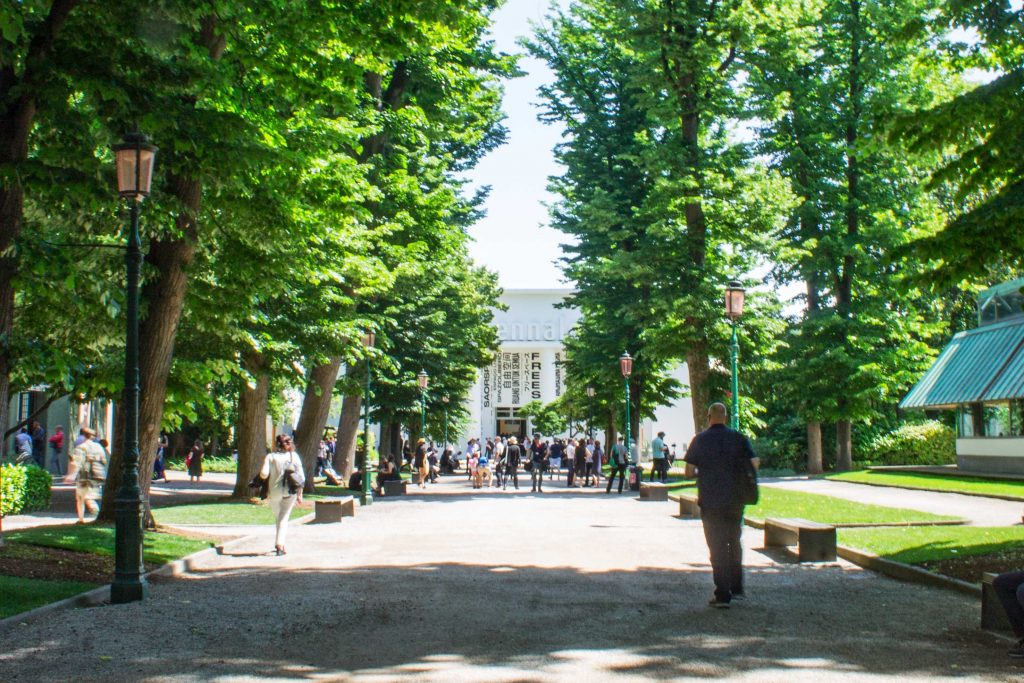
Over the years, the Giardini Napoleonici have welcomed not only an increasing number of visitors, but also countries, each with its own exhibition pavilion. Many of the structures are real works of art and were designed by famous architects: from Carlo Scarpa to Gerrit Rietveld, who was responsible for the design of the Van Gogh Museum in Amsterdam.
After becoming an autonomous body in 1930, the Art Biennale was soon joined by the Festival of Contemporary Music (1930), the International Film Festival (1932), the Theatre Biennale (1934), the Architecture Biennale (1980) and the Dance Biennale (1999), the baby of the bunch.
Today, the Venice Biennale is one of the most significant artistic events on the global scene, and each event (with the exception of film) is linked to a specific theme, often intended to convey a universally valid message. After all, art is a universal language, isn’t it?

The Venice Biennale 2024
In 2024, the calendar is packed with activities associated with this Venetian event. In fact, this year, the Art Biennial, Theatre Biennial, Dance Biennial and Music Biennial are also taking place, in addition to the Film Festival.
The Art Biennial 2024
The first to take place is the Biennale Arte, which on Saturday 20 April officially opened the 60th International Art Exhibition, an event that will come to a close on Sunday 24 November 2024 and this year’s theme is overcoming geographical and cultural boundaries, and the fight against racism and xenophobia.
The exhibition, entitled “Foreigners Everywhere – Stranieri Ovunque” and curated by Adriano Pedrosa (Artistic Director of the Museu de Arte de São Paulo Assis Chateaubriand), also holds a curious record: it’s the first to welcome a pope among its guests! Pope Francis in fact visited the Holy See Pavilion on Sunday 28 April.
86 different nations are participating in the event, and four of these are newcomers, taking part in the Biennale Arte for the first time: the Republic of Benin, Ethiopia, the Democratic Republic of Timor Leste and the United Republic of Tanzania. And two artists have won the Golden Lion for Lifetime Achievement: Anna Maria Maiolino, an Italian-born Brazilian designer, and Nil Yalter, a multi-faceted artist born in Turkey and now living in France.
As with every Biennale, this year also has plenty of collateral events and exhibitions and initiatives promoted by national and international bodies and institutions. They amount to as many as 30 and the full calendar with all the information you need for your visit is available on the official website of the Biennale.
The Theatre Biennial 2024
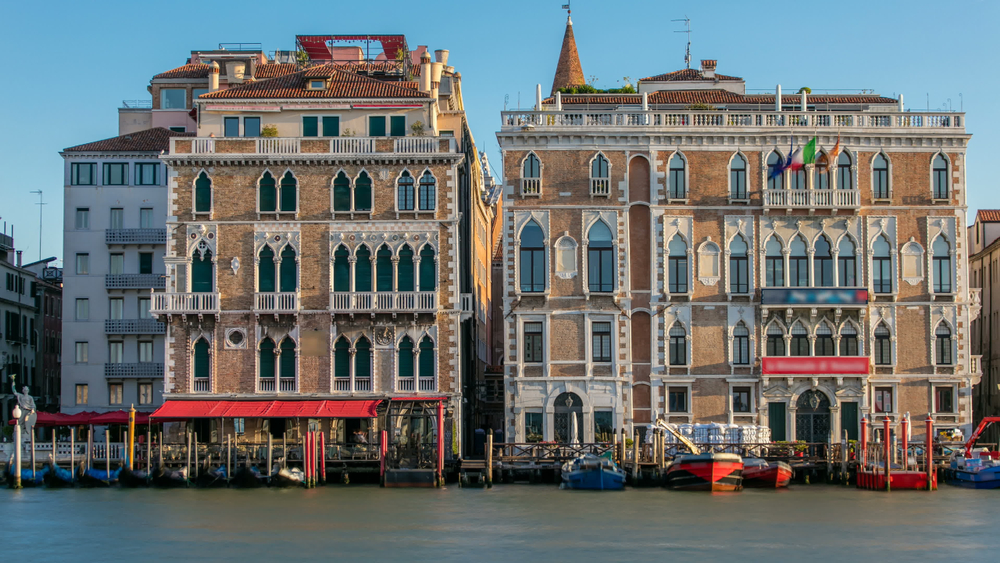
On 15 June 2024, meanwhile, the Biennale Teatro opens its doors for the 52nd time and will run until 30 June. This year the festival, being held in the halls and theatres of the Venetian Arsenal and the elegant Ca’ Giustinian palace, is in the hands of the authors and directors Stefano Ricci and Gianni Forte.
Two awards are presented throughout the course of this event: the Silver Lion, awarded to Gob Squad, a group of British and German artists formed in 1994 in Nottingham (UK), and the Golden Lion, awarded to the Back to Back Theatre, a company considered the “pioneer of renewal in Australian theatre” and one of the companies known around the world for making disability a tool of artistic inquiry.
Again, all the events scheduled in the calendar are listed on the official website.
The Dance Biennial 2024
In the summer, the International Theatre Festival will make way for the Biennale Danza: the 18th International Festival of Contemporary Dance will commence on 18 July, running until 3 August.
Directed by the British choreographer and director Wayne McGregor, the event boasts a vast programme of daily activities and performances, featuring international soloists and dance companies. This year’s theme is “We Humans”, chosen in an attempt to “unwrap the great complexity, contradictions and mystery that human life is.”
As with the Biennale Teatro, there are two prestigious accolades awarded during the course of this event: the Silver Lion, which goes to Trajal Harrell, an American dancer and choreographer who combines numerous artistic styles in eclectic performances with international atmospheres, and the Golden Lion, awarded to the Italian dancer and choreographer Cristina Caprioli.
All performances and events are listed on the official website.
The Film Biennial 2024
The Biennale Cinema, which has now in fact become an annual event, will bring the summer to a close. Now being celebrated for the 81st time and directed this year by Alberto Barbera, The Venice International Film Festival will roll out its red carpet on the Lido di Venezia on 28 August, running until 7 September 2024.
In addition to the arrival of the national and international stars at the Lagoon, the highlights of the event will be the presentation of the Golden Lions for Lifetime Achievement (recognising professionals in the industry who have contributed to the development of cinema) and the Golden Lion for Best Film, which in 2023 was awarded to Poor Things, the highly successful film directed by Yorgos Lanthimos.
The full calendar for the event is available on the official website.

The Music Biennial 2024
With the arrival of autumn comes the Biennale Musica, running from 26 September until 11 October 2024. The 68th International Festival of Contemporary Music will be directed by the Italian composer Lucia Ronchetti and will feature numerous daily events starring international soloists and ensembles, as well as the activities of the Biennale College Musica, dedicated to new projects.
This year’s festival will be dedicated to the concept of “Absolute Music”: an interpretation that includes no extramusical or visual references and which aims to bring music to the fore as an “autonomous language.”
The 2024 Golden Lion and Silver Lion awards for Lifetime Achievement have already been announced and go respectively to the English composer Rebecca Saunders and the long-established German musical group Ensemble Modern, founded over 40 years ago and one of the leading lights in European and American contemporary music.
All performances and events are listed on the official website.
A glimpse into the future: the Architecture Biennial 2025
We will need to wait until 2025, however, for the return of the Biennale Architettura, which will be held for the 19th time next year, running from 10 May to 23 November.
Curated by the architect and engineer Carlo Ratti and taking place at the Giardini della Biennale and the Arsenal, the exhibition is entitled “Intelligens. Natural. Artificial. Collective.” and, with the central theme of environmental sustainability, it will aim to map out new paths for the future, suggesting a range of solutions to the most pressing problems of today. Stay tuned!
Useful information for visiting the Venice Biennale
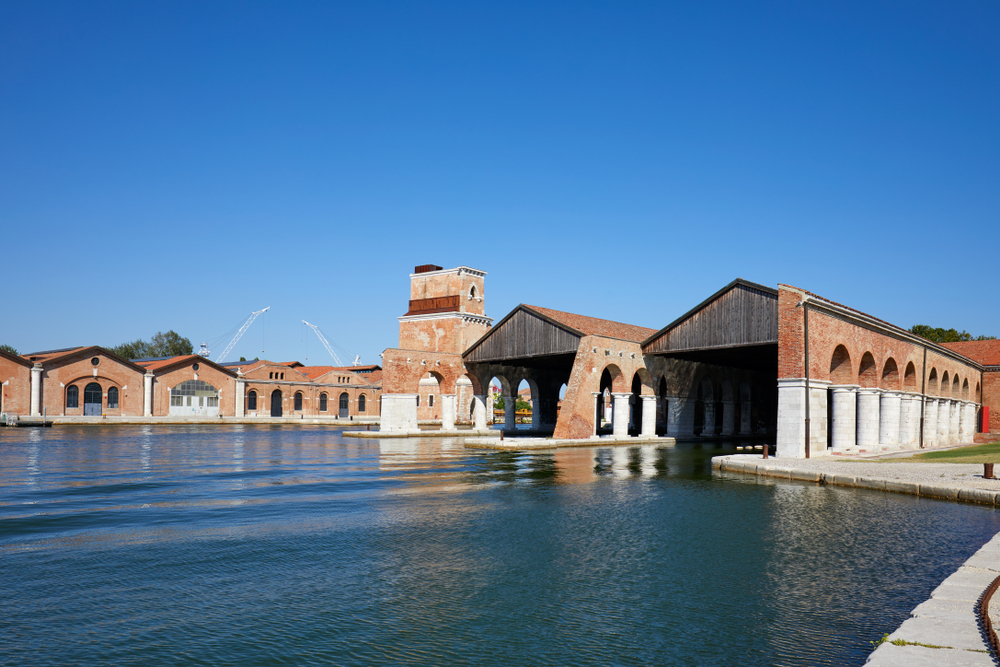
As I was saying, the Venice Biennale literally invades the city, and while the main exhibition venue is the Giardini Napoleonici (or the Lido, for the film festival), events on the calendar are scattered all over Venice: in historical buildings, inside deconsecrated churches, and even on boats!
This is why I recommend that you to go to one of the Tourist Information Offices (IATs) when you reach the Lagoon and ask for a brochure or one of the booklets created especially for the occasion – inside you will find the schedule and all the venues, and you can make a note of those that interest you most. Here is where to find the IATs:
- If you’re arriving by train: inside Venezia Santa Lucia station, opposite platform 2
- If you’re arriving by car: in Piazzale Roma municipal car park
- If you’re arriving by plane: in arrivals at Marco Polo airport, where you’ll touch down with Volotea
- If you’ve already been in Venice for a few days: one of the IATs is in one of the most beautiful places in the city, St Mark’s Square!
Couldn’t find any brochures? Don’t worry, as you walk around the city you’ll see posters and red totem signs displaying the map and the most important events! And of course there is always the official Biennale website.

How to get to the Giardini della Biennale
To get to the Giardini della Biennale, I recommend crossing Venice on foot, meandering along the narrow streets and squares, and maybe stopping in some of the festival locations you find along the way.
This way, you’ll not only experience the intense, lively atmosphere of the Biennale, but you’ll also discover areas of the city that are a little further off the beaten track, such as the Castello district, which is one of the most authentic and fascinating (and one of my favourites, together with Cannaregio).

I do realise, however, that crossing Venice literally from one side to the other can be tiring, especially if you have a whole day of pavilions, shows and exhibitions ahead of you. In this case, the best solution is the vaporetti, Venice’s “waterbuses”. These are a real institution in the city, so be careful not to call them “boats”!
If you arrive by train at Santa Lucia railway station, or by car and leave your car in one of the car parks near Piazzale Roma, you can board one of the vaporetti, lines 4.1 or 5.1, destination Lido.
However, lines 1, 4.2, 5.2, 6, 8, 10 and N also stop at the Giardini della Biennale, should you decide to board from another part of the city. You can find all the latest information on the lines, timetables and fares on the official Venice transport website: AVM.

How to take part in the Venice Biennale
Many of the shows, exhibitions and performances that are organised and staged inside the Venetian buildings can be seen free of charge, but you’ll need to buy a ticket to access the Giardini della Biennale.
Tickets are available on the official Venice Biennale website a month or a couple of weeks before opening, and their cost changes depending on the event. There are usually reductions for those under 26 or over 60, and children under 6 go free.
If however, during your trip to Venice you decide to visit the Biennale at the last minute, tickets can also be purchased at the entrance, except those for the Venice International Film Festival, for which there are few places available and online booking is required. Not surprising, given the high calibre of the event!
10 facts about the Biennale
The Venice Biennale is a crossroads of arts and cultures, with a wealth of stories, titbits and interesting quirks. Here are some things you probably didn’t know about this important lagoon event.
- The structure now known as the Italian Pavilion was built in 1895 for very first Biennale. The building was initially dedicated to art in general and was rather appropriately called “Pro Arte”.
- The first permanent pavilion of the Venice Biennale, after the Italian one, was the Belgian Pavilion, which was only built in 1907.
- Entering the individual pavilions is a bit like going on a world tour, and not just because of the forms of art on display. Inside, the rules of each country apply, so visiting them is a bit like stepping onto foreign soil for a moment!
- 2017 saw the 57th Art Biennale, making it the oldest and longest-running event of its kind in the world!
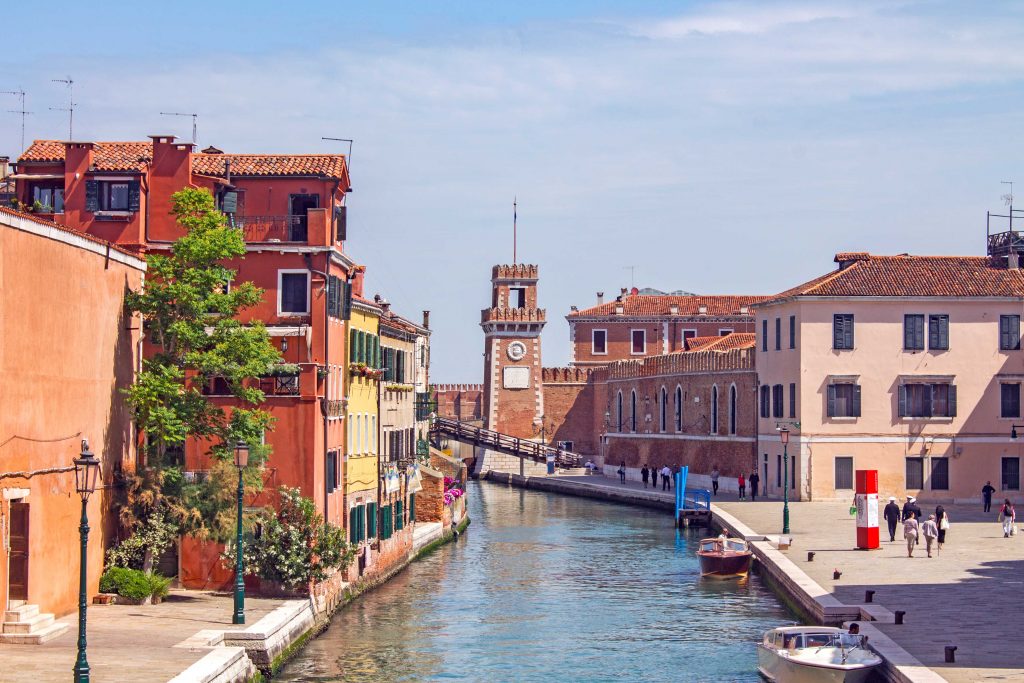
- The first International Architecture Exhibition, organised in 1980, was hosted in the Arsenale area and not in the Giardini Napoleonici. By the way, the Arsenale gates are incredible, definitely don’t miss those!
- Although today the Venice International Film Festival is closely linked with the Palazzo del Cinema on Lungomare Marconi on the Lido, the first event was held on the terrace of the Hotel Excelsior, a five-star hotel whose illustrious guests included Winston Churchill!
- The Venice International Film Festival is so called because it was not created as a competitive event, but as a real exhibition, in the spirit of the Biennale. The first film to be screened was Dr. Jekyll and Mr. Hyde, by Rouben Mamoulian.
- The Architecture Biennale and the Art Biennale are the only two events that actually take place every two years. All the others are in fact held annually.
- American soprano Maria Callas and Greek shipping magnate Aristotle Onassis met for the first time during the 1957 Film Festival. In a nutshell, it was among the lights of the Lido that “La Divina” and the Greek businessman fell in love, and the rest is history!
- During the Second World War the Biennale was cancelled, and from 1943 to 1945 its pavilions provided shelter for the Cinecittà film sets, which thus became studios, transforming the entire area into what was called Cinevillaggio.
If you want to discover everything else about the city, read the other articles about Venice on the Volotea blog, and don’t forget to share this post on social networks if you like it: it might help someone else who is planning a trip to the Lagoon!
Photos: © Martina Sgorlon